
 English
 العربية
 Bosanski jezik
 Čeština
 Dansk
Dansk Nederlands
 Wikang Filipino
 Suomi
Suomi Français
 Deutsch
 Magyar
 Íslenska
 Bahasa Indonesia
 Italiano
 日本語
日本語 한국어
한국어 Bahasa Melayu
 Polski
 Português
 Русский
 Cрпски језик
 Español
 ภาษาไทย
 Türkçe
 Tiếng Việt
You’ve got stacks of paint cans piling up like empty promises in a garage corner—and no, tossing them in the dumpster isn’t just lazy, it’s illegal in most states. These aren’t your grandma’s cookie tins; we’re talking pressurized aerosols, enamel-heavy buckets, and chemical residue clinging to every crevice. Paint cans don’t vanish after use—they linger.
According to the EPA, over 60 million gallons of leftover paint are wasted each year in the U.S., with metal containers clogging up landfills and leaking toxins into local water systems. “Improper disposal can lead to hazardous waste violations,” warns Dr. Annette Hill from the National Institute of Environmental Health Sciences.
And if you’re an OEM buyer juggling bulk orders for industrial or food-grade applications? It’s not just about what goes into those cans—it’s what happens when they’re empty that could cost you fines, customers… or worse, your reputation.
Understanding Paint Can Regulations and Guidelines
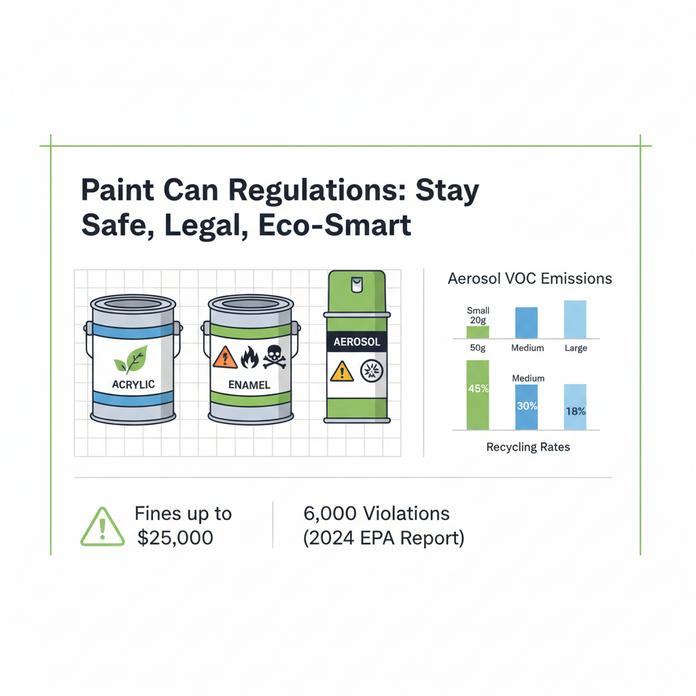
Knowing how to deal with paint cans isn’t just about tossing them in the trash. It’s about staying safe, legal, and eco-smart.
The rules surrounding acrylic lacquer disposal
- Acrylic products like lacquer are classified as hazardous waste—don’t dump them down the drain or toss them in your regular bin.
- Follow local household hazardous waste collection programs.
- Always store leftover lacquer in its original container with a tight lid until proper disposal.
- Check your city’s guidelines on acrylic product disposal.
- Let small amounts of leftover lacquer dry out before discarding if local rules allow.
- Transport sealed containers to an approved drop-off site.
Never burn or evaporate lacquer—it’s flammable and releases harmful VOCs.
Enamel paint regulations: What you must know
• Complying with both federal and state laws is key when handling enamel paint, especially during home renovations.
• Many municipalities require labeling of partially used cans as hazardous material when discarding.
• If you’re unsure, call your local environmental agency before disposing of any old paint cans containing enamel-based formulas.
“According to the 2024 EPA Compliance Report, improper storage of oil-based paints like enamel led to over 6,000 violations nationwide last year.”
• Don’t rinse brushes into household drains—use turpentine responsibly and dispose of it at designated sites.
Understanding environmental impacts of aerosol can sizes
| Aerosol Can Size | Average VOC Emissions (g) | Disposal Complexity | Recycling Rate (%) |
|---|---|---|---|
| Small (100ml) | 20 | Low | 45 |
| Medium (250ml) | 50 | Moderate | 30 |
| Large (500ml+) | 90 | High | 18 |
Smaller aerosol cans often emit fewer volatile compounds but still require careful handling. Oversized spray units may seem efficient but typically carry higher risks for ozone damage due to their elevated VOC output. Always empty fully before recycling or discarding these pressurized containers.
Legal implications of improper paint can disposal
▸ Dumping used or partially full paint cans in unauthorized locations can result in hefty fines—sometimes up to $25,000 depending on jurisdiction.
▸ States like California classify improper disposal as a misdemeanor offense under environmental code violations.
▸ If caught, you might face not just penalties but cleanup costs too.
Improperly handled waste isn’t just illegal—it’s dangerous. Old latex-based products might seem harmless but still fall under regulated waste categories if they contain certain additives. And don’t forget: once that old garage stash leaks into groundwater, it becomes everyone’s problem—not just yours.
Stay sharp by checking your area’s latest compliance bulletins and always follow official disposal, labeling, and transport procedures for leftover coatings.
3 Eco-Friendly Methods to Dispose of Paint Cans
Got leftover paint cans cluttering your garage? Here are three smart, planet-friendly ways to get rid of them without trashing the Earth.

How to recycle 12 ounce cans at local centers
Recycling 12 ounce cans is easier than you think if you know where to look.
- Contact local recycling centers and ask if they accept small-sized paint cans—some only take metal containers that are completely empty and dry.
- Call your county’s waste facility; many offer seasonal hazardous waste drop-offs for old paint materials.
- Make sure the can’s lid is off and all paint is dry before handing it over—this speeds up the sorting process.
- If you’re unsure, check online directories like Earth911 for verified locations near you.
Transforming 400 milliliter cans into art projects
Turning those compact 400 milliliter metal containers into something cool? Absolutely doable.
- Clean out the can thoroughly—no sticky residue allowed.
- Sand sharp edges so no one gets hurt while crafting.
- Paint or decorate with stickers, washi tape, or fabric scraps.
- Use as planters for succulents or herbs—they’re the perfect size for windowsills!
- String a few together for a quirky wind chime or hanging lanterns.
Biodegradable options for waste paint and can disposal
If tossing stuff in landfills gives you guilt sweats, these biodegradable alternatives might ease your eco-conscience:
| Disposal Method | Material Type | Time to Decompose | Eco Rating |
|---|---|---|---|
| Clay-based absorbents | Latex & water-based | ~2 months | High |
| Compostable liners | Metal-free paints only | ~6 months | Medium |
| Bio-strip solvents | Oil-based residues | ~4 weeks | High |
| Paper-mâché encasing | Small metal fragments | ~8 months | Low |
These methods work best when separating dried paint from its metal container first.
How to recycle spray-type paint cans safely
Spray-type paint cans, especially aerosol ones, need extra care due to pressure inside them.
• Never puncture them yourself—it’s risky and illegal in some places!
• Take them to designated hazardous waste facilities that handle pressurized containers properly.
• If the can still sprays, it’s considered hazardous; if it doesn’t, it may be recyclable depending on your area’s policy.
Check with your municipality before tossing any spray can into a bin—it could save someone an injury.
Creative reuse ideas from community DIY groups using small paint tins
People are getting wild with their old mini paint tins, and we’re here for it:
- Candle holders using wax remnants + essential oils = homemade aromatherapy bliss.
- Magnetic spice racks by gluing magnets onto cleaned-out lids.
- Desk organizers made by stacking and painting several tin cans together.
Join local DIY forums or Facebook groups—you’ll find tons of inspiration just waiting there.
Preparing empty paint cans for compost-safe disposal at home
Follow these steps if you’re aiming to compost responsibly:
Step A: Let leftover latex-based paint dry out completely—use kitty litter or shredded paper if needed.
Step B: Remove any plastic parts like handles or liners—they don’t break down naturally.
Step C: Crush the clean metal shell gently with a mallet; smaller pieces decompose faster when mixed with other organic matter.
Step D: Add broken-down bits sparingly into an active compost pile—not too much at once!
This method works best in backyard setups where temperature and moisture levels are regularly monitored.
Local regulations around disposing of oil-based vs water-based paints in rural areas
Rules vary wildly depending on where you live—but here’s what usually applies:
🟢 Water-Based Paints:
✔ Often accepted at household recycling events once fully dried out.
✔ Can sometimes go in regular trash bins if solidified first.
✔ Safer overall—less flammable and toxic than oil types.
🔴 Oil-Based Paints:
❌ Classified as hazardous waste nearly everywhere.
❌ Must be handled by certified facilities only.
❌ Never pour down drains—it contaminates groundwater fast!
Always double-check [local ordinances](https://eec.ky.gov/Environmental-Protection/Waste/recycling-and-local-assistance/Fact Sheets/Paintdisposalfactsheet.pdf) before making assumptions—even rural areas have strict guidelines nowadays.
Upcycling vs Recycling: Which is better for used decorative paint containers?
Let’s compare both paths briefly so you can pick what works best:
Upcycling:
- Keeps original form intact while giving new purpose—think flower pots or pencil holders using vibrant old designs.
- Great for unique décor pieces that tell a story.
- Less energy-intensive than industrial recycling processes.
Recycling:
- Breaks down materials entirely but requires more energy input.
- Better suited when items are damaged beyond repair or contain toxic residues.
- Widely supported by municipal systems but has stricter prep requirements.
In many cases, combining both approaches gives you maximum environmental impact while keeping things fun and creative around the house!
How to Find Local Paint Can Recycling Programs

Finding a place nearby to recycle your old paint cans doesn’t have to be a wild goose chase. Here’s how you can track down reliable, eco-friendly options without breaking a sweat.
Resources for finding programs near metal surfaces
- Check local municipal websites – Many cities list approved paint can recycling or disposal facilities on their sanitation or public works pages.
- Use online proximity search tools, like Earth911 or RecycleNation, by entering your zip code and selecting “metal” or “hazardous waste.”
- Hardware store drop-off points – Retailers like Lowe’s and Home Depot often partner with recycling programs for used cans.
- Library bulletin boards and neighborhood apps (like Nextdoor) sometimes post updates about pop-up collection sites.
- Call your local landfill or transfer station directly—they often accept empty or dried-out paint containers as part of their regular recycling resources.
Some areas even offer curbside pickup for certain types of metal containers, so it’s worth checking if that applies to your address. Just make sure the cans are empty and dry—no gooey leftovers allowed!
Connecting with groups focused on industrial equipment recycling
- Start by joining LinkedIn groups centered around equipment recycling, especially those targeting construction or manufacturing professionals.
- Look up regional chapters of national associations like the Institute of Scrap Recycling Industries (ISRI) that focus on sustainable disposal of industrial equipment.
- Reach out to waste management companies offering corporate packages—they often include services tailored for bulkier items like heavy-duty machinery and large-scale metal surfaces.
- Browse Reddit threads under r/recycling or r/environment where users share contacts for niche recyclers who handle things like forklifts, compressors, and other bulky gear.
⚙️ These connections don’t just help you get rid of old stuff—they plug you into a network of people who care about responsible disposal just as much as you do. Whether you’re dealing with rusted-out drums or dented commercial-grade paint sprayers, these pros know what’s up when it comes to proper handling.
By tapping into both community-level resources and specialized industry groups, you’ll find more than one smart way to recycle those leftover paint containers—especially if they’ve been sitting around near any kind of industrial setup.
FAQs
What regulations apply to large-scale disposal of acrylic lacquer paint cans?
Like quiet sentinels in a warehouse, acrylic lacquer cans await their fate—rules whisper down from environmental agencies:
- Empty every can before its steel shell joins the recycling convoy.
- Never toss into everyday trash; fines lurk in careless moments.
- Deliver chemical-coated containers to approved treatment sites for a clean farewell.
How can enamel paint cans be prepared for recycling in bulk orders?
Picture rows of jet black and bright yellow enamel tins marching toward industry gates—bulk preparation demands:
- Strip them of residue until metal gleams under light.
- Dry completely; moisture is the enemy of batch traceability records.
- Sort by capacity—12 ounce or 400 milliliter—to meet industrial rhythm and OEM order precision.
What eco-friendly options exist for disposing of unused paint and metal pails?
Some choose a gentler ending: water-based acrylics dissolved with biodegradable solutions, urethane topcoats eased away without harm, then reimagined as art-born vessels clad in Royal blue satin finish or Forest green semi-gloss—a second life shaped by human hands instead of landfill shadows.
How do improper disposal practices affect legal standing for bulk buyers of paint products?
Epoxy primer gone astray into public waste streams breaks trust not just with law but conscience—the penalties run deep when adhesion testing clearance is ignored and textured coating aerosols find themselves buried where they never belonged.
Are there special considerations when ordering OEM aerosol accessories alongside large-volume paint cans?
Choices here are like tuning fine instruments: salt spray testing guards corrosion protection on metal surfaces; UV resistance shields Signal white gloss on automotive parts; custom color matching assures harmony between 300 milliliter sprays and towering 20 ounce equipment finishes—with performance features aligning exactly to industrial intent before production ever begins.
References
- EPR Achievements: The case of paint in the U.S. – Coatings World
- National Institute of Environmental Health Sciences: NIEHS Home page – National Institute of Environmental Health Sciences
- Learn the Basics of Hazardous Waste – US EPA
- Inspection Data Shows Common Hazardous Waste Violations – iSi Environmental
- Global emissions of VOCs from compressed aerosol products – White Rose Research Online
- California Nearly Triples Penalties for Waste Violations – Clean Earth
- Recycling Center Search – Earth911.com
- Household Hazardous Waste (HHW) – US EPA
- Paint Disposal: Acrylic, Latex & Oil-Based Paints – NEDT
- Paint Disposal Fact Sheet – Kentucky Energy and Environment Cabinet
- RecycleNation: Search. Find. Recycle – RecycleNation
- Institute of Scrap Recycling Industries (ISRI) – ISRI.org



