 English
 العربية
 Bosanski jezik
 Čeština
 Dansk
Dansk Nederlands
 Wikang Filipino
 Suomi
Suomi Français
 Deutsch
 Magyar
 Íslenska
 Bahasa Indonesia
 Italiano
 日本語
日本語 한국어
한국어 Bahasa Melayu
 Polski
 Português
 Русский
 Cрпски језик
 Español
 ภาษาไทย
 Türkçe
 Tiếng Việt
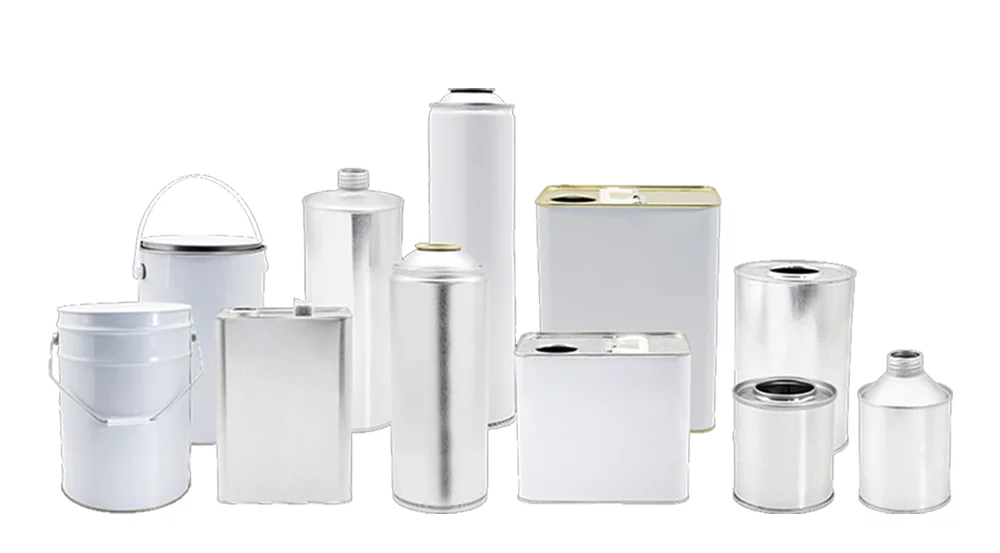
Custom tin can wholesale gets complicated fast: one wrong coating, valve, seam, or material choice can turn a bulk order into an expensive headache. Buyers need packaging that fits the formula, filling line, testing needs, branding, and budget.
This guide covers materials, OEM customization, aerosol components, compliance, tooling, capacity, lead times, and palletized delivery.
Key Notes: Custom Tin Can Wholesale
- Material Matters: Choose tinplate for formability and corrosion resistance or galvanized/cold-rolled steel for strength and pressure tests.
- Seam & Coating Solutions: Apply polymer lining and internal lacquering to boost seam integrity, corrosion protection, and leak-test performance.
- Compliance Checklist: Secure ISO certification, meet FDA standards, and verify burst pressure and leakage test results before bulk orders.
- Production & Delivery: Leverage custom tooling and contract manufacturing for capacity planning, then use palletized shipping to cut lead times and streamline logistics.
Wow! Custom Tin Can Wholesale Demystified

Custom tin can wholesale gets easier once buyers know what sits behind price and performance. From metal choice to forming and compliance, FANXUN connects practical can manufacturing details with custom wholesale needs, so sourcing decisions feel far less tricky.
Unpacking Tinplate vs. Galvanized Iron Benefits
For Custom tin can wholesale, smart material selection starts with the product inside.
- Metal choices
- Tinplate
- Strong corrosion resistance
- Smooth surface finish for printing
- Galvanized iron
- Tough durability
- Protective zinc over the metal substrate
- Tinplate
Wall thickness and storage conditions matter too. In short, custom tin buyers should match metal to actual use.
How Polymer Coating Enhances Seam Integrity
A polymer coating keeps contents away from bare metal, giving Custom tin can wholesale packaging extra barrier protection and chemical resistance.
- Inside: internal lacquer supports food safety.
- At joints: coating aids seam integrity and leak prevention.
That little layer can make a big difference during shipping and storage.
From Two-Piece Extrusion to Necking Operation
Custom tin can wholesale production depends on controlled shaping.
- Body fabrication
- Two-piece extrusion
- A drawing process forms body and bottom together.
- Two-piece extrusion
- Opening preparation
- Necking operation
- Careful metal forming narrows the opening.
- Necking operation
Good dimensional accuracy keeps closures aligned and can manufacturing consistent. Pretty handy for high-volume orders.
Ensuring ISO Certification and FDA Compliance
For regulated Custom tin can wholesale orders, paperwork deserves close attention.
- Quality assurance
- ISO certification can demonstrate controlled systems and support a manufacturing audit.
- Clear traceability tracks materials and production lots.
- Market requirements
- Applicable FDA compliance and regulatory standards support food contact safety for relevant U.S. uses.
FANXUN buyers should still confirm requirements for each product and destination market.
3 Key Steps to Bulk Tin Can Orders
Ordering cans at scale gets easier when design, factory output, and delivery plans line up from the start. Custom tin can wholesale purchasing connects these moving parts, helping buyers keep tin orders practical, control costs, and avoid last-minute headaches when large wholesale volumes are due.
Step 1: Contract Manufacturing and Custom Tooling
A capable contract manufacturer turns production specifications into repeatable containers through metal fabrication and careful quality assurance.
- Design setup
- Confirm tin design, dimensions, wall thickness, closures, and printing.
- Approve custom tooling and mold development before bulk runs begin.
For Custom tin can wholesale projects, these checks help each custom tin order stay consistent from sample to production.
Step 2: Capacity Volume Planning and Bulk Logistics
Good capacity planning keeps purchasing grounded in actual demand rather than guesswork.
- Match demand with output.
- Set the required production volume and order quantities.
- Compare forecasts against the factory manufacturing schedule.
- Keep goods moving.
- Link inventory management to the wider supply chain.
- Build a logistics strategy around replenishment and bulk production.
That makes Custom tin can wholesale ordering far less likely to run into shortages or costly excess stock.
Step 3: Palletized Shipping for Seamless Delivery
Palletized shipping gives finished cans a stable base for long-distance movement.
- Transit
- Use secure packaging to limit dents during cargo handling and freight transport.
- Arrival
- Coordinate delivery logistics with receiving hours.
- Plan warehousing and final distribution before pallets land.
For Custom tin can wholesale shipments, that simple prep keeps wholesale tin cans organized and ready for filling.
Steel vs. Aluminum Custom Cans
Choosing the right custom can comes down to product protection, shipping weight, looks, and manufacturing needs. For Custom tin can wholesale buyers, steel and aluminum each bring practical advantages worth comparing.
Steel Custom Cans
Steel makes sense when a package needs serious strength without getting fancy. Tinplate combines a steel base with protective tin coating, giving cans a rigid structure and dependable durability for lubricants, cleaners, chemicals, and even some food packaging.
- Material advantages
- Protection: Proper coatings improve corrosion resistance, especially when contents could react with bare metal.
- Handling
- Steel tolerates stacking and warehouse bumps well.
- Its magnetic property can also help automated sorting.
- Purchasing considerations
- Custom tin can suppliers can adjust shapes, closures, coatings, and printing for different products.
- For Custom tin can wholesale orders, steel’s recyclability supports packaging recovery goals.
For bulk custom tin can projects, FANXUN can match fabrication choices to filling and distribution requirements. Custom tin can wholesale purchasing is pretty straightforward when product compatibility is checked early.
Aluminum Custom Cans
Aluminum takes another route: less weight, clean styling, and easy shaping. Its lightweight nature helps trim freight loads, while natural rust resistance works well for personal-care aerosols and specialty packaging.
- Design benefits
- Malleability supports shaped bodies and a smooth seamless design.
- High thermal conductivity helps containers transfer heat quickly during processing.
- Market fit
- Familiar use in beverage packaging shows aluminum’s practical production value.
- Strong sustainability potential comes from repeated recycling.
For Custom tin can wholesale comparisons, buyers can weigh steel strength against aluminum‘s lower shipping weight before ordering custom cans.
Industrial Chemicals: Compliant Tin Pail Solutions
Industrial chemical packaging has little room for guesswork. FANXUN links material choice, coating, dispensing parts, and pressure checks into practical Custom tin can wholesale production. For buyers sourcing custom tin cans wholesale, the goal is simple: safe chemical contact, dependable handling, and consistent tin can quality.
Selecting Cold-Rolled Steel for Pressure Resistance Test
Custom tin can wholesale projects start with cold-rolled steel selected for predictable material thickness.
- Material control
- Tensile strength helps resist internal force.
- A suitable yield point limits permanent deformation.
- Performance
- Pressure resistance supports demanding fills.
- Structural integrity and metal durability help cans take everyday knocks.
Integrating a Reliable Aerosol Valve and Dip Tube
A can is only as useful as its dispensing setup. Match the aerosol valve and dip tube to the formula, including propellant compatibility.
- Check the actuator seal for tight closure and leak prevention.
- Tune the spray mechanism for practical dispensing accuracy.
That keeps custom tin packaging easy to use.
Internal Lacquering for Corrosion Resistance
For Custom tin can wholesale orders containing solvents or cleaners:
- Coating choice
- Internal lacquering adds barrier protection.
- Epoxy coating can provide strong chemical resistance.
- Compatibility checks
- Verify substrate adhesion.
- Confirm solvent compatibility for dependable corrosion prevention.
Good coating selection can save a lot of trouble later.
Verifying Burst Pressure and Leakage Test Results
Custom tin can wholesale approval should finish with measured safety checks.
- Run hydrostatic testing to establish burst pressure.
- Complete a leakage test around seams and closures.
- Compare the pressure threshold with the required safety standard.
- Record seal integrity and final quality verification before shipment.
Struggling with Lead Times? Fast-Track Ordering
Custom tin can wholesale schedules get tight when tooling, plant capacity, and freight are handled separately. A smoother approach connects each decision early, so custom tin orders spend less time waiting around. For bulk can wholesale buyers, that means clearer timing, fewer production snags, and faster movement to filling sites.
Leveraging Custom Tooling for Reduced Turnaround
For repeat Custom tin can wholesale runs, preplanned engineering drawings lock in dimensions and tolerances before the manufacturing setup begins.
- Tool preparation
- Approve prototype design and metal molds.
- Confirm shapes before rapid tooling starts.
- Reusing approved tooling improves production efficiency and cuts avoidable changeovers. Pretty handy when deadlines are close.
Maximizing Production Capacity Through Contract Manufacturing
Custom tin can wholesale demand can rise quickly, so an outsourcing partner can balance jobs across industrial equipment and each assembly line.
| Planning input | Trial A | Trial B | Trial C |
|---|---|---|---|
| Order size (units) | 10,000 | 25,000 | 50,000 |
| Lines assigned | 1 | 2 | 3 |
| Planned QC checks | 3 | 5 | 8 |
These illustrative planning inputs show how resource allocation, scalability, and quality control can be mapped against factory needs rather than guessed.
Expedited Delivery via Palletized Shipping
Custom tin can wholesale orders also depend on smart freight logistics. Pallets combine bulk tins with protective packaging, simplifying cargo transport.
- Confirm pallet counts.
- Match pickup to the supply chain schedule.
- Route loads toward warehouse distribution, cutting handling time and helping finished custom tins reach their destination within tighter delivery windows.
References
- Corrosion behavior of tinplate in NaCl solution under different – electrochemsci.org
- Hot-dip galvanization – Wikipedia
- Galvanization – Wikipedia
- Lining Of Waste Impoundment and Disposal Facilities – epa.gov
- APPLICATION OF FEA IN B-PILLAR REINFORCEMENT FORMING – semanticscholar.org
- Simulation of Double-Seaming in a Two-piece Aluminum Can – aip.org
- What Is ISO 9001? A Beginner’s Guide to the QMS Standard – 9001council.org
- Food Chemical Safety – fda.gov
- Cold-formed steel – Wikipedia
- The Story of Aluminum – Part 2: Its Uses – cwbgroup.org
- Lightweight Metals: Aluminum, Titanium, and Magnesium – casting-china.org
- Non Destructive Testing – Pressure Testing Codes – wermac.org
- Acoustic Emission Examination of Metal Pressure Vessels – nationalboard.org