 English
 العربية
 Bosanski jezik
 Čeština
 Dansk
 Nederlands
 Wikang Filipino
 Suomi
 Français
 Deutsch
 Magyar
 Íslenska
 Bahasa Indonesia
 Italiano
 日本語
 한국어
 Bahasa Melayu
 Polski
 Português
 Русский
 Cрпски језик
 Español
 ภาษาไทย
 Türkçe
 Tiếng Việt

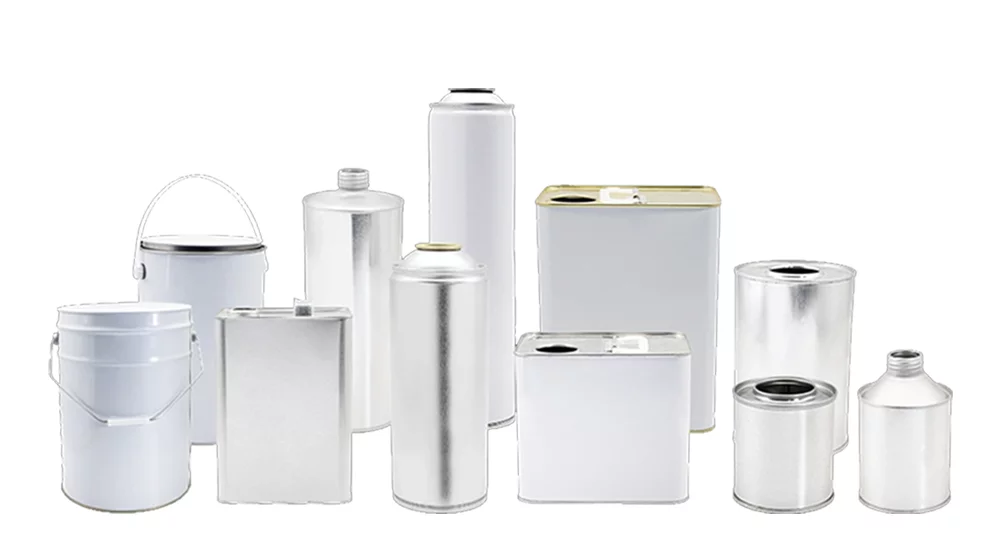
Start with the fill and how the customer will open the pack. Ask for the body material and closure drawing before comparing two quotes. FANXUN’s packaging solutions include both aluminum and tinplate formats.
The rest is arithmetic and stubbornness: lacquer pinholes, dimensional weight, and the contract lines that quietly decide who eats the freight bill.
Sourcing Notes: What Aluminum Tins With Lids Wholesale Buyers Should Know
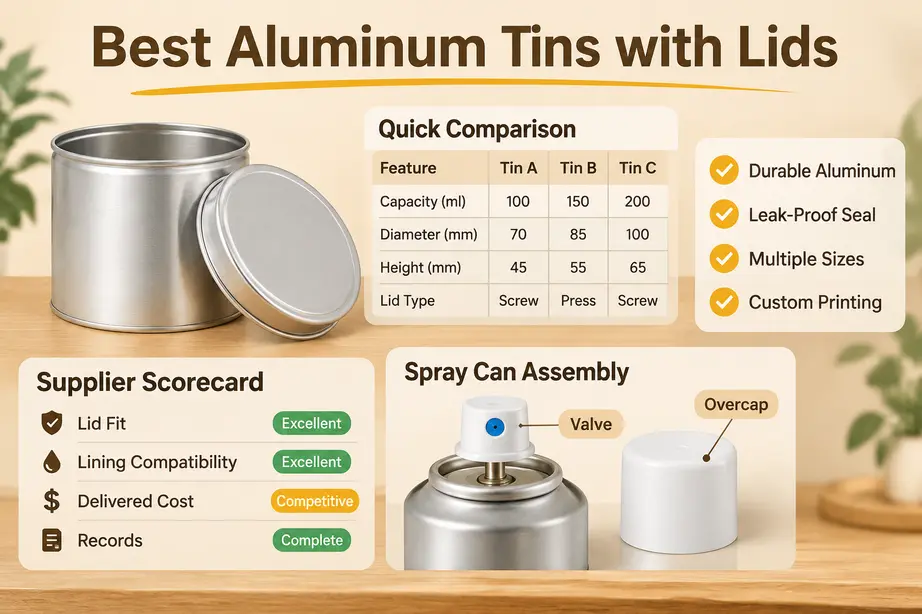
- Pick the Format First: Specify how a lidded tin opens. A pressurized spray requires a separate aerosol specification.
- Check the Lining: Specify the fill, contact time and storage temperature before choosing coated or bare metal.
- Cost Hides in Adders: Compare alloy grade, closure count, printing, curing and freight on the same delivered quantity.
- Verify, Don’t Trust Paperwork: Confirm ISO scope and expiry, batch wall-thickness and leakage data, and for pressure-rated packs, written burst pressure thresholds.
- Price the Fine Print: Assign divider and transit crate costs, tier breaks, and damaged-lot replacement terms before signing.
Choosing a Lidded Tin or an Alternative Metal Pack
Ordering aluminum tins with lids wholesale looks simple until the spec sheet lands on the desk. Threads, wall thickness, liners, lacquer — tiny details decide if a container survives the fill line. Distinguish tinplate from aluminum before choosing the opening and liner.
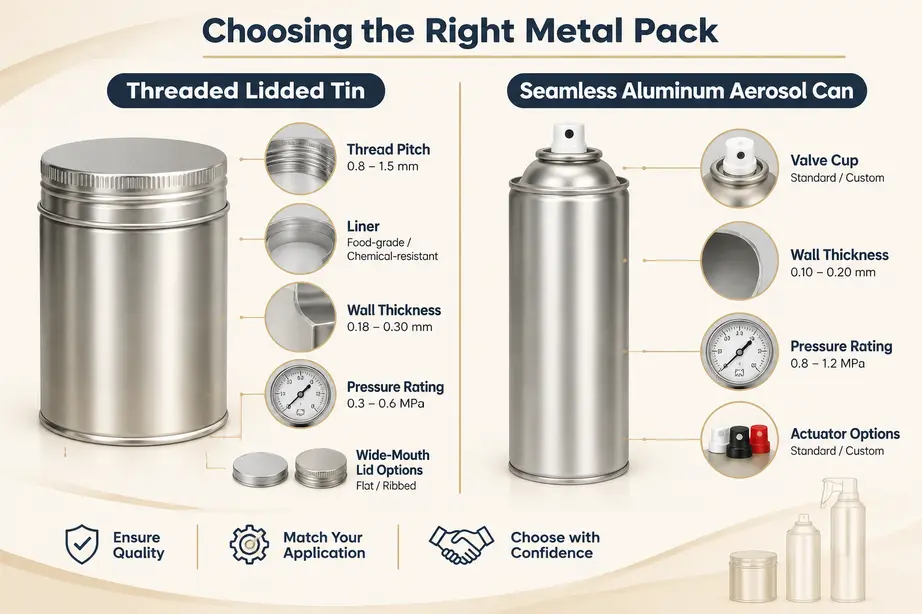
Threaded Metal Cylinders With Reclosable Lids
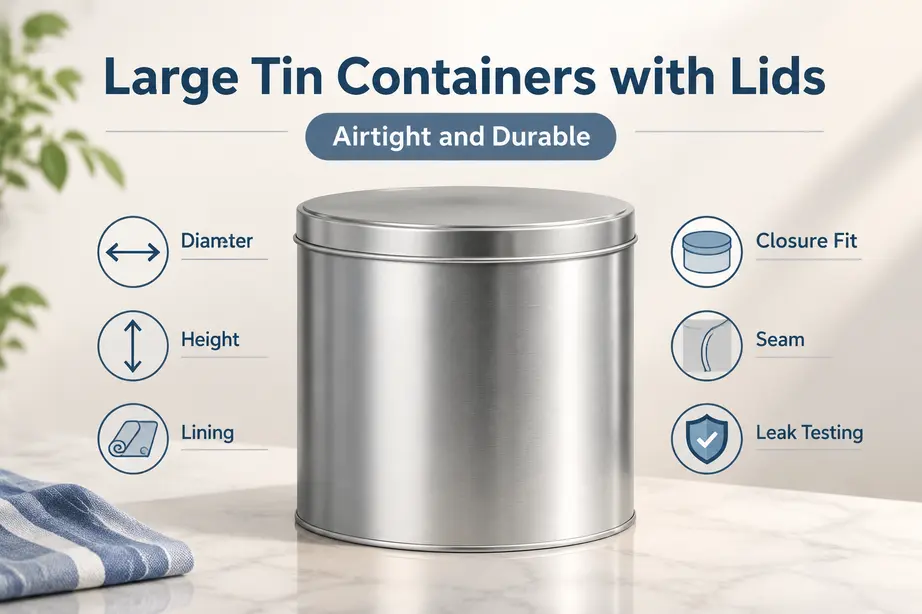
For a threaded tin, request the mating body and lid drawings. Check both sides of the specification:
- Neck and closure
- Neck finish, thread pitch and tolerances
- Closure depth and liner compression when seated
- Body
- Alloy grade and recycled content
- Wall thickness and, for regulated transport packs where applicable, drop test results
- Liner for aggressive fills
Test the reclosable lid on a filled sample after opening and resealing it. Include the liner and screw cap in the quoted assembly.
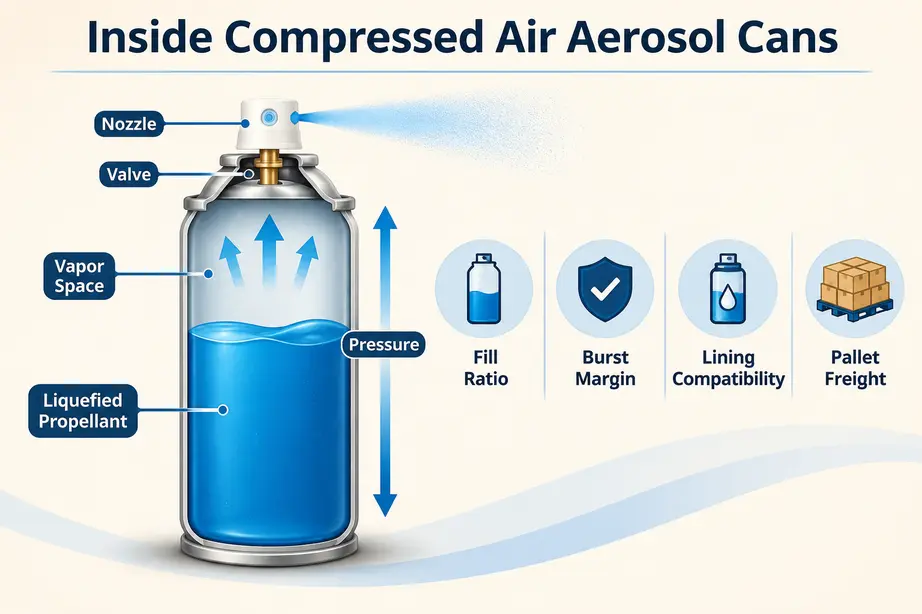
Monobloc Aerosol Containers — Pressure-Ready by Design
A monobloc aluminum aerosol can has a seamless body. For U.S. shipments relying on the limited-quantity aerosol provisions, check the authorized container and its pressure limitations. Specify four items together:
- Valve cup diameter
- Internal pressure rating
- Dome and base profile
- Interior coating
Match the aerosol valve to the can opening and request leak results for the assembled pack.
Wide-Mouth Tins and Lid Selection
For products scooped or poured from a wide-mouth tin, confirm the opening diameter, lid retention and any tamper-evident feature on the sample. When comparing food cans or paint tins, ask which body metal and closure are available for the intended fill.
Lacquered vs. Unlacquered Tins for Chemical Use
Pick the wrong tin and your formula starts fighting the metal. Straight talk on lined versus bare containers follows, with the checks worth running before you order aluminum tins with lids wholesale for spray or solvent fills.
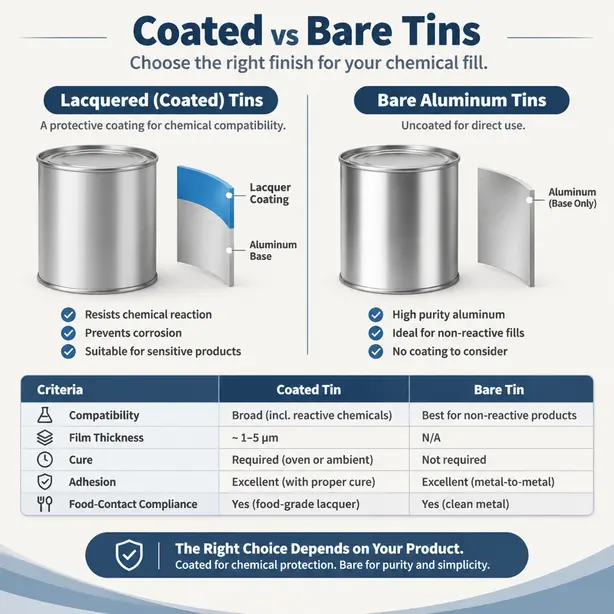
Lacquered Tins
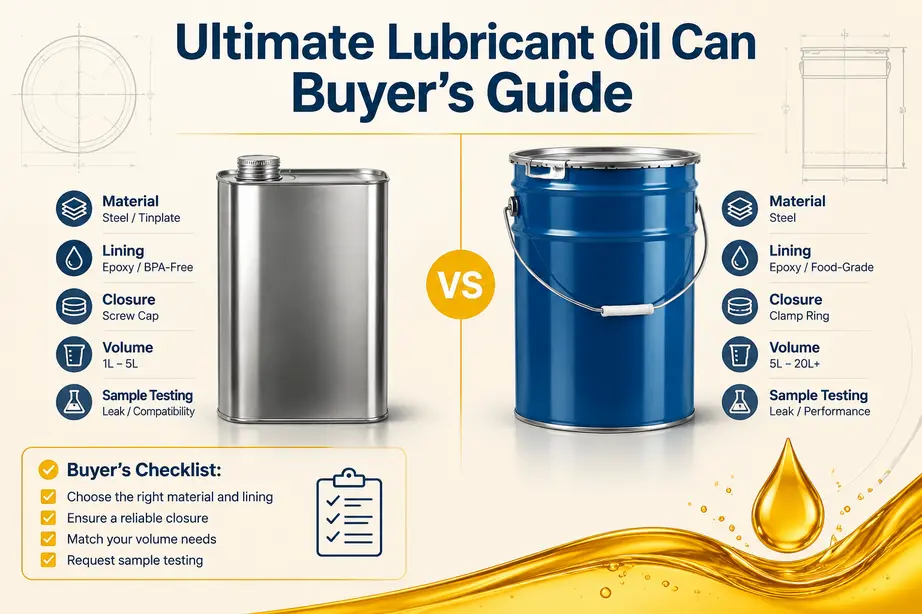
An internal coating separates the fill from the metal where the film is continuous. For adhesive fills, compare the opening and lining offered on monotop cans with the proposed tin.
- Epoxy phenolic lining
- confirm compatibility with the actual solvent mixture
- agree on a method for rating adhesion after cure
- Film thickness
- agree on the dry film thickness range
- select a measurement method suited to the coating and substrate
Unlacquered Tins
Ask for compatibility data for the actual formula on bare aluminum at the expected storage temperature. For regulated U.S. hazardous-material shipments, packaging compatibility includes the materials in contact with the contents, including the closure.
Food-Grade Internal Lacquer Options
For U.S. food-contact applications, check the conditions for resinous and polymeric coatings against the proposed use. A resin family name alone cannot establish compliance.
- Market documentation — identify the destination market and intended food contact
- Resin composition — request evidence for any BPA claim in the purchase specification
- Material purity — check suitability for the intended use under U.S. good manufacturing practice provisions
- acid resistance — matters whenever the fill runs low pH
Cure schedule decides whether that polymeric coating truly holds. Never approve a run off a datasheet alone.
Corrosion-Resistant Coating Trade-Offs
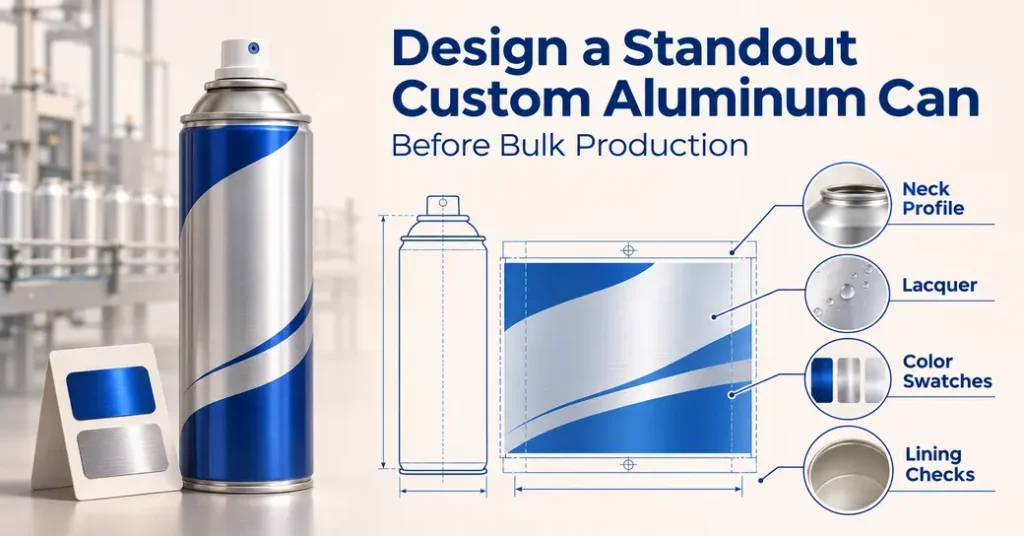
Ask the supplier how the agreed coating survives forming and handling. Compare the film thickness, cure and adhesion results on the finished tin before approving a change in coating cost.
How Much Do Aluminum Tins With Lids Wholesale Cost?
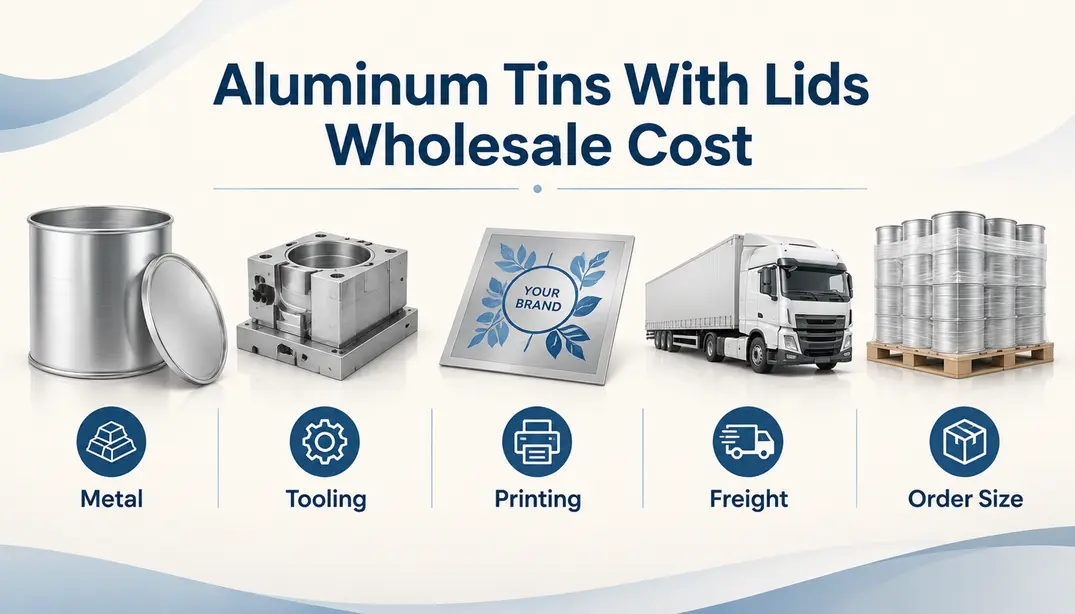
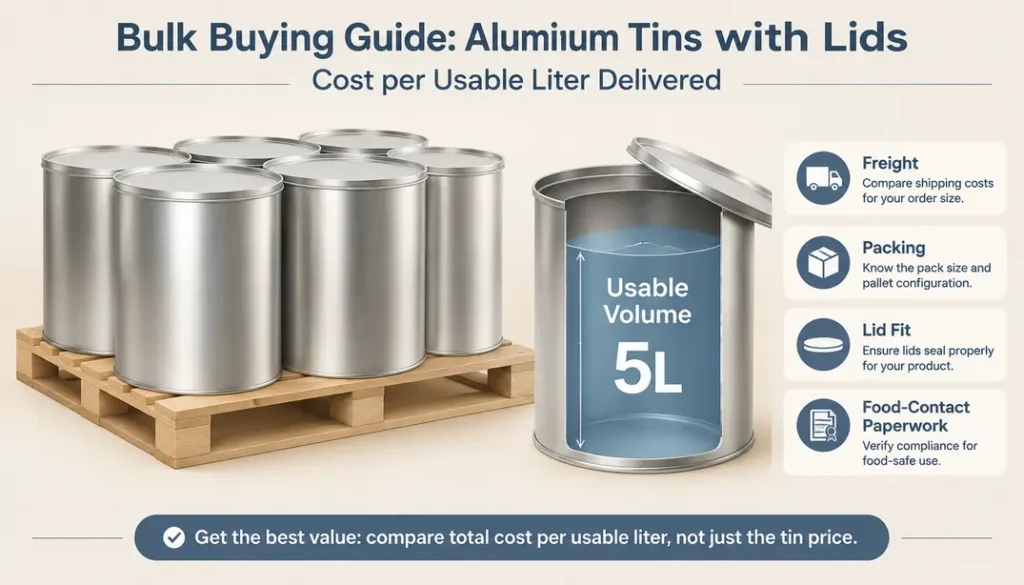
Nobody loves a surprise invoice. The short version of where your cash actually goes on aluminum tins with lids wholesale: metal, dies, ink, freight, and order size. Nail those five and you can spot a padded quote before your coffee goes cold, no spreadsheet heroics needed.
What Drives Per-Unit Cost at Volume
- Metal base: Compare the quoted alloy, recycled content and wall thickness on the same drawing.
- Scale: wider press capacity and steadier production efficiency spread setup across more pieces, so the fixed slice of each quote shrinks quick.
- Closure count: every extra lid component is another line to pay for.
Tooling, Printing, and Thermal Curing Adders
- Price the custom mold or embossing die as a one-time charge, billed apart from unit cost.
- Compare printing setup and per-piece costs at the intended order quantity.
- Ask how the supplier prices each coating and curing pass.
Freight Math: Palletized Shrink Wrapping and Export Cartons
Ask the forwarder to price the packed shipment using the actual route, service, gross weight and dimensions. Confirm whether lids ship fitted or separately before estimating pallet capacity. For regulated packaging designs, request applicable stacking test results.
| Quote input | What to obtain |
|---|---|
| Export carton | Outside dimensions, gross weight and sellable units per carton |
| Loaded pallet | Carton count, overall height, footprint and gross weight |
| Freight basis | Written rate, unit of measure, minimum charge and surcharges |
Minimum Order Quantities and Tier Breaks
Suppliers quote in steps, and the volume threshold usually matters more than the calendar. Ask what the next production run tier does to unit scaling — a modest bump in inventory commitment often cuts per-tin cost hard. Send FANXUN your order quantity, artwork and destination to request an itemized quote at two volumes.
5 Checks Before Signing a Wholesale Tin Contract
Buying aluminum tins with lids wholesale feels routine right up until a bad lot lands. Five checks keep the paperwork honest and your money where it belongs.
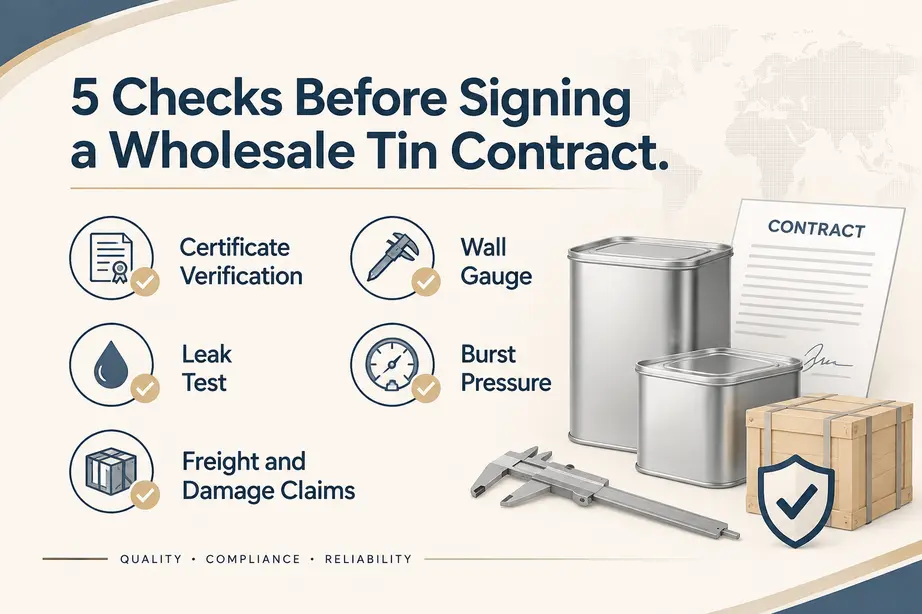
Does the Supplier Hold a Current Certificate Covering This Site?
Ask for the certificate number, then ring the issuing body yourself. Confirm certification status, the site address and the processes in scope. Book a factory audit if the evidence leaves a gap.
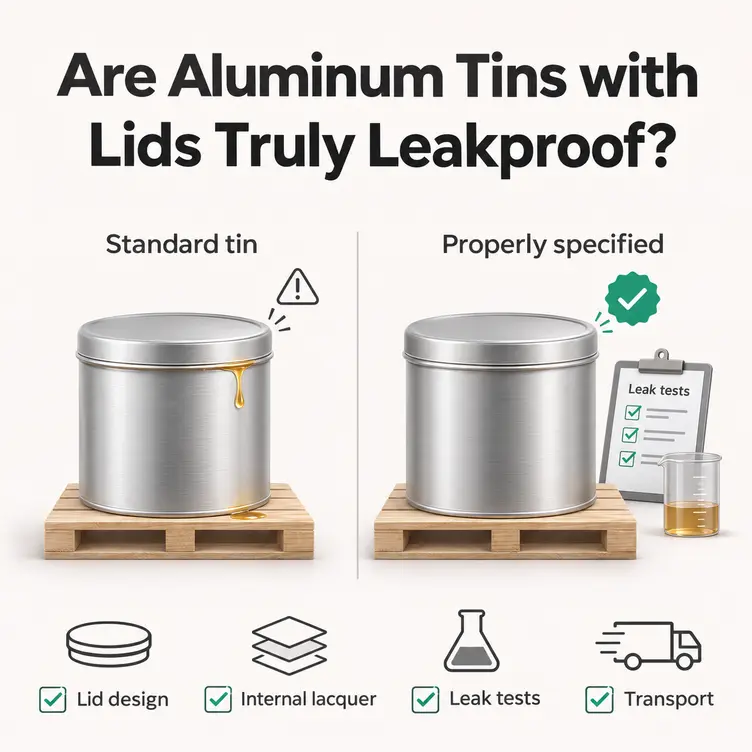
Wall Thickness Uniformity and Leakage Test Compliance
- Agree on gauge locations for the proposed shape and record the readings.
- Request batch leakage records and identify any applicable U.S. leakproofness test for regulated liquid packaging.
- Wall thickness spread tight enough that aluminum gauge stays predictable across lots.
- Seal integrity records naming the machine and the shift.
Weak uniformity shows up months later as returns, so pull the raw numbers before approving production for aluminum tins with lids wholesale.
Get the Burst Pressure Threshold in Writing
For pressure-rated aerosol packs, name a minimum burst pressure in the spec sheet, set the test method right beside it, and tie acceptance to batch reports. For ordinary lidded tins, specify lid retention and leakage criteria for the intended fill.
Who Absorbs the Cost of Corrugated Dividers and Transit Crates?
Anyone buying aluminum tins with lids wholesale has watched this turn into a fight. Decide early: do corrugated dividers and transit crates sit inside the unit price, ride on freight expenses, or land on your account? Packaging materials left vague become a later invoice dispute, and protective inserts get argued over too.
Replacement Terms for Damaged Lots
Set the defect threshold. Define the inspection window. Say which photos you need, and who pays return freight. Then pick the remedy for damaged lots — credit, replacement terms, or rework. Nail the return policy down before the first container of aluminum tins with lids wholesale leaves the yard.
References
- 49 CFR § 178.603 – Drop test. — Cornell Law School, Legal Information Institute
- 49 CFR § 173.306 – Limited quantities of compressed gases. — Cornell Law School, Legal Information Institute
- D3359 Standard Test Methods for Rating Adhesion by Tape Test — ASTM International
- D7091 Standard Practice for Nondestructive Measurement of Dry Film Thickness of Nonmagnetic Coatings Applied to Ferrous Metals and Nonmagnetic, Nonconductive Coatings Applied to Non-Ferrous Metals — ASTM International
- 49 CFR § 173.24 – General requirements for packagings and packages. — Cornell Law School, Legal Information Institute
- 21 CFR § 175.300 – Resinous and polymeric coatings. — Cornell Law School, Legal Information Institute
- 21 CFR § 174.5 – General provisions applicable to indirect food additives. — Cornell Law School, Legal Information Institute
- 49 CFR § 178.606 – Stacking test. — Cornell Law School, Legal Information Institute
- ISO – Certification — ISO
- 49 CFR § 178.604 – Leakproofness test. — Cornell Law School, Legal Information Institute