 English
 العربية
 Bosanski jezik
 Čeština
 Dansk
 Nederlands
 Wikang Filipino
 Suomi
 Français
 Deutsch
 Magyar
 Íslenska
 Bahasa Indonesia
 Italiano
 日本語
 한국어
 Bahasa Melayu
 Polski
 Português
 Русский
 Cрпски језик
 Español
 ภาษาไทย
 Türkçe
 Tiếng Việt

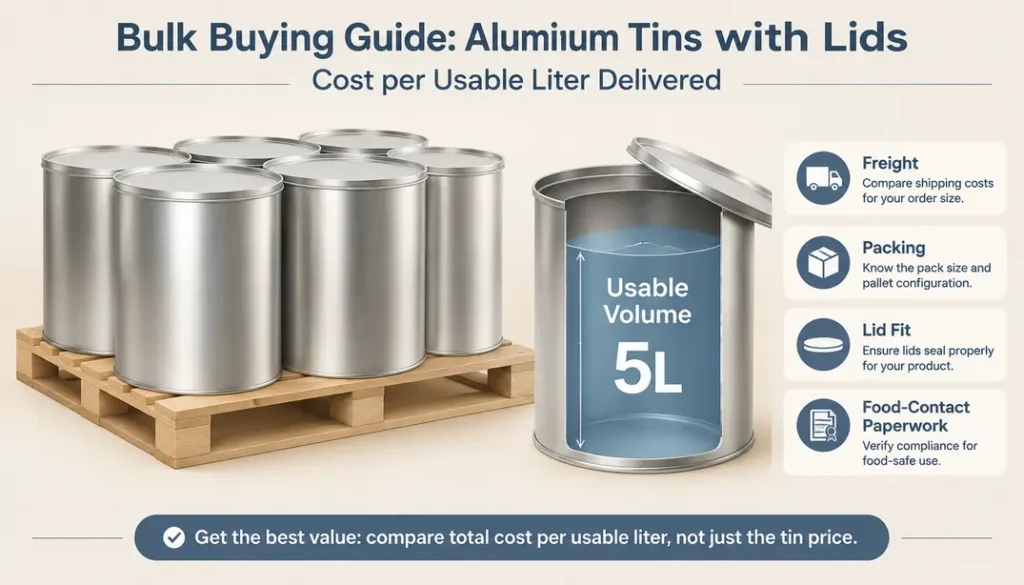
Before requesting prices, give each supplier the same drawing, intended contents and order quantity. Compare the lid on a production sample and ask for the paperwork that ties the sample specification to the lot you will receive.
Key Points: Aluminum Tins With Lids Bulk
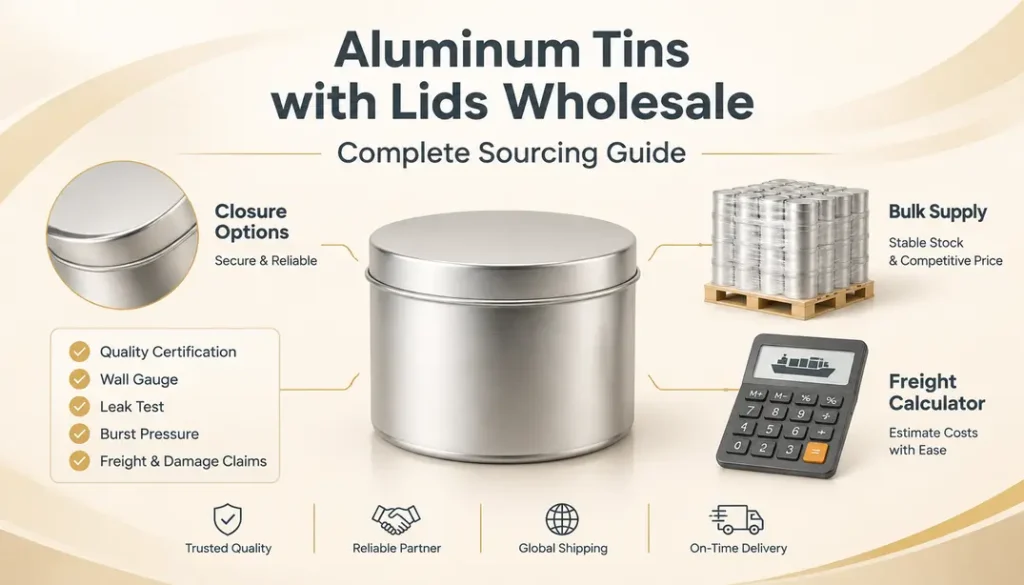
- Spec sheet first: Confirm alloy, wall thickness, temper and tolerances before pricing.
- Match alloy to conditions: Describe the contents, storage period and expected exposure during transit.
- Anodized coatings: Specify the finish and how its thickness will be checked.
- Lid choice: Press-fit for fast-fill dry goods, threaded screw caps where repeated resealing matters.
- Supplier trade-off: Compare replenishment dates and delivered prices on the same order quantity.
- Before signing: Test gasket compression, require mill certificates, and write pallet stacking and damage liability into the contract.
Specifications for Aluminum Tins With Lids Bulk Orders
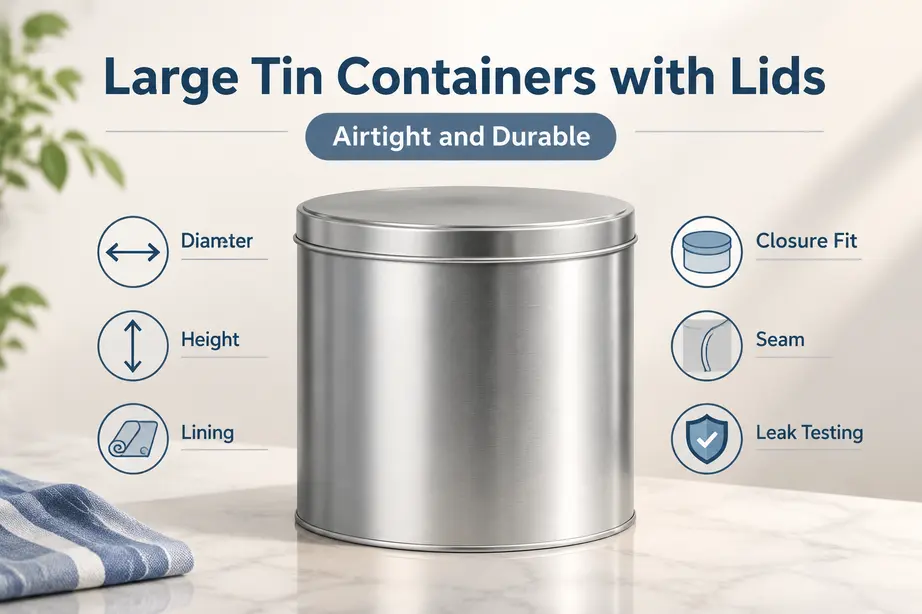
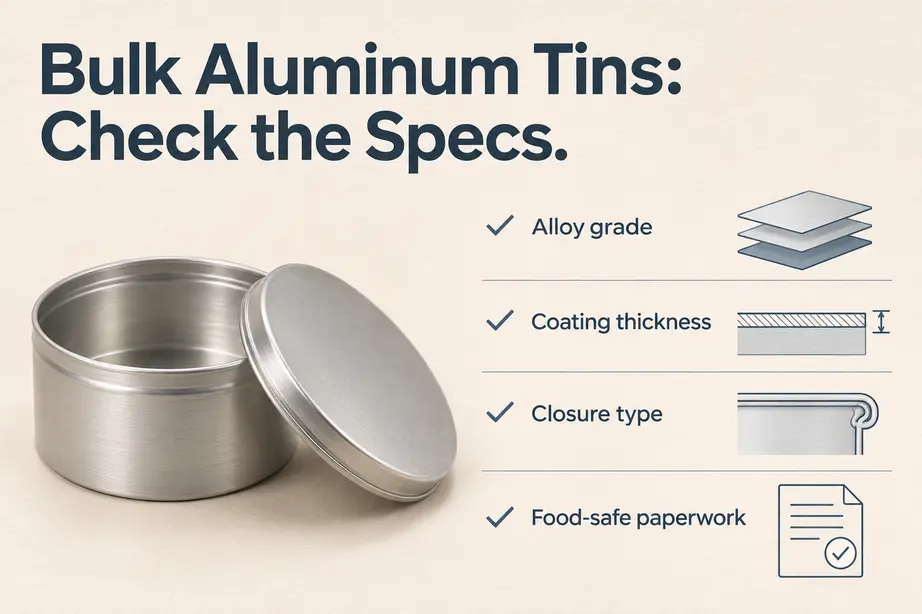
Ordering aluminum tins with lids bulk means the spec sheet is your best friend. Check the alloy, coating, closure and, for food packs, the food type and conditions of use.
Food-grade aluminum: reading the spec sheet correctly
Start with the numbers, then the words.
- Alloy and temper stamp
- record the alloy designation and temper on the purchase drawing
- Metal thickness plus tolerance
- specify where to measure the finished wall after can forming, and record the can dimensions needed for your filling line
- For US food packs, request the regulatory basis for each food-contact component.
- Check that any migration data cover the intended food and time and temperature of contact.
- Purity standards and chemical composition in writing, signed
A supplier who dodges the last item is telling you something.
Corrosion-resistant alloy grades and where they belong
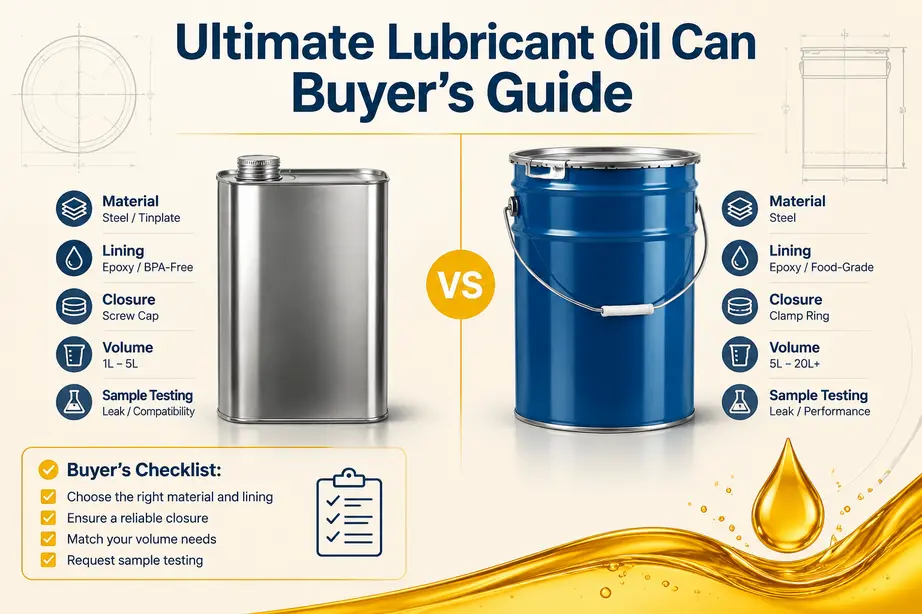
Distinguish tinplate and aluminum when comparing quotes. Ask the supplier to identify the alloy, the internal finish in contact with the fill and the external finish exposed during transit. For an acidic filling, request compatibility data on the proposed pack before approving the material.
Do anodized metal coatings really extend shelf life?
A coating thickness reading alone cannot establish shelf life. For anodized aluminum, agree on a thickness range and a method such as eddy-current measurement. Evaluate shelf life separately with the actual contents and closure under the proposed storage conditions.
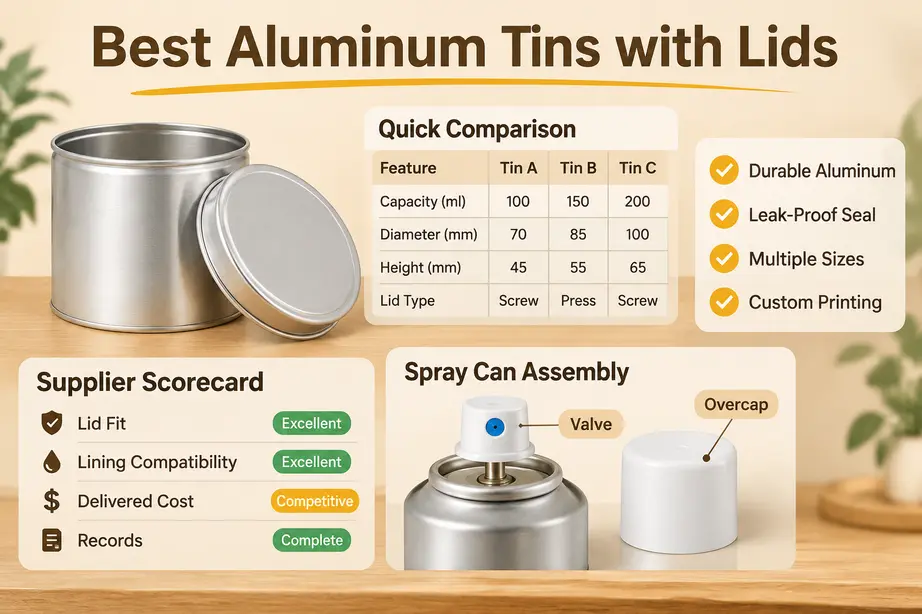
Press-fit lid or threaded screw cap for bulk packs
Two closures, two jobs:
- Press-fit
- fast fill lines, dry goods, single-use retail
- check lid retention after opening and reclosing
- Threaded screw cap
- check thread engagement and opening torque after repeated use
- compare the quoted cost of the lid and liner as a set
Pick by containment need. For food packaging, review FANXUN’s food can range and confirm the material and closure offered for your fill.
Local Supplier vs Overseas Aluminum Tins Bulk
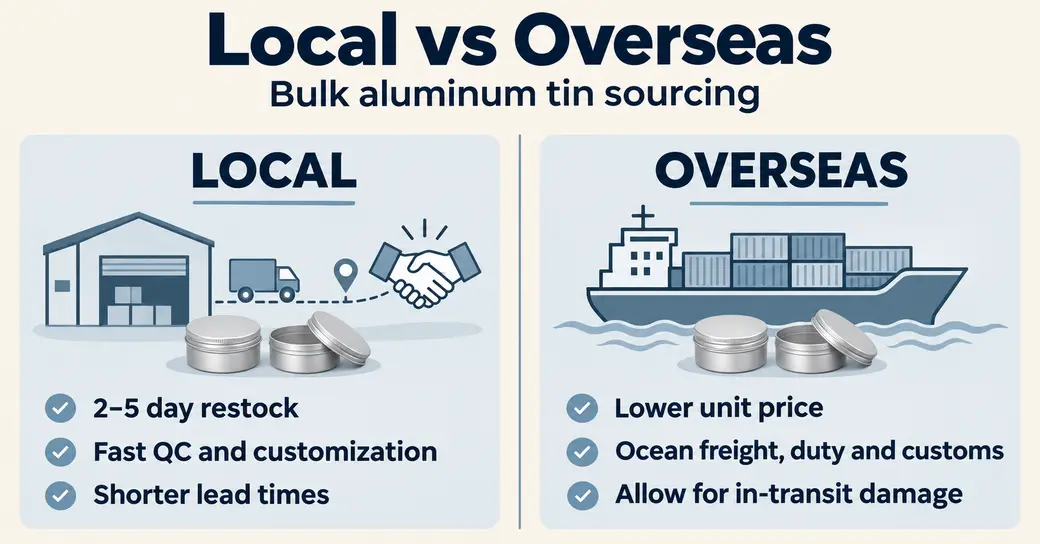
When comparing aluminum can suppliers, request a delivery date for the first lot and a separate replenishment date. Stock on hand and a made-to-order run can have different lead times even at the same supplier.
Local suppliers
- Domestic shipping: Ask which sizes are already in stock.
- Request samples before you commit so you can check the gauge against the drawing.
- A regional warehouse close by can hold pallets, which trims freight cost down to a local truck run.
- Communication gets a whole lot easier when the clock lines up.
- Agree on a contact for artwork and sample approval.
- Include a printed lid or matte finish in the quote if the design calls for it.
- Quality control stays hands-on.
- Walk the line, count the dents, sign off yourself.
- Confirm lead time for the approved finish and quantity.
Overseas suppliers
Compare the estimated landed cost of the overseas order with the domestic delivered price. Request separate prices for the can, lid, decoration and tooling so a volume discount is visible on the quote.
Budget the hidden line items, because the sticker price lies a little:
- Ocean freight per container
- Import duty
- Customs clearance fees
- A buffer for crushed corners
Production capacity matters more than the quote sheet — ask what happens in peak season. Before shipment, check the commercial invoice used for customs valuation against the packing list showing the contents and weight of each package.
3 Checks Before Signing Bulk Aluminum Tin Contracts
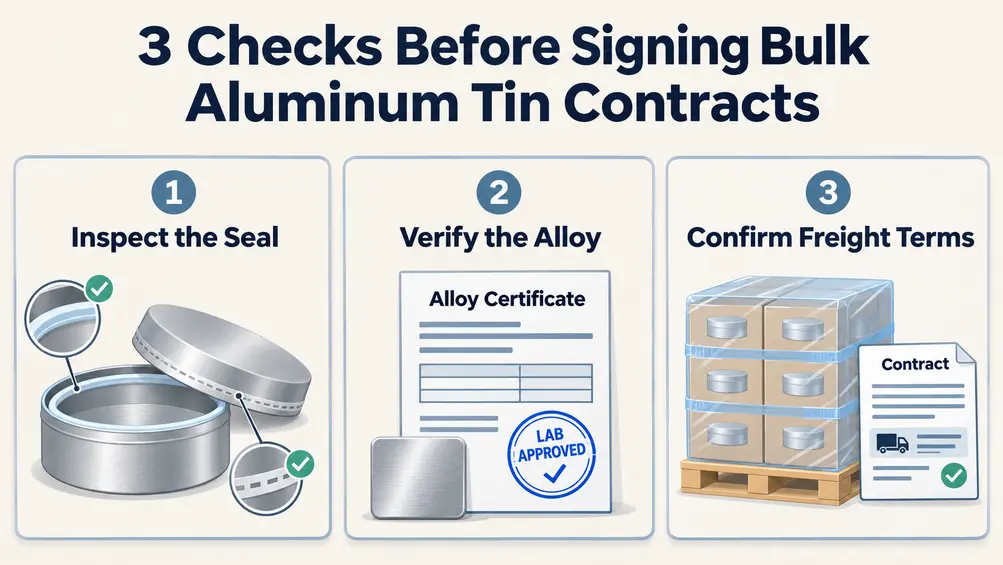
Signing for aluminum tins with lids bulk shouldn’t feel like a coin flip. Three quick checks — the seal, the alloy paperwork, the freight terms — catch most trouble before your money moves. Skip one and the risk rides home with you.
Sample check — sealing rubber gasket and tamper-evident rim
- If the lid uses a gasket, inspect its seating after closure and again after reopening. Agree on acceptance criteria using the proposed liner and fill.
- If the design includes a tamper-evident band, open samples as a customer would and record what visible evidence remains.
- Rim and wall
Inspect for dents at the mating surfaces. Where resistance to leakage under differential pressure matters, agree on a suitable test for the assembled pack. ASTM D4991 covers empty rigid containers and has limits for seals that the test fluid may damage.
Validating corrosion-resistant alloy certificates
Paperwork is where quiet losses hide on tin containers in bulk. Ask for a mill test report naming the material grade and temper, not just “aluminum.” Then match the numbers yourself:
- Match the grade and temper to the purchase drawing.
- Match the report’s lot identifier to the delivered material.
- If the finish is anodized, request its thickness report separately.
Ask the supplier which tests cover the finished container and which cover only the starting sheet.
Bulk freight containment and pallet stacking clauses
- Pallet build
- Pallet configuration: layer count, interlock pattern, corner boards
- Use compression tests on shipping containers or complete unit loads to evaluate a proposed stack.
- Wrap and protect
- Agree on a wrap pattern for the loaded pallet and check that the cases stay in position.
- Edge protectors wherever a strap bites
- Who eats the loss
- Put a transportation damage threshold in writing
- Record the delivery term and named place so both parties know where transit risk transfers.
- Ask where warehouse storage happens — dock, rack, or open yard
Vague freight terms on aluminum tins with lids bulk are how buyers end up paying for somebody else’s forklift.
For sample development, start with the drawing, fill and closure requirements. Once the order quantity and delivery point are set, send FANXUN the specification and ask which material and lid combination it can quote.
References
- Food Types & Conditions of Use for Food Contact Substances — FDA
- Determining the Regulatory Status of Components of a Food Contact Material — FDA
- Guidance for Industry: Preparation of Premarket Submissions for Food Contact Substances (Chemistry Recommendations) — FDA
- ASTM B244-09(2021) — Measurement of Thickness of Anodic Coatings — ASTM International
- Determine Total Export Price — International Trade Administration
- Common Export Documents — International Trade Administration
- Packing List — International Trade Administration
- ASTM D4991-25 — Leakage Testing of Empty Rigid Containers by Vacuum Method — ASTM International
- ASTM D642-25 — Determining Compressive Resistance of Shipping Containers, Components, and Unit Loads — ASTM International
- Know Your Incoterms — International Trade Administration