
 English
 العربية
 Bosanski jezik
 Čeština
 Dansk
Dansk Nederlands
 Wikang Filipino
 Suomi
Suomi Français
 Deutsch
 Magyar
 Íslenska
 Bahasa Indonesia
 Italiano
 日本語
日本語 한국어
한국어 Bahasa Melayu
 Polski
 Português
 Русский
 Cрпски језик
 Español
 ภาษาไทย
 Türkçe
 Tiếng Việt
Choosing the right tin of paint for OEM work isn’t just grabbing a can off the shelf—it’s more like picking the right engine for a cross‑country haul. One weak seal, one off‑spec liner, and suddenly your production line is coughing like an old pickup in January.
The global paints and coatings market topped $179.9 billion in 2023 (Grand View Research), which means competition is fierce and mistakes are pricey. A flimsy tin can wreck finish quality, trigger compliance headaches, or stall bulk shipments when deadlines are breathing down your neck.
So before you sign that purchase order, it pays to know what’s really inside—and outside—the can.
4 Factors to Evaluate OEM Paint Tin Quality
Choosing the right tin of paint isn’t just about color on a shelf. A solid tin, a reliable paint tin, and a well-formulated coating inside all matter. From a single tin of paint for home touch-ups to bulk tins of paint for factories, quality shows up in performance, finish, and staying power. Brands like FANXUN focus on getting every paint tin right—inside and out.

Industrial coating vs. specialty enamel: Choosing the right paint type
When selecting a tin of paint, start by matching use case with formulation:
- Application needs
- Industrial settings
- Heavy-duty industrial coating for steel beams or machinery
- Strong durability requirements and abrasion tolerance
- Decorative or detailed work
- Smooth specialty enamel for furniture or fixtures
- Fine finish with precise paint formulation
- Industrial settings
- Material focus
- Metal surfaces
- Check substrate compatibility to avoid peeling
- Wood or composite
- Flexible resin systems that adapt to movement
- Metal surfaces
- Performance factors
- Long-term exposure
- Specific application method like spray or brush
A smart pick means the tin of paint actually works for the job, not against it.
Assessing pigment dispersion and resin binder for optimal performance
Inside every paint tin, chemistry decides the outcome.
- Core composition
- Pigment dispersion
- Even particle spread
- Stable color consistency
- Resin binder
- Strong adhesion properties
- Durable film integrity
- Pigment dispersion
- Performance balance
- Controlled viscosity for smooth brushing
- Reliable chemical resistance in harsh settings
- Quick checks:
- Stir the tin of paint—look for uniform texture
- Apply a test patch
- Watch drying and bonding behavior
FANXUN maintains tight control over dispersion and binder ratios, so each tin of paint delivers steady coverage without weird streaks.
Nozzle design and canister pressure: Ensuring reliable application
For spray-based paint tins and pressurized options, mechanics matter as much as formula.
- Dispensing system
- Nozzle design
- Balanced spray pattern
- Clean atomization quality
- Canister pressure
- Stable flow rate
- Even application consistency
- Nozzle design
- User-focused tweaks:
- Comfortable grip
- Smooth trigger action
- Reduced hand fatigue
If the paint can’t exit properly, even a premium tin of paint feels like a headache.
Extreme temperature resistance and corrosion protection: Matching the environment
Environmental stress separates average paint from dependable coating.
- Climate stress
- High heat
- Verified temperature resistance
- Cold cycles
- Crack prevention
- High heat
- Surface defense
- Moisture exposure
- Strong corrosion protection
- Long-term substrate protection
- Sunlight
- Proven UV stability
- Solid weatherability
- Moisture exposure
- Chemical contact
- Oils or solvents
- Enhanced chemical resistance
A well-built tin of paint should handle real-world pressure. With FANXUN, the focus stays on durability, so that single tin of paint—or a full batch of tins of paint—keeps surfaces protected for the long haul.
Unclear Specs? How to Read Tin of Paint Labels
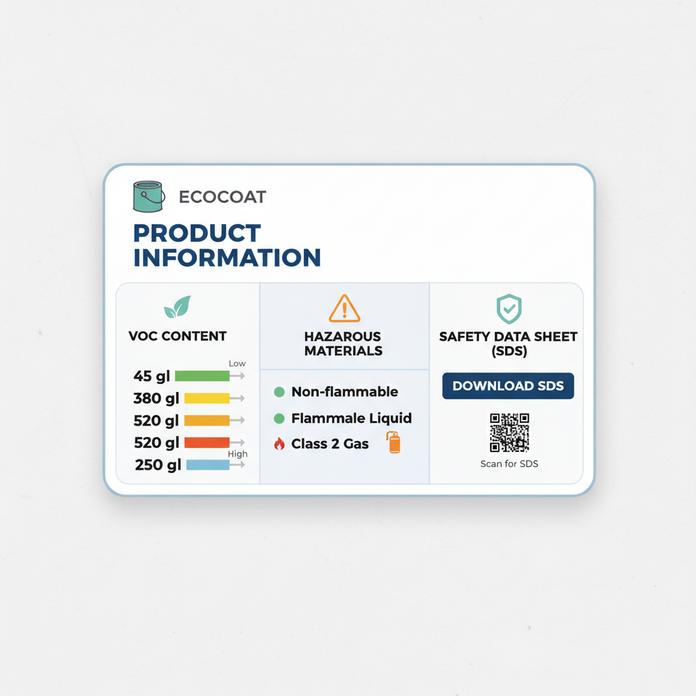
A tin of paint looks simple on the shelf, yet the label is packed with codes, numbers, and safety hints. If you handle a paint tin, spray can, or coating canister, reading it right keeps projects smooth and compliant.
Understanding VOC content limits and hazardous material classifications
When picking up a tin of paint, start with the numbers that matter. VOC content affects Environmental impact, indoor air quality, and even jobsite approval. Lower values usually mean fewer Health risks, but always compare against Regulatory limits.
| Product Type | VOC Content (g/L) | Regulatory Limits (g/L) | Hazardous Materials Classification |
|---|---|---|---|
| Water-based coating | 45 | 100 | Non-flammable |
| Solvent-based paint | 380 | 400 | Flammable Liquid |
| Aerosol tin of paint | 520 | 600 | Class 2 Gas |
| Industrial coating | 250 | 350 | Flammable Liquid |
Key checks on a paint tin:
- Confirm Hazardous materials label for transport.
- Match Classification with storage rules.
- Review local Safety regulations before bulk shipping.
A reliable brand like FANXUN prints VOC thresholds clearly on every tin of paint, helping buyers avoid compliance headaches.
Decoding safety data sheets and environmental standards
Reading a Safety Data Sheet (SDS) linked to a tin of paint feels technical, yet it follows a clear logic:
- Chemical composition
- Base resin
- Solvent ratio
- Additive package
- Handling precautions
- Ventilation needs
- PPE guidance
- Spill response
- Disposal guidelines
- Waste category
- Recycling notes
- Local reporting rules
- Regulatory compliance
- Listed standards
- Regional environmental caps
- Product stewardship commitments
For any tin of paint or paint can, align SDS data with current Environmental standards to avoid fines and rejected shipments.
Identifying propellant blend, valve actuator, and internal lining details
Not every tin of paint is brushed on; aerosol versions rely on a Propellant blend and precise Valve actuator design. If the propellant mix clashes with the formula, pressure drops and spray gets patchy.
Check these points on the coating can:
- Internal lining material and corrosion resistance
- Canister material strength under rated pressure
- Dispensing mechanism compatibility
- Coating compatibility to protect Product integrity
A well-built tin of paint keeps formula stable from factory fill to final spray. That small print on the paint tin? It’s doing serious work.
Steel vs. Aluminum: Tin of Paint Packaging Showdown
Picking the right tin of paint isn’t just about color on a wall. The can itself matters. From shipping weight to shelf life, your paint tin choice shapes cost, safety, and brand vibe.

Steel
Steel remains the old-school hero for a tin of paint, especially in industrial supply chains where pressure, stacking, and rough handling are daily business.
- Core Performance Factors1.1 Structural Capacity
- High Strength keeps each tin of paint stable under stacking loads.
- Strong Durability reduces dent risk during transport.
1.2 Barrier Protection
- With proper lining, Corrosion resistance protects the paint in tin from reacting with metal.
- Excellent seal integrity supports long storage cycles.
- Cost and Logistics2.1 Production Scale
- Cost-effectiveness shines in large-volume runs.
- Efficient forming processes support mass output of uniform paint tins.
2.2 Weight Consideration
- Heavier Weight adds shipping cost, yet improves shelf stability.
- Sustainability Profile3.1 End-of-Life Value
- High Recyclability keeps steel in circular systems.
3.2 Brand Fit
- FANXUN steel solutions balance industrial strength with consistent quality control, ideal for bulk tin of paint distribution.
For heavy-duty coatings and solvent-based formulas, steel simply feels solid in hand. That solid feel builds trust.
Aluminum
Aluminum flips the script. A tin of paint made from aluminum is lighter, sleek, and often chosen for retail-facing or specialty coatings.
- Physical Advantages1.1 Reduced Mass
- Lightweight design cuts freight cost per paint tin.
- Easier handling for DIY users carrying a tin of paint home.
1.2 Shock Handling
- Strong Impact resistance despite thinner walls.
- Material Behavior2.1 Natural Protection
- Inherent Corrosion resistance without heavy coatings.
2.2 Shaping Flexibility
- Excellent Formability supports seamless bodies and custom lids.
- Market Appeal3.1 Visual Edge
- Clean metallic finish boosts Aesthetics for premium paint in tin lines.
3.2 Eco Messaging
- High Sustainability value in recycling streams.
3.3 Brand Collaboration
- FANXUN aluminum packaging works well for custom color collections and boutique tin of paint launches.
If shelf appeal and freight savings matter most, aluminum earns attention fast.
Large-Batch Production: Streamline Paint Tin Sourcing
Scaling up production of a tin of paint is not just about pouring more liquid into a paint tin. It’s about syncing machines, people, and planning so every tin of paint, every can of paint, and every paint can rolls out steady and safe.
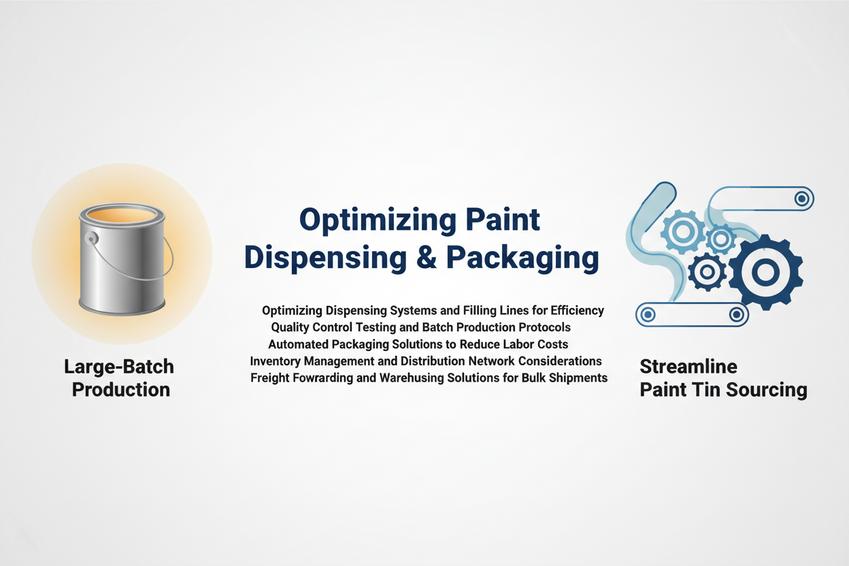
Optimizing dispensing systems and filling lines for efficiency
- Dispensing equipment and filling machinery alignment
- Calibration routines
- Adjust dispensing equipment daily to stabilize material flow into each tin of paint.
- Fine-tune nozzle pressure to reduce splash and solvent loss.
- Valve timing control
- Sync actuators with line speed to prevent overfill in a paint tin.
- Monitor drip intervals to protect lid sealing quality.
- Calibration routines
- Process automation for higher production throughput
- Sensor integration
- Install weight sensors to verify each tin of paint meets fill targets.
- Link alerts to central dashboards for fast correction.
- Conveyor optimization
- Balance production throughput with steady operational efficiency.
- Prevent bottlenecks that slow down paint can output.
- Sensor integration
Quality control testing and batch production protocols
- Quality assurance framework
- Raw inputs
- Conduct raw material inspection before blending pigments for a tin of paint.
- Log supplier data for traceability.
- In-process checks
- Follow strict testing procedures for viscosity and color accuracy.
- Maintain batch consistency across every paint tin run.
- Raw inputs
- Standard operating procedures
- Documentation
- Apply clear standard operating procedures for mixing and filling.
- Record deviations affecting finished product analysis.
- Trace systems
- Enable digital traceability from raw mix to sealed tin of paint.
- Documentation
Automated packaging solutions to reduce labor costs
- Packaging automation flow
- Primary packing
- Use labeling systems to mark each tin of paint clearly.
- Seal lids through automated sealing machines.
- Secondary packing
- Deploy case erectors to prepare cartons for stacked paint cans.
- Integrate robotic packaging arms for pallet loads.
- Primary packing
- Efficiency gains and labor reduction
- Workforce shift
- Reassign staff from manual taping to monitoring packaging automation dashboards.
- Consistency control
- Reduce rework on damaged paint tins through stable machine cycles.
- Workforce shift
Inventory management and distribution network considerations
- Stock planning structure
- Demand signals
- Base demand forecasting on regional sales of tin of paint lines.
- Track seasonal spikes in exterior paint can demand.
- Warehouse layout
- Design warehouse layout for smooth forklift access to bulk paint tins.
- Rotate stock to improve inventory turnover.
- Demand signals
- Supply chain optimization
- Channel mapping
- Align distribution channels with contractor-heavy regions.
- Logistics planning
- Coordinate logistics planning to avoid surplus tin of paint storage.
- Channel mapping
Freight forwarding and warehousing solutions for bulk shipments
- Freight services coordination
- Carrier selection
- Compare transportation modes for large paint can consignments.
- Partner with trusted freight services teams.
- Border handling
- Prepare paperwork for smooth customs clearance of bulk tin of paint shipments.
- Carrier selection
- Warehousing facilities management
- Bulk storage controls
- Maintain temperature-stable bulk storage zones for every tin of paint.
- Inspect stacking limits to prevent dented paint tins.
- Supply chain partners
- Align with reliable supply chain partners to secure flexible warehousing facilities during peak runs.
- Bulk storage controls
FAQs about Tin Of Paint
What determines the right industrial coating or enamel type for OEM tin of paint orders?
Choosing the correct tin of paint starts with matching product chemistry to real‑world stress.
Substrate & use intensity
- Heavy machinery → industrial coating with strong abrasion resistance
- Decorative metal → specialty enamel for gloss retention
- Outdoor fixtures → high-performance lacquer with UV stability
Environment exposure
- Corrosive sites demand corrosion protection and chemical inertness
- High humidity areas require balanced resin binder and additive package
Production scale
- Stable batch production ensures consistent pigment dispersion
- Quality control testing confirms durability before mass filling line runs
The right formula protects reputation as much as it protects metal.
How can buyers confirm pigment dispersion quality before bulk production?
Color inconsistency can quietly destroy a launch. Smart buyers verify performance early through layered checks:
- Review pigment dispersion under lab lighting for streaks or sediment.
- Test resin binder strength against the solvent mixture to prevent separation.
- Measure viscosity modifier balance to ensure smooth flow through the dispensing system.
- Conduct small batch production trials before scaling to automated packaging.
Clear lab reports, repeatable quality control testing, and stable spray output from the valve actuator signal that the tin of paint is ready for volume.
Why does nozzle design influence large-scale aerosol performance?
A single design flaw in nozzle geometry can turn a strong formula into a weak finish.
• Nozzle design shapes spray pattern and film thickness.
• Valve actuator calibration stabilizes flow rate.
• Propellant blend maintains steady canister pressure.
• Internal lining protects the solvent mixture from metal reaction.
When these elements align, the dispensing system delivers even coverage with minimal overspray—critical for industrial coating and custom color formulation projects.
What should procurement teams check on a tin of paint label before shipment?
Compliance mistakes are costly and public. A careful label review protects both shipment and brand.
| Check Point | Why It Matters |
|---|---|
| VOC content limits | Meets environmental standards |
| Hazardous material classification | Required for transportation regulations |
| Safety data sheet reference | Guides safe handling in warehousing solutions |
| Internal lining specification | Confirms chemical inertness |
Clear documentation reduces delays in freight forwarding and keeps the distribution network moving without interruption.
How do steel cans compare with aluminum alternatives in OEM sourcing?
Material choice shapes durability, cost, and logistics strategy.
- Steel tins
- Higher strength under elevated canister pressure
- Cost-efficient for bulk shipment
- Suitable for industrial coating and protective sealant lines
- Aluminum tins
- Lightweight for easier inventory management
- Natural corrosion protection
- Popular for specialty enamel and custom color formulation
Both options can achieve extreme temperature resistance when paired with the right internal lining and additive package. The better choice depends on transport distance, storage conditions, and target application environment.
References
- Paints and Coatings Market – grandviewresearch.com / Grand View Research
- Industrial coating – wikipedia.org / Wikipedia
- Pigment – wikipedia.org / Wikipedia
- Binder (material) – wikipedia.org / Wikipedia
- Viscosity – wikipedia.org / Wikipedia
- Volatile Organic Compounds’ Impact on Indoor Air Quality – epa.gov / EPA
- UN Environment Programme – unep.org / UNEP
- Safety data sheet – wikipedia.org / Wikipedia
- ISO 14001 Environmental management – iso.org / ISO
- Corrosion – wikipedia.org / Wikipedia
- Recycle – epa.gov / EPA
- Demand Forecasting – investopedia.com / Investopedia
- Basic Importing and Exporting – cbp.gov / CBP



