
 English
 العربية
 Bosanski jezik
 Čeština
 Dansk
Dansk Nederlands
 Wikang Filipino
 Suomi
Suomi Français
 Deutsch
 Magyar
 Íslenska
 Bahasa Indonesia
 Italiano
 日本語
日本語 한국어
한국어 Bahasa Melayu
 Polski
 Português
 Русский
 Cрпски језик
 Español
 ภาษาไทย
 Türkçe
 Tiếng Việt
Choosing spray can manufacturers feels like picking a drummer for your band: off‑beat and the whole song wobbles. Costs creep, valves hiss, regulators glare, and your brand eats the blame—at scale, fast, today.
I’ve watched buyers learn this the hard way—rushed picks turn into recalls and sleepless nights. This guide pulls you toward partners who hit tempo, pass audits, and ship on time, so the curtain rises on the real show. No fluff—clear moves that stick, for American teams now.
Types Of Spray Can Manufacturers
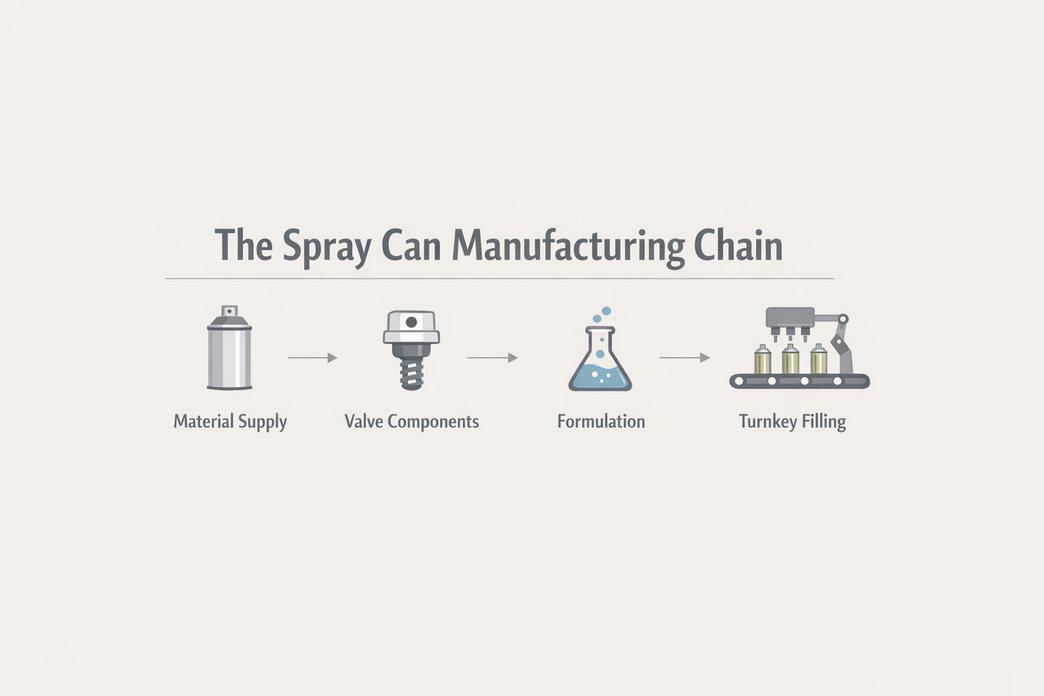
Spray can manufacturers sit at the heart of modern packaging, turning simple metal or plastic into high-performance aerosol systems. From raw can suppliers to full aerosol filling plants, each player in the spray, can, and manufacturers chain handles a different job. Knowing who does what saves time, money, and stress.
Aerosol Container Materials Suppliers
When people talk about spray can manufacturers, many forget the upstream pros who shape the container itself. These suppliers focus on material science and structural design.
- Material Selection
- Aluminum: lightweight, corrosion-resistant, easy to recycle.
- Steel and tinplate: high strength, cost-friendly for mass runs.
- Glass and Plastic: niche uses for specialty sprays.
- Surface Engineering
- Internal Coating and Lining prevent chemical reactions.
- External Lamination improves branding and scratch resistance.
- Production Flow
- Coil preparation
- Deep drawing and shaping
- Necking and trimming
- Internal coating cure
- Pressure testing
For spray can manufacturers, container integrity sets the tone. A weak wall or poor lining can ruin an entire batch of aerosol cans.
Valve and Actuator Component Producers
Inside every spray can sits a precise system of Valves, Actuators, and Dip Tubes. This is where performance gets real.
- Core Components
- Nozzles control spray angle and droplet size.
- Springs regulate pressure response.
- Gaskets seal against leaks.
- Buttons improve user comfort.
Production logic often runs like this:
- Polymer molding of actuators
- Spring calibration
- Valve crimp testing
- Flow-rate verification
According to Smithers’ 2025 aerosol packaging outlook, demand for high-precision valves is rising with personal care and pharma growth. That’s why experienced spray can manufacturers invest heavily in micro-tolerance tooling. Reliable aerosol can producers know a tiny mismatch in a gasket can mess up the whole spray pattern.
Propellant and Formulation Houses
Beyond the hardware, chemistry drives results. These houses blend Propellants, Solvents, and Active Ingredients into stable Formulation systems.
Key working layers include:
- Gas systems: LPG blends, nitrogen, CO2
- Liquid bases: water or solvent
- Functional Additives for stability
Typical development path:
- Raw Chemicals screening
- Compatibility checks with can lining
- Pressure curve testing
- Stability trials of final Mixtures
Spray can manufacturers rely on these partners to balance safety and spray feel. A smart formula reduces clogging, keeps pressure steady, and meets global rules.
Full-Service Turnkey Packaging Plants
Some spray can manufacturers handle it all. From empty can to pallet shipment, the process stays under one roof.
Integrated Operations
- Filling lines calibrated by product type
- Capping and valve crimping
- Surface Printing and Labeling
- Final Assembly
- In-line Quality Control
- End-stage Logistics
Workflow usually moves through:
- Incoming material inspection
- Automated filling and propellant charging
- Leak detection bath
- Batch coding
- Carton Packaging Solutions and dispatch
Grand View Research noted in a 2025 packaging update that turnkey aerosol plants are gaining traction as brands cut supplier layers to control costs and quality. That’s where companies like aerosol can manufacturer step in, offering coordinated packaging solutions that simplify life for global clients working with spray can manufacturers.
In short, from material suppliers to aerosol filling experts, every link in the spray can manufacturers chain matters. Choose wisely, and the product just works.
The Real Cost Of Aerosol Production

Spray can manufacturers face cost pressure from metal prices to gas filling and testing rules. If you compare spray, can, and manufacturers across regions, the numbers shift fast and margins get tight.
Raw Material Sourcing and Alloy Costs
For spray can manufacturers, metal is the budget anchor. Costs break down like this:
- Core Metals
- Aluminum
- Price linked to LME trends
- Recycled ratio affects sustainability score
- Steel
- Heavier, often lower base cost
- Needs stronger coating materials
- Aluminum
- Surface Protection
- Internal lacquers for corrosion control
- External pigments for branding
- Specialty metal alloys for high-pressure cans
- Commercial Factors
- Long-term supplier agreements
- Freight and energy surcharges
- Volume tiers from spray can manufacturers
| Material | Avg Cost/टन (USD) | Recycled % | Corrosion Rating | Freight Impact % |
|---|---|---|---|---|
| Aluminum 1070 | 2,450 | 35 | High | 8 |
| Aluminum 3003 | 2,620 | 42 | Very High | 9 |
| Tinplate Steel | 980 | 25 | Medium | 6 |
| ECCS Steel | 1,050 | 30 | Medium-High | 7 |
| Custom Alloy Mix | 2,900 | 50 | Very High | 10 |
Brands like FANXUN work closely with aerosol can manufacturers to balance price swings with performance targets.
Tooling, Deep Drawing, and Necking Expenses
Custom mold design sets the tone. A narrow shoulder or sleek profile means higher die manufacturing cost and tighter press operations control.
In many spray can factories, metal forming runs at high speed. That demands durable production machinery and constant tool maintenance. If tolerances drift during stamping processes, scrap rates climb.
For spray can manufacturers chasing custom shapes, the upfront tooling bill can feel heavy. Yet over large volumes, the cost per can drops fast. That’s why partners like FANXUN often recommend balancing design flair with manufacturing efficiency.
Propellants, Formulations, and Gas Charges
Gas filling costs follow a clear path:
- Select propellant
- Hydrocarbons for cost efficiency
- Compressed gases for lower flammability
- Review formula
- Active chemical compounds
- Target product efficacy
- Validate system
- Match with dispensing systems
- Check safety regulations
- Assess environmental impact
Different spray can manufacturers negotiate bulk LPG or nitrogen contracts. Small changes in blend ratios can shift filling speed and total gas usage, which hits unit economics directly.
Quality Control, Testing, and Certification Fees
Compliance spending protects both brand and user.
- Product Safety
- Leak detection systems
- Burst and pressure trials
- Ongoing batch testing
- Performance
- Spray pattern performance evaluation
- Valve endurance checks
- Coating adhesion tests for product integrity
- Documentation
- Audit trails for regulatory compliance
- Alignment with industry standards
- Detailed documentation requirements for export markets
Reliable spray can manufacturers treat testing as a core investment, not a side cost. That mindset keeps rejection rates low and helps partners like FANXUN stay trusted among global spray can manufacturers and aerosol packaging suppliers alike.
5 Factors To Vet Spray Can Manufacturers
Choosing the right spray can manufacturers isn’t just a sourcing task; it’s about protecting your formula, brand image, and delivery timeline. From material quality to print finish, reliable spray can, manufacturing, and aerosol can manufacturers must tick technical and operational boxes. Here’s how smart buyers narrow it down.

Material Certification and Corrosion Resistance
When reviewing spray can manufacturers, check material depth:
- Material Standards & Composition
- Verified material standards
- Documented material composition
- Approved metal alloys
- Certification & Compliance
- Recognized certification bodies
- Traceable mill certificates
- Durability & Resistance
- Accelerated corrosion testing
- Proven environmental resistance
- Stable coating integrity
Reliable aerosol can suppliers reduce contamination risks and extend shelf life.
Leak Testing and Pressure Resistance Protocols
Strong spray can manufacturing depends on tight controls:
- Leak Detection Methods
- Automated leak detection methods
- Inline quality control
- Pressure Validation
- Verified pressure testing
- Documented burst pressure
- Seal & Valve Performance
- Tested seal integrity
- Stable valve performance
- Compliance with safety standards
Top spray can manufacturers protect product containment under real-world stress.
Inventory Management and Just-In-Time Delivery
Operational strength matters as much as metal quality.
- Stock & Planning
- Balanced stock levels
- Predictable lead times
- Smart production scheduling
- Logistics & Warehousing
- Efficient warehouse management
- Accurate order fulfillment
- Reliable delivery reliability
FANXUN supports supply chain efficiency so your filling line never sits idle. Serious spray can manufacturers understand that timing equals money.
Custom Tooling, Graphic Design, and Prototyping
Brand impact starts with shape and print.
- Tooling & Form Development
- Precision mold creation
- Engineered die casting
- Custom can dimensions
- Design Workflow
- Professional label design
- Fast artwork approval
- Iterative design iteration
- Validation
- Rapid sample production
- Early-stage form development
Experienced spray can manufacturers help brands stand out without slowing launch cycles.
Coating Application, Printing, and Finish Options
Looks matter, but compatibility matters more.
- Internal Protection
- Food-grade internal coatings
- Verified lacquer types
- Exterior Performance
- Durable external coatings
- Advanced printing techniques
- Accurate color matching
- Surface & Longevity
- Premium surface finishes
- Controlled varnish application
- Tested UV resistance
FANXUN combines aesthetics and function, proving why leading spray can manufacturers stay ahead in today’s competitive can manufacturing market.
Are Your Spray Cans FDA-Compliant?

Picking the right spray can manufacturers is not just about price or speed. It’s about safety, paperwork, and keeping your product off regulatory hot water. From coatings to valves, every tiny part matters. If your aerosol brand works with professional spray can manufacturers, compliance becomes smoother, cleaner, and honestly, way less stressful.
Regulatory Compliance for Food-Contact Materials
When food or pharma products sit inside aerosol packaging, FDA regulations are not optional.
- Core compliance focus:
- Food contact materials must pass migration limits.
- Internal coatings must meet manufacturing standards.
- Full compliance testing documentation is required.
- Verified material safety declarations from suppliers.
For experienced spray can manufacturers, compliance usually breaks down like this:
- Raw Material Control
- Resin suppliers provide certification.
- Coating vendors submit extraction data.
- Production Oversight
- Batch traceability systems
- Scheduled audit reviews
- Final Validation
- Migration simulation tests
- Stability storage checks
“Global regulators are tightening scrutiny on food-contact packaging, particularly for chemical migration and coating integrity,” notes Smithers in its 2025 packaging compliance outlook.
Reliable aerosol can manufacturers like FANXUN align internal audits with FDA updates, helping brands avoid recall nightmares. Smart spray can manufacturers treat regulatory review as routine, not a last-minute scramble.
Ensuring Gaskets, Dip Tubes, and Valves Meet Standards
Small parts. Big risk.
Professional spray can manufacturers evaluate:
- Gasket materials for swelling resistance
- Dip tube components for chemical compatibility
- Valve specifications under pressure cycles
Compliance usually follows a layered check:
- Material Qualification
- Confirm food grade certification
- Review elastomer compatibility charts
- Mechanical Testing
- Pressure endurance
- Repeated actuation cycles
- Chemical Stability
- Solvent exposure tests
- Long-term storage simulation
Under propellant pressure, weak component integrity leads to leakage or contamination. Top spray can makers build validation reports into ISO 9001 quality systems. That’s how leading tin can manufacturers protect brand owners from messy claims.
FANXUN works with certified material partners so every valve system lines up with regulatory expectations, not guesswork.
Water-Based Formulations and Safe Propellants
Regulators like simple chemistry. So do consumers.
- Shift toward water-based aerosols
- Reduced VOC burden
- Easier regulatory approval
Responsible spray can manufacturers guide brands through:
- Formula Assessment
- Verify non-toxic formulations
- Review preservative limits
- Propellant Selection
- Nitrogen
- CO₂
- Low-impact blends
- Supply Chain Review
- Traceable ingredient sourcing
- Updated compliance files
Using safer propellants cuts flammability risks and eases warehouse rules. Many aerosol can manufacturers now prioritize these systems to align with environmental goals.
Good spray can manufacturers don’t just fill cans. They help shape safer formulas from day one.
Labeling Solutions and Safety Standards Adherence
Regulatory trouble often starts on the label.
Key checkpoints include:
- Accurate product labeling
- Updated safety data sheets
- Clear hazard communication
- Correct regulatory labeling
- Visible compliance marking
Structured approach used by leading spray can manufacturers:
- Data Collection
- Ingredient disclosure
- Hazard classification review
- Artwork Verification
- Cross-check with SDS
- Market-specific symbol updates
- Final Compliance Audit
- Legal review
- Print approval sign-off
Aerosol can manufacturers that manage labeling internally reduce mismatch errors. Trusted spray can manufacturers keep regulatory teams in the loop before production even starts.
At the end of the day, choosing the right spray can manufacturers means fewer surprises, smoother approvals, and products that actually stay on shelves.
OEM Vs. Private Label Spray Cans

Choosing between OEM and private label isn’t just business talk—it shapes cost, speed, and control. Many brands work closely with spray can manufacturers to decide what truly fits their market goals.
OEM Spray Cans
OEM projects suit brands that want full control and tight alignment with experienced spray can manufacturers.
- Manufacturing Process
- Custom mold development
- Tailored valve systems
- Specific internal coating selection
- Dedicated filling lines coordinated with professional spray can manufacturers
- Process validation for pressure resistance and durability
- Custom mold development
- Technical Specifications
- Precise Technical Specifications
- Can height, diameter, wall thickness
- Propellant compatibility
- Advanced Material Sourcing
- Tinplate grade
- Aluminum purity levels
- Precise Technical Specifications
- Quality & Capacity
- Structured Quality Control
- Burst testing
- Leak detection
- Reserved Production Capacity for large-volume contracts
- Structured Quality Control
- Customization Options
- Deep Customization Options
- Exclusive finishes
- Proprietary actuator design
- Deep Customization Options
Brands working with aerosol can manufacturers like FANXUN often go OEM to lock in product identity and long-term differentiation.
Private Label Spray Cans
Private label fits companies that want speed and scale from established spray can manufacturers.
- Product Formulation
- Ready-made Product Formulation
- Tested compatibility with standard valves
- Packaging & Compliance
- Flexible Packaging Design
- Built-in Regulatory Compliance support
- Market Execution
- Streamlined Distribution Channels
- Light Marketing Support
- Retail-focused Brand Identity setup
Private label programs from spray can manufacturers reduce tooling costs and shorten launch cycles. FANXUN supports both models, helping brands pick what actually works instead of what just sounds good.
FAQs
What should buyers examine when choosing spray can manufacturers?
Choosing the right partner can decide the fate of a product line. Key checkpoints include:
- Aerosol container materials: aluminum aerosol cans, tin aerosol cans, steel, or plastic—each affects weight, corrosion resistance, and brand feel.
- Manufacturing processes: deep drawing, two-piece can production, three-piece can assembly, necking, flanging, and coating application.
- Quality control: leak testing, pressure resistance validation, material certification, and proof of regulatory compliance.
- Valve systems: metering valves or continuous valves, paired with aerosol valve accessories, spray caps, dip tubes, and gaskets that match the formulation.
- Supply reliability: stable raw material sourcing, inventory management, and just-in-time delivery.
A missed detail in any of these areas can lead to recalls, leakage, or costly delays.
How do materials and propellants impact performance and safety?
Performance lives at the intersection of container strength and internal chemistry.
| Factor | Key Options | Impact |
|---|---|---|
| Container Material | Aluminum, steel, tinplate, recycled content | Affects pressure resistance, recyclability, freight cost |
| Propellant | Hydrocarbons, LPG, nitrogen, CO2, compressed gases | Controls spray force, flammability, safety standards |
| Formulation | Water-based formulations or solvent-based | Influences corrosion resistance and coating compatibility |
For food or sensitive chemical use, manufacturers often pair FDA-aligned coating application with nitrogen or CO2 systems to reduce risk. Poor matching of propellant and can material can cause swelling, leakage, or internal rust—problems that surface fast in the market.
What customization and OEM services do spray can manufacturers offer?
Strong brands rarely settle for stock packaging. OEM programs often include:
- Customization of tooling and shape for shelf impact.
- Graphic design services, advanced printing, and finish options.
- Labeling solutions and prototyping before mass production.
- Integration of metering valves, actuators, and dip tubes tailored to spray pattern needs.
- Bulk packaging, freight forwarding, and warehousing support.
Behind the scenes, precise deep drawing, coating control, and disciplined leak testing protect that visual appeal. The result is not just a can—but a controlled delivery system built for performance and identity.
References
- London Metal Exchange (LME) – lme.com
- Smithers Global Packaging – smithers.com
- ISO 9001 Quality Management – iso.org
- Occupational Safety and Health Administration (OSHA) – osha.gov
- Environmental Protection Agency (EPA) – epa.gov
- Can Makers UK – canmakers.co.uk
- British Aerosol Manufacturers’ Association (BAMA) – bama.co.uk
- ScienceDirect Engineering Materials – sciencedirect.com
- U.S. Food and Drug Administration (FDA) – fda.gov
- International Organization for Standardization – iso.org
- Grand View Research – grandviewresearch.com
- European Aerosol Federation (FEA) – aerosol.org



