
 Polski
 English
 العربية
 Bosanski jezik
 Čeština
 Dansk
Dansk Nederlands
 Wikang Filipino
 Suomi
Suomi Français
 Deutsch
 Magyar
 Íslenska
 Bahasa Indonesia
 Italiano
 日本語
日本語 한국어
한국어 Bahasa Melayu
 Português
 Русский
 Cрпски језик
 Español
 ภาษาไทย
 Türkçe
 Tiếng Việt
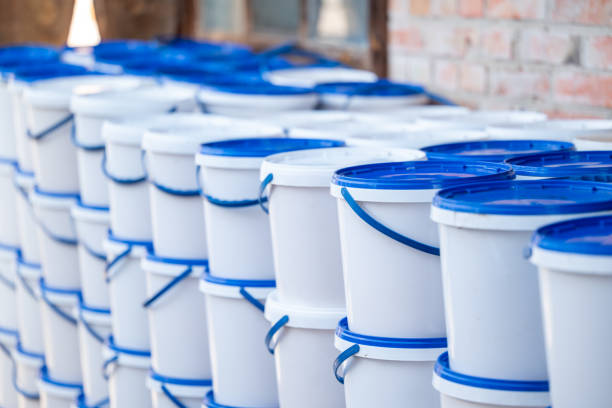
Przyłapałeś się kiedyś na wpatrywaniu się w stertę ściółki, gleba, lub żwir, w ręku niezawodne 5-litrowe wiadro, zastanawianie się, “Ile ich będę potrzebować, aby wypełnić metr sześcienny?” A może zamawiasz materiały i próbujesz wyobrazić sobie, jak faktycznie wygląda metr sześcienny w kontekście znanych wiader. Jeśli jesteś podobny do mnie, you want a straightforward answer and some practical advice to get your project done right. Let’s dive in and figure this out together!
Ile 5-galonów jest na podwórku sześciennym?
Dobra, let’s get straight to the point. Mathematically speaking:
- 1 Galon amerykański wynosi około 0.133681 stóp sześciennych.
- Więc, a 5-gallon bucket holds approximately 5 X 0.133681 = 0.668405 stóp sześciennych.
- A cubic yard is 3 feet x 3 feet x 3 stopy, which equals 27 stóp sześciennych.
Teraz, for the calculation: Number of 5-gallon buckets in a cubic yard = (Volume of a cubic yard) / (Volume of a 5-gallon bucket) Number of 5-gallon buckets = 27 stóp sześciennych / 0.668405 cubic feet/bucket Number of 5-gallon buckets
Więc, theoretically, you would need około 40.4 seven 5-gallon buckets to make up one cubic yard.
For practical purposes, you’ll often see this rounded. You might need slightly more or fewer depending on how you fill the buckets and the material itself.
Breaking It Down:
It can be a bit mind-boggling to switch between gallons, stóp sześciennych, and cubic yards. Here’s a simple way to think about it:
- Imagine a Cube: A cubic yard is literally a cube shape that is 1 yard long, 1 yard wide, I 1 yard high. Od 1 yard equals 3 stopy, this cube is also 3 feet x 3 feet x 3 stopy.
- Rozmiar wiadra: Your standard 5-gallon bucket is a much smaller unit of volume.
The key is converting everything to a common unit, like cubic feet, before doing the final calculation.
Why you need to know this?
Knowing this conversion is super handy for a variety of DIY and professional projects:
- Ogrodnictwo: Buying topsoil, kompost, or mulch? These are often sold by the cubic yard. If you don’t have a truck, you might be transporting it in 5-gallon buckets.
- Landscaping: Moving gravel for a pathway, sand for a paver base, or decorative stones? Ponownie, cubic yards are the standard measurement.
- Budowa: Mixing concrete? Small batches are often measured out using buckets. Knowing the conversion helps you figure out how many bags of concrete mix you might need if a supplier tells you the yield in cubic yards.
- Debris Removal: Clearing out soil, rocks, or other heavy debris? Estimating the volume in buckets can help you understand how much you’re dealing with.
Na przykład, if I’m planning to add a 2-inch layer of mulch to my 10 ft x 15 ft garden bed:
- Area =
- Depth = 2 inches =
- Volume needed =
- Od 1 cubic yard = 27 stóp sześciennych, I need just under 1 cubic yard.
- In 5-gallon buckets: . Więc, Przyjrzałbym się z grubsza 37-38 wiadra ściółki na potrzeby tego projektu.
Ważne uwagi: Poza czystą matematyką
Chwila 40.4 to matematyczna odpowiedź, scenariusze ze świata rzeczywistego mają kilka zmiennych:
- Rzeczywista objętość łyżki: Czy twoje wiadro naprawdę 5 galony? Niektóre wiadra mogą być nieco mniejsze lub większe. Sprawdź oznaczenia.
- Poziom napełnienia: Czy napełniasz wiadra idealnie poziomo?, lub są spiętrzone? Usypywanie będzie oznaczać mniej wiader na metr sześcienny, podczas gdy niedopełnienie będzie oznaczać więcej. Do materiałów takich jak ściółka, możesz je zebrać. Na coś takiego jak piasek lub żwir, prawdopodobnie wypełnisz je bliżej brzegów.
- Zagęszczenie materiału:
- Luźne materiały jak ściółka lub suche liście ulegną kompresji. Może się przydasz “więcej” materiału do metra sześciennego, niż sugeruje sama objętość łyżki, ponieważ osiada.
- Gęste materiały jak żwir lub mokry piasek nie ubijają się tak bardzo. The bucket calculation will be more accurate.
- Soil: Soil can vary greatly. Luźny, fluffy topsoil will act differently than dense, wet clay.
- Spillage and Inefficiency: Bądźmy szczerzy, some material gets spilled! It’s wise to factor in a little extra, mowić 5-10%, to account for this. You’ll also lose a tiny bit of space between packed buckets if you’re trying to stack them into a cubic yard shape (though this is less relevant when just using them for transport).
- Material Swell/Shrinkage: Some materials, like concrete, have a different volume when wet (mixed) versus dry. The number of buckets of dry ingredients won’t directly translate to the same number of buckets of wet, cured concrete that fills a cubic yard. Always refer to the manufacturer’s instructions for concrete.
Given these factors, for practical planning, it’s often a good idea to round up. If the math says 40.4 wiadra, thinking in terms of 40 Do 42 buckets is a safe range.
Często zadawane pytania: Odpowiedzi na Twoje pytania
Q1: How many 5-gallon buckets of concrete are in a cubic yard? This is a common one! Ready-mix concrete is sold by the cubic yard. If you’re mixing it yourself from bags, jakiś 80 lb bag of concrete mix typically yields about 0.6 metrów sześciennych betonu.
- Cubic yard = 27 stóp sześciennych.
- Number of 80lb bags = 27 z ft / 0.6 cu ft/bag = 45 mnóstwo. If you were to przenosić one cubic yard of mixed concrete into 5-gallon buckets (which hold approx 0.668 z ft):
- Number of buckets = 27 z ft / 0.668 cu ft/bucket wiadra. Jednakże, it’s more practical to think about the dry ingredients or the yield of bags.
Q2: How many 5-gallon buckets for a yard of soil or mulch? For soil or mulch, due to potential compaction and how you fill the buckets (often heaped for mulch), you might find the 40.4 number is a good starting point, but be prepared for slight variations. If I’m buying a cubic yard of mulch, I expect to fill around 40-41 buckets if I’m careful, maybe slightly fewer if I really heap them.
Q3: Does the type of material drastically change the number of buckets? . tom calculation (40.4 wiadra) doesn’t change based on the material because a cubic yard is a measure of volume, and so is a 5-gallon bucket. Jednakże, . waga per bucket will change dramatically (NP., a bucket of feathers vs. a bucket of rocks), and how the material settles or compacts w the cubic yard or w the bucket can lead to needing slightly more or fewer bucket trips to move what is effectively a cubic yard of material.
Q4: What if my buckets aren’t exactly 5 galony? If your buckets are a different size, you’ll need to adjust the calculation.
- Znajdź objętość swojego wiadra w galonach.
- Zamień to na stopy sześcienne (pomnóż galony przez 0.133681).
- Dzielić 27 (stopa sześcienna na jard sześcienny) według objętości wiadra w stopach sześciennych. Przykład: Na 3-litrowe wiadro:
- 3 galony * 0.133681 stopa sześcienna/galon stóp sześciennych na wiadro.
- 27 z ft / 0.401 cu ft/bucket wiadra.
Q5: Czy lepiej kupować materiały na worki czy na metry sześcienne?? To zależy od potrzebnej ilości.
- Małe projekty: Torby są wygodne.
- Duże projekty: Kupowanie na metry sześcienne (cielsko) jest prawie zawsze bardziej opłacalne. Znajomość konwersji łyżek może pomóc w zarządzaniu dostawami masowymi, jeśli zajdzie potrzeba przeniesienia ich z punktu zrzutu do docelowej lokalizacji.
Ostateczne myśli:
Zrozumienie, ile 5-galonowych wiader znajduje się w jardzie sześciennym – mniej więcej 40.4 – pozwala efektywniej planować projekty, niezależnie od tego, czy jesteś zapalonym ogrodnikiem, miłośnik majsterkowania, lub podjąć się drobnej pracy budowlanej. Zawsze pamiętaj, aby wziąć pod uwagę rodzaj materiału, jak napełniasz wiadra, i może dodać mały margines błędu.
A jeśli chodzi o pozyskiwanie wiader, jakość ma znaczenie. Trwałe i niezawodne kontenery spełniające wszystkie potrzeby projektowe, czy to do miksowania, ciągnięcie, lub przechowywanie, rozważ zaufanego dostawcę. FANXUN to światowej klasy producent i dostawca puszek i wiader, oferujący produkty o różnych specyfikacjach i kształtach, upewniając się, że masz odpowiednie narzędzia do pracy.



