 Italiano
 English
 العربية
 Bosanski jezik
 Čeština
 Dansk
 Nederlands
 Wikang Filipino
 Suomi
 Français
 Deutsch
 Magyar
 Íslenska
 Bahasa Indonesia
 日本語
 한국어
 Bahasa Melayu
 Polski
 Português
 Русский
 Cрпски језик
 Español
 ภาษาไทย
 Türkçe
 Tiếng Việt

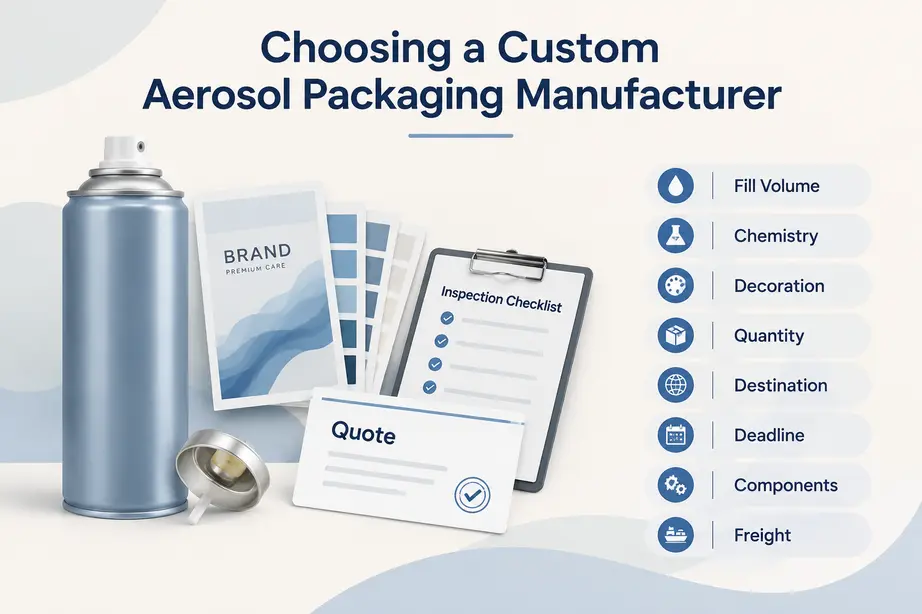
Choose a standard tin for a product that users brush on or pour. For a pressurized spray, start with a stock aerosol can that fits the formulation and filling line. Consider a custom aerosol can when available sizes, valves or decoration cannot meet the brief.
A custom aerosol can isn’t a prettier tin. It’s a metal argument with your fill line, and somebody always loses.
Custom Aerosol Can: Quick Answers Before You Spec
- Gauge and Wall: Specify finished wall thickness and tolerance in the drawing.
- Riempi volume: Allow for liquid expansion at the temperature specified for the package.
- Pressione di scoppio: Use the applicable container test and the pressure of the complete formulation.
- Valve and Gasket: Confirm valve dimensions and gasket compatibility with the formulation.
- Lining Fit: Check whether the formulation needs an internal coating.
- Conformità: Identify the destination and transport mode before selecting the container specification.
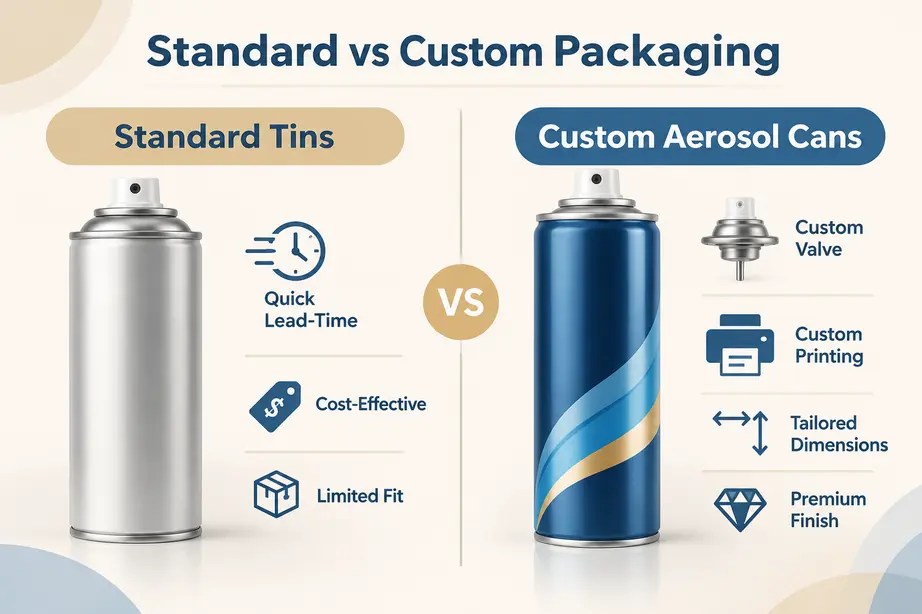
Standard Tins vs Custom Aerosol Cans
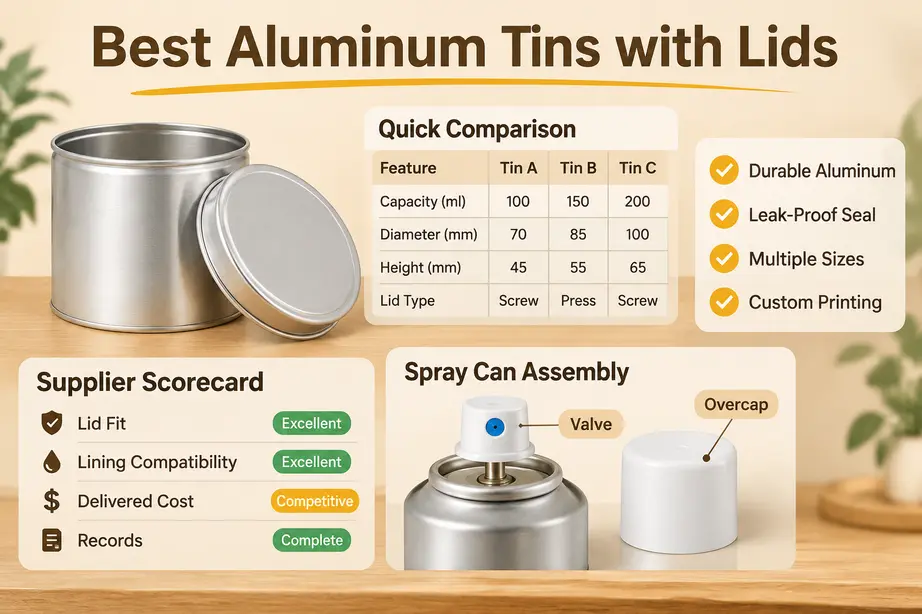
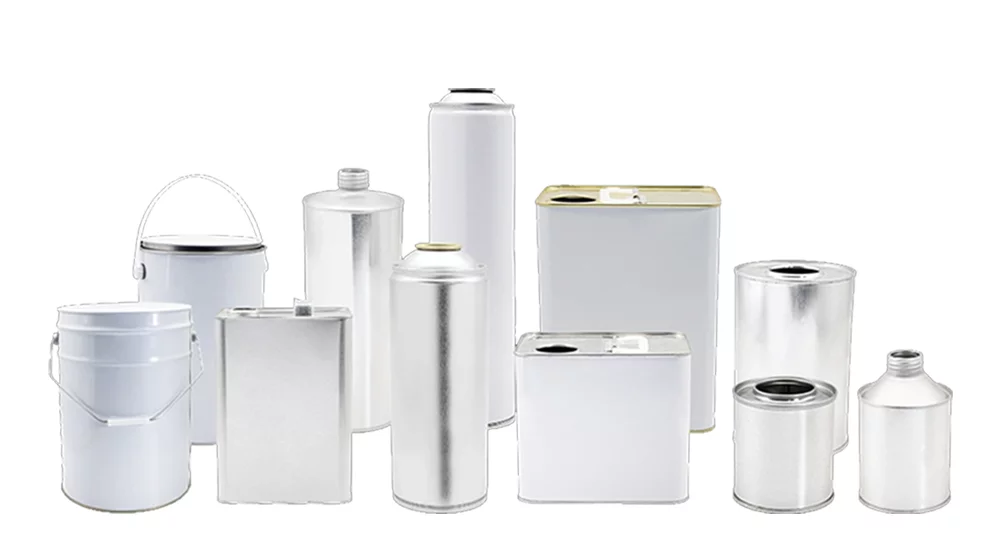
Picking a can sounds simple until fill volume, valvole, and lead times start pulling in different directions. Offerte FANXUN barattoli di vernice for conventional coatings and bombolette spray di latta per prodotti spray. Compare stock and custom options within the appropriate packaging family.
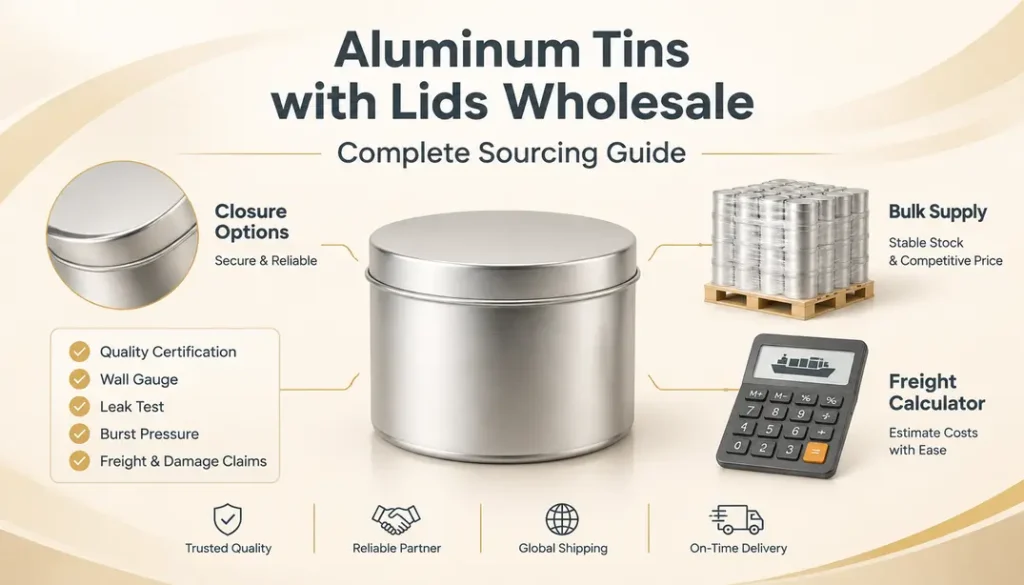
Standard Tins
Stock sizes are the whole appeal. Ask which sizes are available, whether existing tooling can be used and what the delivered price would be for your first run.
The trade-offs show up fast, Anche se:
- Speed and price, SÌ
- confirm lead time and minimum order size
- request the tinplate specification for repeat orders
- Adatta e finisci, not so much
- for a stock aerosol format, check which valvole adatto
- fill volume bends around the can, not the other way round
- spese generali di produzione creeps back in through workarounds
A stock format can suit test batches if it uses the dispensing system planned for production.
Custom Aerosol Cans
Custom work may involve printing on an existing body or changing the body dimensions. Ask which diameter, height and valve combinations are available before budgeting for tooling.
Sicuro, printing expenses E minimum run volumes bite early. Design complexity drags component complexity along for the ride — artwork has to wrap a curved surface, E finitura superficiale choices multiply fast. Spring for finishing options and the can reads as yours, not as catalog stock.
Ask FANXUN to compare an existing format with the proposed custom design. Include the target fill, annual volume and artwork in your enquiry.
Levels of Tinplate Thickness Explained
Thin walls save weight, but a drawing alone cannot establish how the finished can will perform. Rivedi il processo di produzione delle bombolette aerosol alongside the material specification and test records.
Reading Gauge Numbers as Wall Thickness
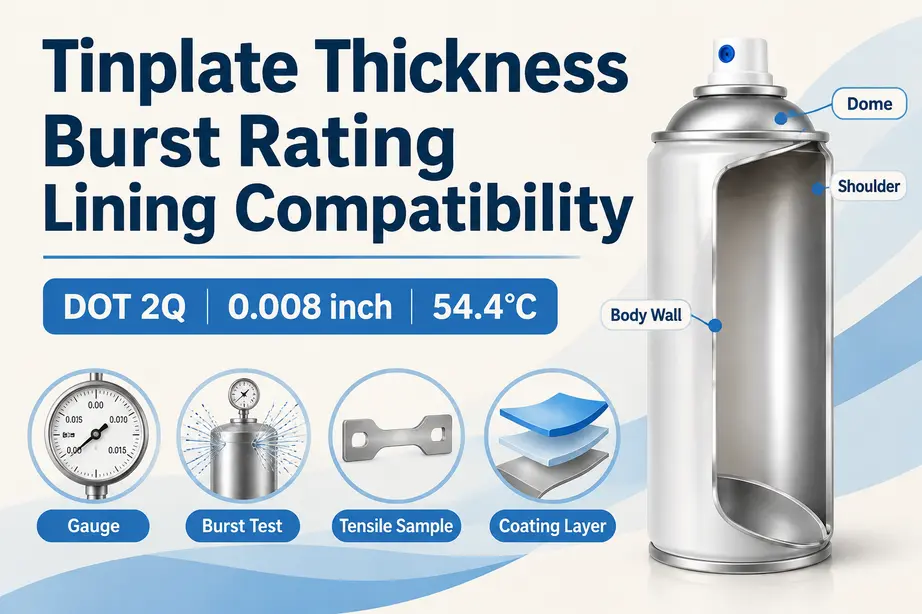
Ask the supplier to identify the measurement points and tolerances on the finished drawing. For a DOT 2Q container, IL spessore minimo della parete È 0.008 pollice. Check how the drawing treats each component:
- Body wall — compare the measured and specified thickness
- Shoulder — identify the formed area on the drawing
- Dome — confirm which pressure-design finisce the specification requires
Compare the body and end specifications separately. Record the units and tolleranza alongside each measurement.
How Much Burst Pressure Does a Lighter Can Hold?
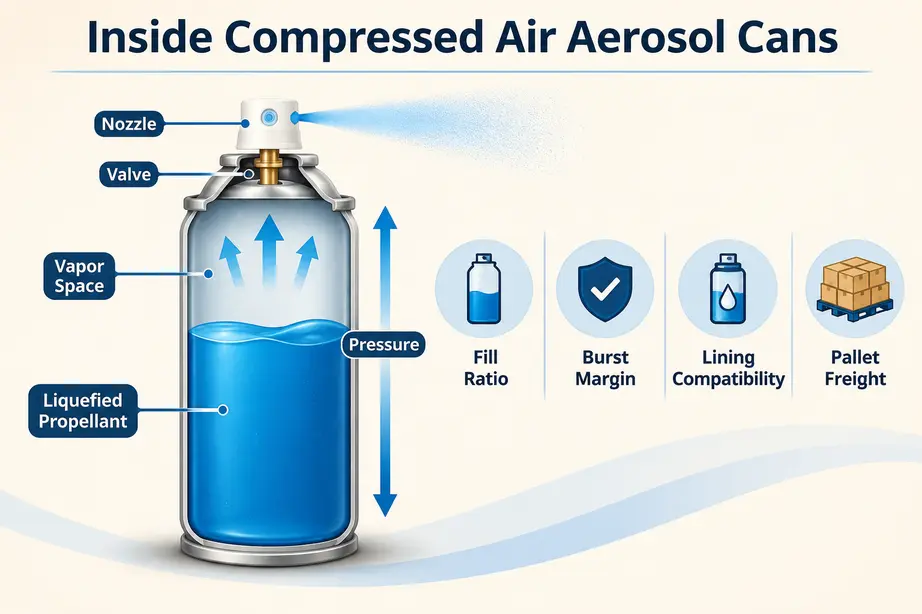
Wall thickness alone does not give a burst rating. Per gli Stati Uniti. limited-quantity metal aerosols under § 173.306(UN)(3), the burst criterion uses the equilibrium pressure of the contents A 54.4 °C. For a DOT 2Q can, request the separate lot test record for the container with its end assembled.
Deep Drawing Limits at Each Grade
For drawn components, confermare allungamento E resistenza alla trazione, set the depth to suit the grade, then trial a small batch before full tooling. For DOT 2Q cans, controlla il requisiti materiali for acceptable plate and injurious defects.
Choosing a Lining for the Formulation
Valutare compatibilità chimica utilizzando la formulazione attuale, exposed metal and any proposed coating. If the supplier proposes an epoxy phenolic lining, ask for results from filled samples made with that lining.
5 Checks Before You Order Custom Aerosol Cans
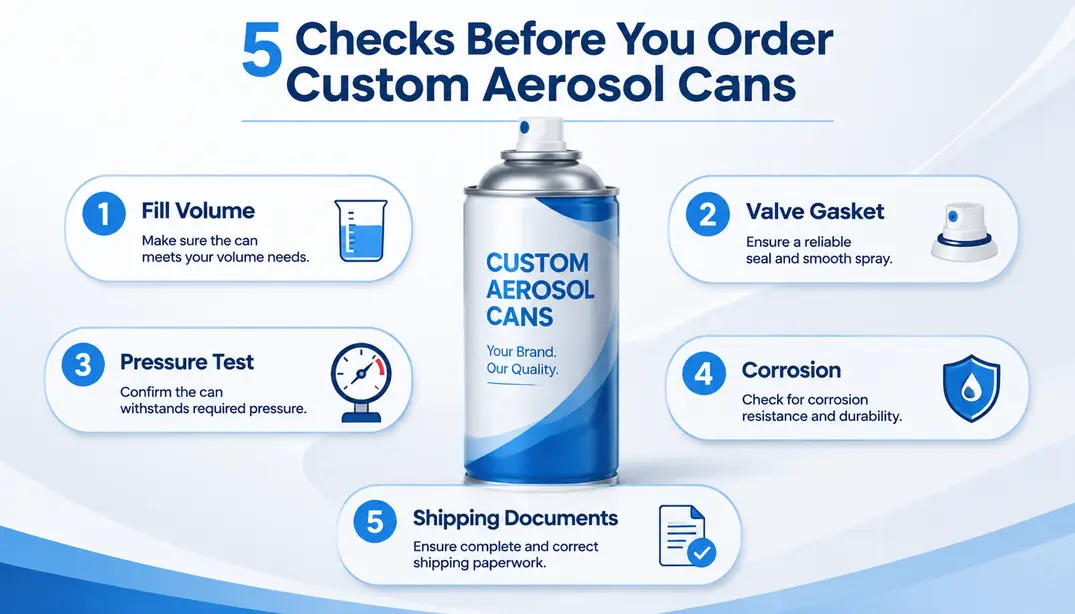
Use these five checks to agree on the specification with the can supplier and filler before you commit volume.
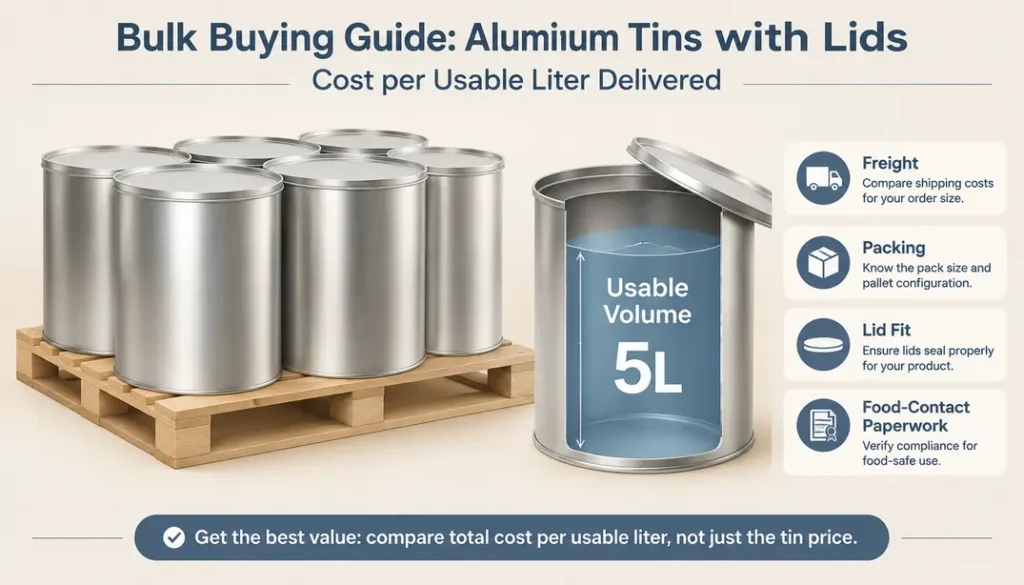
Is Your Fill Volume Matched to the Can Dimensions?
- Riempi il volume has to sit under true capacità di troppopieno
- Under § 173.306(UN)(3), liquid must leave headspace at 54.4 °C
- Include the propellente when assessing the filled package
- Ricontrolla dimensioni della lattina contro il progettazione dell'imballaggio drawings before tooling gets cut
Verify Valve and Gasket Compatibility
Rivedi il valve parameters with the filler and check seal materials against both solvent and propellant. UN buna gasket that swells is a leak waiting to happen.
- Valvola crimp diameter against the can neck
- Elastomero swell test with the intended formulation
- Integrità della tenuta watched at storage temperature
Get this wrong on a custom spray can run and your propellente escapes quietly, one can at a time.
Pressure Testing Before the Production Run
Nobody wants a pressione di scoppio surprise halfway through a ciclo di produzione.
- Agree with the filler on the required filled-container leak test and any permitted alternative
- For the standard U.S. water bath test, IL target internal pressure depends on fill conditions
- Check for leakage and permanent deformazione
- Request separate records for the empty-container lot and the filled production run
Corrosion Inhibitor vs. Product Chemistry
Review the metal, lining and any proposed inibitore della corrosione insieme. Ask which changes in the stored product would indicate a compatibility problem.
- livello di pH drift where relevant to the formulation
- Ossidazione during warehouse storage
- Vero durata di conservazione from a filled sample, non è un'ipotesi
Confirm the Transport Specification and Shipping Documents
Identify the shipping route before requesting marks or paperwork.
- Per gli Stati Uniti. trasporto, identify the proper shipping name and hazard class in the Hazardous Materials Table.
- Controlla il rules for each transport mode. ADR applies to international road carriage on routes within its scope.
- When U.S. shipping papers are required, controlla il shipping description, including the identification number.
Confirm the applicable exceptions with the shipper before releasing the order.
Riferimenti
- 49 CFR § 178.33a-7 – Spessore della parete - Cornell Legal Information Institute
- 49 CFR § 178.33a-6 – Manufacture - Cornell Legal Information Institute
- 49 CFFR§ 173.306 – Quantità limitate di gas compressi - Cornell Legal Information Institute
- 49 CFR § 178.33a-8 – Test - Cornell Legal Information Institute
- 49 CFR § 178.33a-5 – Materiale - Cornell Legal Information Institute
- 49 CFFR§ 173.24 – Requisiti generali per imballaggi e colli - Cornell Legal Information Institute
- Interpretazione 98-0350 - NOI. Dipartimento dei trasporti
- 49 CFFR§ 172.101 – Purpose and use of the hazardous materials table - Cornell Legal Information Institute
- Moving dangerous goods: Rules for different types of transport — GOV.UK
- 49 CFFR§ 172.202 – Description of hazardous material on shipping papers - Cornell Legal Information Institute