
 Italiano
 English
 العربية
 Bosanski jezik
 Čeština
 Dansk
 Nederlands
 Wikang Filipino
 Suomi
 Français
 Deutsch
 Magyar
 Íslenska
 Bahasa Indonesia
 日本語
 한국어
 Bahasa Melayu
 Polski
 Português
 Русский
 Cрпски језик
 Español
 ภาษาไทย
 Türkçe
 Tiếng Việt

L’imballaggio delle lattine in alluminio non è solo uno scambio più ecologico; è una mossa aziendale intelligente che riduce gli sprechi ed elimina i grattacapi del trasporto merci.
Gli acquirenti sentono la pressione dell’aumento dei costi dei materiali e dei controlli di sostenibilità più severi, e l’acciaio o la plastica non reggeranno più quel peso.
L’International Aluminium Institute segnala una crescita sostenuta della domanda di alluminio riciclato in tutto il mondo.
Why Aluminum Can Packaging Leads Sustainability Trends
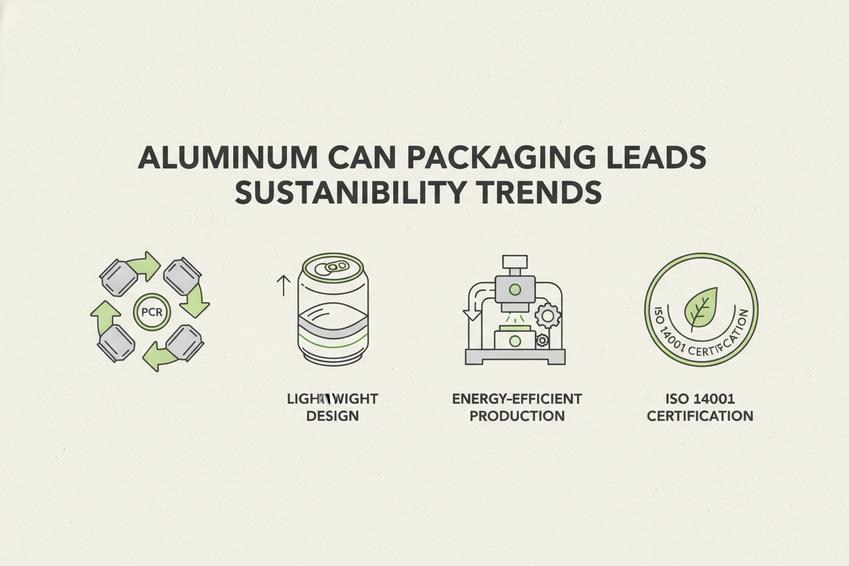
Aluminum can packaging keeps popping up in sustainability talks, e per una buona ragione. From recycled metal to smart energy use, lattina di alluminio, confezione in alluminio, and beverage can systems are reshaping how brands think about waste and carbon footprints.
PCR Aluminum Content and Its Impact on Recyclability Rate
In imballaggio della lattina di alluminio, più alto PCR aluminum content reshapes the sostenibilità math.
- Composizione materiale
- Riciclato post-consumo (PCR) Alluminio
- Reduces demand for alluminio vergine estrazione
- Cuts lifecycle emissions in aluminum packaging production
- Alloy Integrity
- Mantiene alloy performance in monobloc can bodies
- Protegge valutazione della pressione for aerosol and beverage can formats
- Riciclato post-consumo (PCR) Alluminio
- Circular Performance
- Recycling Loop
- Supports closed-loop aluminum can recycling streams
- Preserves metal quality without downcycling
- Protezione della corrosione
- Works with internal coating systems
- Sustains resistenza alla corrosione across shelf life
- Recycling Loop
Brands choosing aluminum can packaging with higher PCR content often see improved recyclability rates while keeping the same can diameter, dome strength, and burst resistance. That balance is what keeps aluminum packaging ahead of other metal packaging options.
Lightweighting Strategies for Reduced Environmental Footprint
Smart lightweighting in imballaggio della lattina di alluminio is not guesswork; it is engineered precision.
- Structural Optimization
- Wall Design
- Aggiustato spessore della parete to trim grams
- Balanced against pressione di scoppio obiettivi
- Base Geometry
- Raffinato base curvature
- Improved load distribution during stacking
- Wall Design
- Convalida delle prestazioni
- Mechanical Testing
- Verified through drop test performance
- Checked under transport vibration
- Controllo della stabilità
- Confermato shelf life stability
- Protected against paneling and deformation
- Mechanical Testing
By reducing material gauge while holding strength, lattina di alluminio, bombolette spray in alluminio, and beverage can formats cut transport emissions. FANXUN applies these lightweighting strategies so aluminum can packaging stays tough but uses less metal. Idea semplice. Grande impatto.
Energy Efficiency in Impact Extrusion and Annealing Processes
Energy use defines the real footprint of imballaggio della lattina di alluminio produzione.
- Impact Extrusion Stage
- Impact extrusion presses
- Optimized stroke control
- Reduced scrap generation
- Material Flow
- Enhanced aluminum flow behavior
- Improved surface finish consistency
- Impact extrusion presses
- Thermal Treatment Stage
- Annealing process
- Controlled temperature profiles
- Lower peak energy demand
- Precisione dimensionale
- Stabile can diameter and height
- Consistent wall structure after forming
- Annealing process
When aluminum packaging lines fine-tune extrusion speed and annealing cycles, consumo energetico drops while throughput stays steady. That means aluminum can packaging delivers lower emissions per unit without sacrificing output. It is efficient, puro e semplice.
Achieving ISO 14001 Sustainable Manufacturing Certification
Sustainability in imballaggio della lattina di alluminio also lives in management systems.
- Environmental Management Framework
- ISO 14001 Implementation
- Defined environmental objectives
- Continuous improvement cycles
- Compliance Monitoring
- Tracked controllo delle emissioni
- Documented legal adherence
- ISO 14001 Implementation
- Operational Controls
- Riduzione dei rifiuti
- Scrap segregation in aluminum can production
- Recycling of washing water
- Energy Oversight
- Monitoring of forni di stagionatura
- Optimization of linee di rivestimento and washing processes
- Riduzione dei rifiuti
With structured environmental management, aluminum can packaging plants move from basic compliance to measurable progress. FANXUN allinea il suo produzione operations with ISO 14001 principi, helping brands trust that their aluminum can choices support real, trackable sustainability goals.
From Steel to Aluminum: A Packaging Evolution
The shift from steel to imballaggio della lattina di alluminio didn’t happen overnight. Brands wanted lighter weight, better corrosion control, and sharper design. That’s where aluminum cans, alloy bodies, and modern can packaging tech stepped in. Oggi, imballaggio della lattina di alluminio shapes how aerosol, bevanda, and personal care products look and perform on shelves.

Material Gauge Comparison: Acciaio contro. Lega di alluminio
Quando si confronta Calibro del materiale, the difference between Acciaio E Lega di alluminio becomes clear through layered evaluation:
- Structural Performance1.1 Pressure Rating
- Steel requires thicker gauge to reach similar burst strength.
- Aluminum alloy maintains pressure stability at reduced wall thickness.
1.2 Impatto sul peso
- Thinner aluminum lowers overall unit mass.
- Più leggero imballaggio della lattina di alluminio cuts transport cost per pallet.
- Manufacturing Efficiency2.1 Formability
- Aluminum alloy supports deeper drawing without fracture.
2.2 Material Yield
- Reduced scrap rate during high-speed forming.
- Commercial Value3.1 Logistics
- Lower shipping emissions.
3.2 Brand Perception
- Lightweight aluminum cans feel modern and clean.
A FANXUN, personalizzazione depth is tuned to balance gauge, forza, e riciclabilità, ensuring aluminum packaging remains competitive against traditional steel formats.
Two-Piece Can Monobloc Construction: Corrosion Resistance Benefits
IL Two-Piece Can Monobloc Construction removes the side seam entirely. That small structural change drives major gains:
- Seam Elimination1.1 Fewer corrosion initiation points.
1.2 Migliorato Internal Lacquer Adhesion coerenza.
- Filling Integrity2.1 Stable structure under Propellant Filling Conditions.
2.2 Reduced micro-leak risk over long storage cycles.
- Long-Term Protection3.1 Better resistance to aggressive formulations.
3.2 Cleaner interior surface for sensitive products.
For brands moving toward premium Aerosol può soluzioni, FANXUN applies strict wall uniformity controls so the monobloc body stays tight, sicuro, e pronto per lo scaffale.
Trattamenti superficiali: Gloss Finish Steel Coating vs. Matte Finish Aluminum
Surface style matters. Con Gloss Finish Steel Coating, production usually requires:
- Thick external base coat
- Multiple curing passes
- Higher coating weight lacquer requirements.
Al contrario, Matte Finish Aluminum supporta:
- Direct ink adhesion on treated aluminum surface
- Embossing compatibility for tactile branding
- Fine-detail graphics without heavy coating build-up
Sotto Trattamenti superficiali, aluminum packaging offers flexibility:
- Matte elegance
- Satin textures
- High-definition branding
Ecco perché imballaggio della lattina di alluminio continues to replace steel in cosmetic and personal care lines. The feel is sharper. The print pops. And with aluminum cans engineered by FANXUN, brands gain both design freedom and functional durability in modern can packaging formats.
5 Steps to Implement Aluminum Packaging in Your Line
Passando a imballaggio della lattina di alluminio isn’t just a materials swap; it reshapes equipment settings, inspection logic, and sourcing habits. When your team handles alluminio, Potere, E confezione as one connected system, production runs smoother. Below is a practical path to bring aluminum can packaging into your line without nasty surprises.

Fare un passo 1: Assess Filling Line Compatibility and Valve Crimping Parameters
When preparing for imballaggio della lattina di alluminio, alignment starts at the filling block.
- Filling Line Review
- Diametro della tazza della valvola
- Neck opening tolerance
- Crimp head profile
- Crimping Parameters
- Bersaglio profondità di crimpatura
- Accettabile compression range
- Seal integrity under pressure
- Integration Check
- Incontro can body alloy with valve material
- Verify torque control on actuator fitment
A tight match between valve crimping parameters and the aluminum can geometry keeps leak rates low and protects your aluminum packaging reputation. Brands often acquire a macchina riempitrice specifically calibrated for these tighter aluminum tolerances.
Fare un passo 2: Optimize Impact Extrusion and Drawing & Ironing Settings
Stabile estrusione ad impatto defines the base of strong aluminum can packaging.
- Extrusion Phase
- Control billet temperature
- Monitor punch speed
- Track wall thinning ratio
- Disegno & Stiro
- Adjust ironing ring clearance
- Confirm wall thickness uniformity
- Inspect internal coating continuity
- Dimensional Stability
- Check trimming height
- Validate flanging angle
Fine-tuning these elements keeps your aluminum cans consistent, reducing scrap and boosting output without pushing machines too hard.
Fare un passo 3: Integrate Quality Inspection Systems for Leak Integrity and Burst Pressure
Quality control in aluminum can packaging lives or dies by measurable data.
- Core Tests
- Pressione di scoppio
- Integrità delle perdite
- Resistenza alle cadute
- Adesione del rivestimento
| Tipo di prova | Valore obiettivo | Sampling Rate | Soglia di fallimento |
|---|---|---|---|
| Pressione di scoppio | ≥18 bar | 1/5,000 lattine | <16 sbarra |
| Prova di tenuta | 0 perdite | 100% inline | Any leak |
| Prova di caduta | 1.2 M | 1/10,000 | Visible crack |
| Grado di adesione | 4B–5B | 1/Lotto | ≤3B |
- Automation Layer
- In linea vision inspection
- Real-time reject sorting
Numbers keep aluminum packaging honest. If the can fails here, it fails on retail shelves.
Fare un passo 4: Standardize Labeling Application and Overcap Seating Automation
L'aspetto conta. So does fit.
- Labeling Application
- Controllare color registration
- Maintain adhesive temperature
- Sync conveyor speed
- Actuator and Overcap
- Convalidare actuator fitment force
- Confirm overcap snap retention
- Test removal torque
- Automation Readiness
- Integrate servo-driven applicators
- Link sensors to PLC alarms
Clean labeling plus steady overcap seating makes aluminum can packaging shelf-ready and retail-safe.
Fare un passo 5: Monitor Supply Chain Integration for Recycled Content Sourcing
Long-term aluminum can packaging success depends on supply stability.
- PCR Aluminum Sourcing
- Verify recycled content percentage
- Controllo material gauge consistency
- Track supplier certification
- Cost and Sustainability Balance
- Compare virgin vs. PCR input pricing
- Monitor scrap return rate
- Market Direction
Lo ha riferito l’International Aluminium Institute 2025 that global recycled aluminum usage in packaging continues to rise, with beverage and aerosol cans leading closed-loop recovery systems.
Staying close to suppliers keeps your aluminum can packaging steady, compiacente, and aligned with circular economy goals.
Overcoming Supply Concerns for Aluminum Can Packaging
Supply worries around imballaggio della lattina di alluminio are real. Price swings, recycled feedstock gaps, and gauge inconsistencies can slow down even the best beverage launch. For brands using aluminum, possono corpi, and metal packaging formats, stability matters. Smart sourcing and tight process control keep imballaggio della lattina di alluminio costante, sicuro, and ready for scale.

Securing PCR Aluminum Supply Chains and Waste Minimization Tactics
To steady PCR aluminum flusso per imballaggio della lattina di alluminio, strong systems beat short-term buying.
- Diversified Sourcing Framework1.1 Regional balance
- Local scrap collectors
- Cross-border secondary aluminum traders
1.2 Supplier tiering
- Primary PCR smelters
- Backup billet converters
1.3 Risk review
- Energy cost exposure
- Policy shifts on recycled aluminum
- Closed-Loop Recycling Integration2.1 In-plant scrap recovery
- Trim loss capture from can body forming
- Re-melting protocols aligned with composizione della lega
2.2 Customer take-back programs
- Branded collection drives
- Partnerships with waste management firms
- Waste Minimization Controls3.1 Process calibration
- Stretto spessore della parete tolerance checks
- Reduced offspec coils
3.2 Tracciamento digitale
- Scrap rate dashboards
- Yield benchmarking across production lines
L'International Aluminium Institute ha osservato nella sua 2025 industry update that recycled aluminum demand for beverage cans continues to outpace collection growth, urging stronger closed-loop systems across regions.
With this mindset, FANXUN supporta soluzioni di imballaggio by aligning PCR sourcing with real production data, keeping aluminum can supply practical, non caotico.
Scaling Automation Readiness to Meet Volume Capacity Demands
Alto volume imballaggio della lattina di alluminio needs machines that keep up without cutting corners.
- Aggiornamento forni di stagionatura to stabilize coating adhesion.
- Aumento inspection throughput using vision systems.
- Calibrare valutazione della pressione tests more often during peak runs.
Here’s how scaling usually rolls out:
- Audit current line speed versus defect rate.
- Add servo-driven bodymakers for smoother can forming.
- Sync real-time monitoring with maintenance alerts.
Short bursts of innovazione aiuto. A faster conveyor here. A smarter rejection system there. When automated can lines talk to each other, aluminum cans move cleaner, with fewer dents and burst failures. Ecco come FANXUN approaches beverage can packaging growth—steady upgrades, nessun dramma.
Building Supplier Partnerships for Consistent Material Gauge Delivery
Stabile calibro del materiale is the backbone of safe imballaggio della lattina di alluminio.
- Technical Alignment with Alloy Suppliers1.1 Shared specification sheets
- Bersaglio gauge tolerance allineare
- Approvato grado di lega lista
1.2 Joint testing routines
- Convalida della pressione di scoppio
- Controlli dell'integrità delle cuciture
- Forecast and Capacity Planning2.1 Rolling demand forecasts for aluminum cans
2.2 Safety stock agreements on coil inventory
- Performance Feedback Loops3.1 Monthly quality reviews
3.2 Root-cause sessions on thickness drift
When suppliers treat can stock like a long-term commitment, not a spot sale, metal packaging stays consistent. For brands betting big on aluminum can packaging, produttore di bombolette spray partnerships—backed by data and straight talk—keep wall thickness stable and shelves stocked.
Will Aluminum Cans Dominate Tomorrow’s Markets?
Aluminum can packaging keeps popping up in drinks, cura personale, and even food aisles. From sustainability buzz to smart manufacturing, aluminum can and can packaging trends are reshaping how brands think about packaging.
Recyclability Rate vs. Traditional Packaging Materials
Nel mondo di materiali di imballaggio, Riciclabalità isn’t just a green buzzword. It drives cost, policy, and brand image. When comparing aluminum can packaging with bicchiere, plastica, acciaio, E cartone, the differences stack up fast.
- Recycling rate performance
- Aluminum can packaging
- Closed-loop system in many regions
- Minimal quality loss after repeated processing
- Plastica
- Downcycling common
- Lower effective tasso di riciclaggio due to sorting loss
- Bicchiere
- High recyclability
- Heavy transport footprint
- Acciaio
- Magnetically recoverable
- Often blended with other alloys
- Aluminum can packaging
- Material durability in reuse cycles
- Lattina di alluminio:
- Melt
- Reform
- Ricarica
- Plastica:
- Sort
- Shred
- Often downgraded into fibers
- Lattina di alluminio:
- Key takeaways
- ♻ Infinite reuse potential gives aluminum can packaging a serious edge.
- Lower contamination risk boosts actual tasso di riciclaggio.
- Circular models are easier to scale.
I marchi piacciono FANXUN align aluminum can solutions with markets demanding measurable Riciclabalità, not just claims.
Environmental Footprint Comparison of Aluminum and PET
When brands compare aluminum can packaging with ANIMALE DOMESTICO, the debate centers on impatto ambientale, impronta di carbonio, E consumo energetico.
1. Lifecycle metrics overview
| Materiale | Media. Contenuto riciclato (%) | Impronta di carbonio (kg CO₂e/1000 units) | Consumo energetico (MJ/1000 units) | Water Usage (m³/1000 units) |
|---|---|---|---|---|
| Alluminio (virgin) | 0 | 950 | 14,000 | 12 |
| Alluminio (70% riciclato) | 70 | 520 | 8,500 | 7 |
| ANIMALE DOMESTICO (virgin) | 0 | 680 | 10,200 | 9 |
| ANIMALE DOMESTICO (30% riciclato) | 30 | 610 | 9,400 | 8 |
Higher recycled content dramatically lowers greenhouse gas emissions and total carbon footprint for aluminum can packaging.
2. Breakdown by impact factor
- Impronta di carbonio
- Alluminio primario: energy intensive
- Alluminio riciclato: fino a 95% energy savings
- Consumo energetico
- PET production stable but fossil-dependent
- Utilizzo dell'acqua
- Aluminum refining water-heavy at virgin stage
3. System-level effect
Under mature collection systems, aluminum can packaging often outperforms PET in full valutazione del ciclo di vita modelli. That’s why many beverage brands are switching back to aluminum can formats for long-term environmental impact goals.
Consumer Preference Trends in Can Diameter and Volume Capacity
Shoppers are picky. Preferenza del consumatore now shapes every bit of può progettare, da diametro A volume and total capacità.
Some clear tendenze del mercato stand out:
- Slim 45–53 mm diameter cans dominate energy drinks.
- Standard 66 mm diameter works for carbonated beverages.
- Larger capacity (500 ml+) signals value.
- Smaller packaging size (150–200 ml) fits sampling culture.
Short and straight:
Ergonomics matter.
Shelf presence matters more.
Shipping efficiency still decides margins.
Brands fine-tune dimensione dell'imballaggio per bilanciare:
- Grip comfort
- Visual height impact
- Pallet density
Aluminum can packaging makes these tweaks easier because wall thickness can adjust without sacrificing strength. That flexibility helps FANXUN support private-label clients experimenting with bold aluminum can packaging formats.
OEM Integration: Propellant Filling and Actuator Fitment Readiness
For aerosol aluminum can packaging, OEM integration goes deeper than aesthetics. It’s about syncing produzione precision with real-world performance.
UN. Production line alignment
- Processo di riempimento
- Pressure calibration
- Rilevamento perdite
- Valve crimp control
- Automazione
- Controlli del peso in linea
- Sistemi di ispezione visiva
- Real-time rejection sorting
B. Component compatibility
- Propellente
- Miscele di idrocarburi
- Compressed gas systems
- Attuatore
- Spray angle tolerance
- Dip tube length matching
- Fitment
- Crimp diameter accuracy
- Seal integrity validation
C. Pressure and safety validation
- Test di scoppio
- Drop testing
- Simulazione dello stoccaggio a lungo termine
An aluminum can built for aerosol use must pass strict BAMA linea di produzione convalida. FANXUN ensures aluminum can packaging integrates smoothly into automated systems, reducing downtime and speeding time-to-market.
In fast-moving categories, aluminum can packaging that’s ready for seamless OEM adaptation isn’t just nice to have. It’s the difference between prototype and shelf-ready success.
FAQ
Why is aluminum can packaging preferred by industrial and chemical OEM buyers?
Aluminum can packaging is chosen for its balance of strength, peso, and line compatibility.
Può costruzione & Protezione
- Aluminum alloy in a two-piece can with monobloc construction
- Internal lacquer and external base coat for high corrosion resistance
- Optimized material gauge to maintain burst pressure without excess weight
Performance Under Pressure
- Stable pressure rating and strong leak integrity
- Reliable valve retention during propellant filling
- Proven drop test results and shelf life stability
Line Integration Confidence
- Compatibilità con la linea di riempimento fluida
- Accurate valve crimping parameters and actuator fitment
- Consistent quality inspection systems for large production runs
The result is a lighter package with dependable safety margins and predictable output on high-speed lines.
Which dimensional and decoration specifications should OEMs verify before integration?
Correct specifications protect both efficiency and brand image.
① Core Dimensions
- Diametro della lattina & può altezza
- Capacità di volume
- Neck opening & valve cup diameter
- Shoulder radius & base curvature
- Tolleranza sullo spessore della parete
② Superficie & Visual Control
| Zona | Key Checkpoints | Perché è importante |
|---|---|---|
| Stampa offset | Color registration | Clean brand presentation |
| Graphic design | Adesione dell'inchiostro | Resistenza ai graffi |
| Finish options | Finitura opaca / Finitura lucida | Posizionamento sul mercato |
| Goffratura | Depth accuracy | Tactile identity |
| Vernice protettiva | Adesione del rivestimento | Durabilità a lungo termine |
Precise alignment between trimming and flanging, labeling application, and overcap seating avoids stoppages and protects appearance at scale.
How does aluminum can packaging support sustainability goals in high-volume production?
Sustainability in aluminum can packaging is practical, misurabile, and tied to process control.
- Livello materiale:PCR aluminum and high recycled content increase recyclability rate and cut environmental footprint. Lightweighting reduces raw material use while maintaining pressure rating.
- Process Level:Estrusione ad impatto, drawing and ironing, and controlled annealing process improve energy efficiency. Washing and drying systems, applicazione del rivestimento interno, and curing ovens are optimized to limit waste and emissions.
- System Level:Automation readiness enhances quality inspection systems, lowers rejection rates, and supports waste minimization aligned with ISO 14001 certificazioni.
Peso inferiore, lower energy, lower waste—without sacrificing corrosion resistance or performance testing standards.
Riferimenti
- Global Recycled Aluminum Demand – Istituto Internazionale dell'Alluminio
- Dati specifici del materiale in alluminio – APE
- Energy Efficiency in Aluminum Recycling – L'Associazione dell'Alluminio
- ISO 14001:2015 Sistemi di gestione ambientale – ISO.org
- Circular Economy for Plastics and Metals – OCSE
- Standard di sicurezza dei contenitori aerosol – BAMA
- Sustainable Packaging Trends 2025 – Istituto dei produttori di lattine
- Aluminum Carbon Footprint Analysis – ScienceDirect
- Industrial Decarbonization in the Aluminum Sector – IEA
- Circular Economy and Resource Efficiency – UNEP
- Global Circularity Gap Report – WBCSD
- Metal Packaging Recyclability Standards – European Aluminium
- World Commodity Outlook: Alluminio – Banca Mondiale



