
 ภาษาไทย
 English
 العربية
 Bosanski jezik
 Čeština
 Dansk
Dansk Nederlands
 Wikang Filipino
 Suomi
Suomi Français
 Deutsch
 Magyar
 Íslenska
 Bahasa Indonesia
 Italiano
 日本語
日本語 한국어
한국어 Bahasa Melayu
 Polski
 Português
 Русский
 Cрпски језик
 Español
 Türkçe
 Tiếng Việt
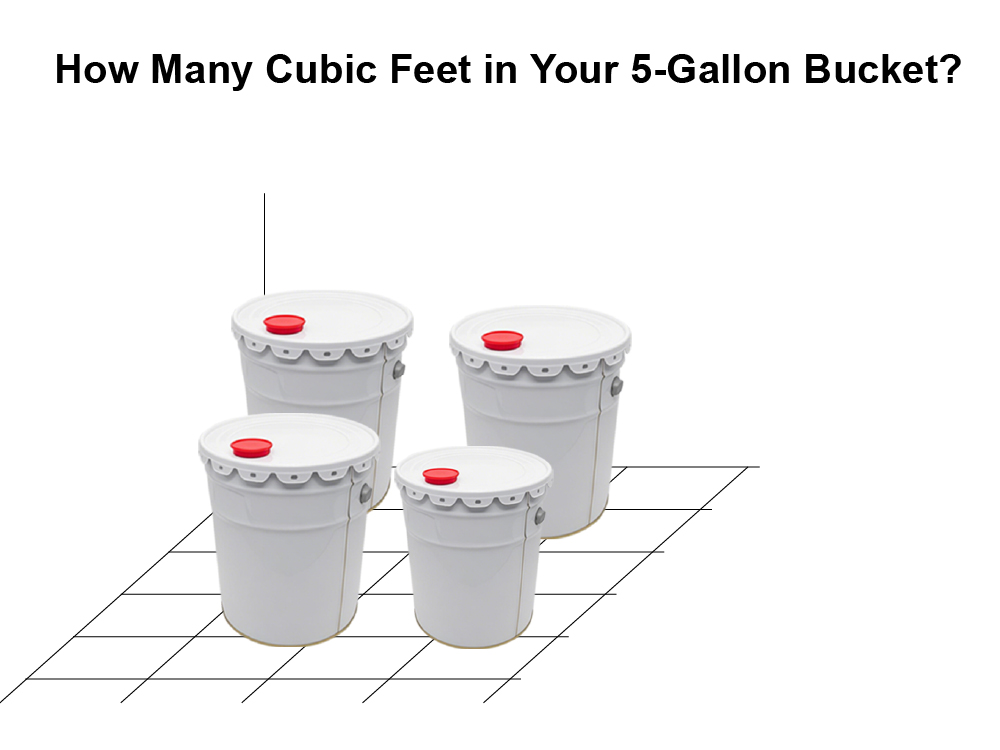
เป็นคำถามที่พบบ่อยว่าคุณเป็นคนสวนที่กระตือรือร้นหรือไม่, ผู้ชื่นชอบ DIY, หรือแค่พยายามหาพื้นที่เก็บข้อมูล: ถังขนาด 5 แกลลอนที่เชื่อถือได้นั้นสามารถบรรจุได้กี่ลูกบาศก์ฟุต? คุณอาจกำลังวางแผนที่จะผสมคอนกรีต, จัดสรรดินสำหรับพืชของคุณ, หรือจัดเก็บวัสดุ, and knowing this conversion can be incredibly handy. Let’s dive in and demystify this for you.
The straightforward answer is:
A 5-gallon bucket holds approximately 0.6684 ลูกบาศก์ฟุต.
But how do we get to that number, และเหตุใดจึงสำคัญ? มาทำลายมันกัน.
Understanding the Units: Gallons vs. Cubic Feet
อันดับแรก, it helps to understand what these units measure.
- แกลลอน (ของเหลวสหรัฐ): This is a unit of volume commonly used for liquids in the United States. When we talk about a 5-gallon bucket, we’re typically referring to the US liquid gallon.
- ลูกบาศก์ฟุต: This is a unit of volume that measures the space occupied by a cube with sides of 1 foot in length. Imagine a box that’s 1 foot wide, 1 foot deep, และ 1 foot tall – that’s one cubic foot.
Why convert between them? บางครั้ง, วัสดุ (like soil, ทราย, หรือกรวด) are sold or measured in cubic feet, while your mixing container is a familiar 5-gallon bucket. Knowing the conversion helps you accurately measure and mix.
The Conversion Explained
The core of the conversion lies in this relationship:
- 1 US liquid gallon = 0.1336805556 ลูกบาศก์ฟุต
To find out how many cubic feet are in a 5-gallon bucket, you simply multiply:
เพื่อวัตถุประสงค์ในทางปฏิบัติมากที่สุด, rounding to 0.6684 ลูกบาศก์ฟุต is perfectly fine. You can also think of it in terms of a fraction: a 5-gallon bucket is precisely ลูกบาศก์ฟุต.
Another way to think about it is that:
- 1 cubic foot 7.48 US liquid gallons
ดังนั้น, if you have a space of 1 cubic foot, you could fit roughly of liquid into it.
การใช้งานจริง: Why This Matters for You
Knowing the cubic footage of your 5-gallon bucket can be useful in various situations:
- การทำสวน:
- ดินปลูก: Bags of potting soil are often sold in cubic feet. If a bag contains 2 cubic feet of soil, you’ll know you can fill approximately three 5-gallon buckets ().
- Amendments: When mixing soil amendments like compost or perlite, you can achieve better ratios.
- DIY & การก่อสร้าง:
- Mixing Concrete or Mortar: Instructions for concrete or mortar often specify ratios by volume or require a certain yield in cubic feet. A 5-gallon bucket is a common tool for measuring water, ทราย, and gravel.
- Estimating Materials: If a project requires a certain number of cubic feet of sand or gravel, you can figure out how many bucketfuls you’ll need.
- Aquatics:
- Small Ponds or Aquariums: While larger volumes are usually just measured in gallons, understanding the spatial volume can be helpful in planning.
- พื้นที่จัดเก็บ & องค์กร:
- Space Calculation: If you’re storing multiple 5-gallon buckets, knowing their cubic footage can help you estimate how much storage space they will occupy.
- Spill Containment & การจัดการของเหลว:
- While the bucket is rated for 5 gallons of liquid, understanding its volume in cubic feet can be relevant in certain industrial or safety contexts.
Quick Conversion Table
Here’s a handy table for common bucket sizes and their approximate cubic foot equivalents:
บันทึก: Values are rounded for simplicity.
Aspects to Consider Before You Measure
While the mathematical conversion is straightforward, here are a few real-world points to keep in mind:
- ปริมาณบัคเก็ตจริง: Not all buckets marketed as “5-แกลลอน” hold exactly 5.000 gallons to the brim. There can be slight variations between manufacturers. Some also have a fill line that might be slightly below the absolute top.
- รูปร่างถัง: Most 5-gallon buckets are tapered (wider at the top than the bottom). The stated volume is typically the maximum liquid capacity.
- แห้งเทียบกับ. Liquid Materials: ที่ ปริมาณ conversion is the same regardless of what’s inside. อย่างไรก็ตาม, how materials settle can differ. เช่น, fluffy potting soil might compact over time, while liquids will fill the space more uniformly. When measuring dry, loose materials, you might not get the exact same “การบรรจุ” as you would with a liquid.
- Accuracy Requirements: For casual gardening, a close estimate is usually sufficient. For tasks requiring precise measurements (like mixing specific chemical ratios), ensure your measurements are as accurate as possible, perhaps using graduated markings if available on your bucket.
- US Gallons vs. Imperial Gallons: The conversion used here () is for US liquid gallons. An Imperial gallon (used in some other countries) is larger (ประมาณ 1.2 แกลลอนสหรัฐฯ). อย่างไรก็ตาม, the standard “5-ถังแกลลอน” in the US refers to US gallons.
คำถามที่พบบ่อย (คำถามที่พบบ่อย)
Q1: What is the exact conversion factor for US gallons to cubic feet? A1: 1 US liquid gallon is precisely ลูกบาศก์ฟุต, which equals 0.1336805555… ลูกบาศก์ฟุต.
Q2: Why would I need to convert gallons to cubic feet? A2: This conversion is common when materials like soil, ทราย, กรวด, or concrete components are sold or specified in cubic feet, but you are using a gallon-denominated container (like a 5-gallon bucket) for measuring or mixing.
Q3: Does the type of material in the bucket change the cubic feet? A3: เลขที่, the volume in cubic feet remains the same. 0.6684 cubic feet is a measure of space. อย่างไรก็ตาม, ที่ น้ำหนัก ของ 5 gallons of different materials will vary significantly (เช่น, 5 gallons of feathers vs. 5 gallons of rocks).
Q4: Are all 5-gallon buckets exactly the same size? A4: While they are designed to hold approximately 5 แกลลอน, there can be slight variations in exact dimensions and total volume from one manufacturer to another. Most are very close for practical purposes.
Q5: How much does a 5-gallon bucket of water weigh? A5: น้ำมีน้ำหนักประมาณ . ดังนั้น, a 5-gallon bucket of water would weigh about , plus the weight of the bucket itself.
Q6: เท่าไหร่ 60 lb bags of concrete mix fit in a 5-gallon bucket? A6: This depends on the density of the concrete mix. A typical 60 lb bag of concrete mix yields about 0.45 ลูกบาศก์ฟุตของคอนกรีต. Since a 5-gallon bucket is about 0.67 ลูกบาศก์ฟุต, you could fit more than one bag’s worth of แห้ง, unmixed powder into a bucket, but you wouldn’t mix that much concrete in a single 5-gallon bucket at once. You usually mix one bag (หรือน้อยกว่า) ครั้งละครั้ง, and the 5-gallon bucket is often used for measuring the water or the dry components if mixing from scratch. A 60lb bag of dry mix itself has a volume; it can often fit into a 5-gallon bucket before water is added, but it would be very full.
สรุปแล้ว
ดังนั้น, the next time you grab your 5-gallon bucket for a project, you’ll know it represents about 0.6684 ลูกบาศก์ฟุต of usable space. This simple conversion can make planning your tasks, purchasing materials, and achieving the right mixes much easier and more accurate. Whether you’re nurturing your garden or building something new, understanding these volumes helps you work smarter.
If you’re in need of high-quality buckets for any project, ฟานซุน is a world-class bucket manufacturer and supplier. They can provide products in a wide array of different specifications, วัสดุ, and shapes to meet your specific requirements, ensuring you have the right container for any task.



