
 Português
 English
 العربية
 Bosanski jezik
 Čeština
 Dansk
Dansk Nederlands
 Wikang Filipino
 Suomi
Suomi Français
 Deutsch
 Magyar
 Íslenska
 Bahasa Indonesia
 Italiano
 日本語
日本語 한국어
한국어 Bahasa Melayu
 Polski
 Русский
 Cрпски језик
 Español
 ภาษาไทย
 Türkçe
 Tiếng Việt
Tin can lids look small, but when one fails, shipments leak, products spoil, and costs pile up fast. Para compradores em massa, that “tiny” component quietly decides shelf life, segurança, e confiança do cliente.
Procurement teams juggle fit, tolerância à pressão, Revestimentos, and line compatibility, all while keeping costs in check. Escolha errado, and returns, tempo de inatividade, and compliance headaches show up uninvited.
According to FANXUN engineers in their 2025 packaging brief, consistent sealing performance and tolerance control remain the top failure points in high-volume aerosol systems, directly impacting transport safety and regulatory outcomes.
Respostas rápidas: The Harmony of tin can lids
➔ Choose the right seal: match seaming curl, polymer liners or gasket designs for leak prevention and pressure resistance.
➔ Pick compatible coatings: lacquer or epoxy + polymer liners boost corrosion protection and propellant compatibility.
➔ Mind your size: common neck diameters (45, 52, 65, 70 milímetros) align with application needs from personal care to industrial sprays.
➔ Ensure quality: perform 100% testes de vedação on-line, maintain ISO/FDA/SGS compliance, and verify gasket elasticity for safe resealing.
85% Of Buyers Prefer Resealable Tin Can Lids
Aviso rápido: shoppers keep coming back to resealable options because they’re cleaner, mais seguro, and just easier day to day. De tin can lids to can tin lids and lids for tin cans, small design tweaks make a big difference.

Enhanced Leak Prevention with Polymer Liners
- Thin coatings matter:
- polymer liners add a tight barrier
- melhorar prevenção de vazamentos sob pressão
- melhorou propriedades de barreira for shelf life
Breves períodos de uso, long-term payoff. A good liner supports tecnologia de vedação that keeps propellant in and moisture out, então tin can lids don’t sweat or corrode.
- Apply liner evenly
- Cure for adhesion
- Test for selo hermético
You’ll notice fewer drips, less odor loss, e mais forte segurança alimentar confidence when the same lid goes on and off. FANXUN tunes liner thickness to match product viscosity, so can lids stay dependable without feeling stiff.
Improved Seal Integrity from Precision Stamping
- What drives integridade do selo:
- ultra-tight tolerances from precision stamping
- consistent curl and flange via conformação de metal
- checks in controle de qualidade
For lids tin can systems, tiny geometry shifts can break an fechamento hermético. FANXUN mantém precisão dimensional tight across batches, so tin lids snap on with a satisfying, repeatable feel.
- Align sheet stock
- Stamp and form
- Inspect edges
- Validate pressure hold
O resultado? Fewer rejects, steadier performance, e tin can lids that behave the same on day one and day one hundred.
Durable Gasket Designs for Repeat Use
- Core pieces:
- durable gaskets
- inteligente material de junta
- cuidadoso otimização de projeto
- How it holds up:
- repeated opening without cracks
- steady rebound for re-seal
- cleaner interface with valves
- Visualização aninhada:
- Gasket system
- Camada de material
- elasticity retention
- resistência química
- Shape profile
- compression zones
- recovery paths
- Interface fit
- actuator contact
- rim alignment
- Camada de material
- Gasket system
With can tin lids used daily, reusability isn’t optional. Construções FANXUN componentes de aerossol lata de aerossol na parte superior e inferior that keep their spring, so lids for tin cans close tight again and again, delivering long-lasting performance across real-life cycles.
Types Of Tin Can Lid Seals Explained
Tin can lids might look simple, but the way a can lid locks, casacos, and seals matters a lot. From food cans to spray cans, small design tweaks shape how tin can lids perform daily.

Seaming Curl Seal
- Core mechanism of tin can lids relies on a tight mechanical bond:
- Formation
- seamer machine rolls the edge into a costura dupla
- lid hook e pode corpo interlock
- Desempenho
- Mantém selo hermético sob pressão
- Reforça mechanical closure estabilidade
- Components in motion
- seaming roller compressas
- interlock prevents leakage
- Formation
Para FANXUN, this approach keeps tin lids and can lids consistent even in high-speed lines.
Lacquer Coating Seal
- Um magro lacquer layer acts like armor
- Applied on internal surface of tinplate
- Melhora adesão e propriedades de barreira
“Protective coatings remain critical for extending shelf stability in packaged goods,” observa um 2025 Relatório de embalagens Smithers.
Short take: cleaner taste, armazenamento mais seguro, better corrosion resistance. That’s why FANXUN uses this method across food-grade tin can lids and metal lids.
Epoxy Coating with Polymer Liner
- Aplicar resina epóxi onto surface
- Adicionar polymer liner como material de junta
- Cure into a flexible seal
- Ensure inércia química and BPA-free safety
This combo works well for aggressive contents, keeping tin can lids reliable over long storage cycles.
Direct Applied Sealant
- Líquido sealant compound flows into lid groove
- Bonds through controlled processo de cura
- Creates soft yet tight hermetic closure
Quick note: flexibilidade + adhesion = fewer leaks. FANXUN leans on this for modern can lid designs where precision matters most.
4 Common Tin Can Lids Sizes
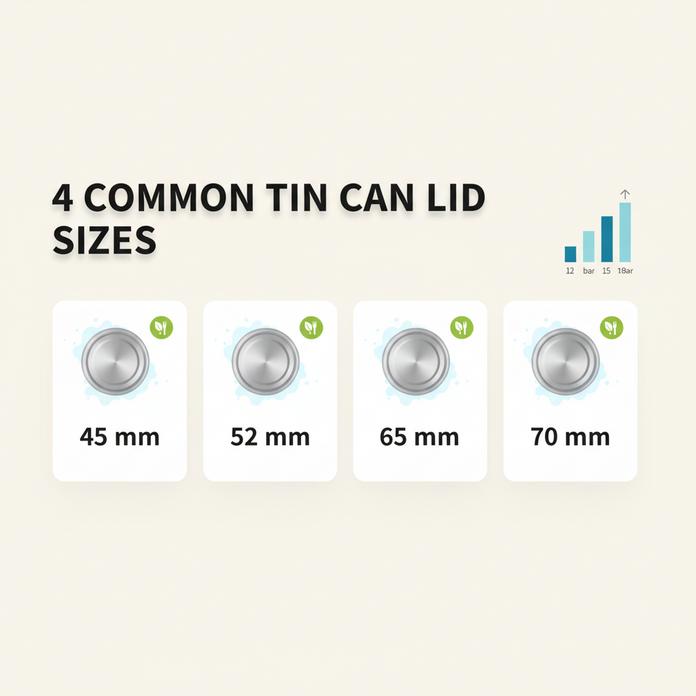
Escolhendo o certo tin can lids isn’t just spec talk—it affects safety, sensação de pulverização, e prazo de validade. De compacto tin lids for cosmetics to heavy-duty tampas de lata for industry, these four sizes keep tin can lids practical and consistent across real-world use.
45 mm Diameter for Personal Care Aerosols
- Fits snug diâmetro standards for cuidados pessoais embalagem
- Funciona com aerossóis usado em cosmético e higiene routines
- Balances pressure and comfort in spray manuseio
Quick breakdown:
- Valve cup alignment stays stable
- Leve latas reduce fatigue
- Fine mist control improves user feel
Com FANXUN, tin can lids in this size keep daily-use sprays smooth and reliable.
52 mm Diameter in Household Sprays
• Mais amplo neck size supports varied doméstico fórmulas
• Designed for sprays em limpeza e doméstico configurações
Você notará:
Rajadas curtas. Clean seals. Less leakage.
Esses tin lids fit trigger systems without fuss, mantendo latas efficient in kitchens or garages.
65 mm Diameter for Industrial Sprays
Data helps here:
| Diâmetro (milímetros) | Pressão de ruptura (bar) | Caso de uso |
|---|---|---|
| 0.30 | 12 | luz industrial sprays |
| 0.35 | 15 | químico manuseio |
| 0.35 | 18 | fabricação heavy-duty |
Steps to match the right tin can lids:
- Check pressure needs
- Corresponder latas material
- Confirm coating resistance
FANXUN keeps consistency across tampas even under tough conditions.
70 mm Diameter for Food-Grade Cans
- Thick profile improves vedação
- Construído para de qualidade alimentar latas e seguro embalagem
Visualização aninhada:
- Safety focus
- Corrosion-resistant coating
- Longo prazo preservação
- Conformidade
- Atende segurança regras
- Stable during transport
Esses tampas de lata keep contents fresh longer, and FANXUN ensures each batch of tin can lids meets strict storage demands.
Need a specific diameter between 45–70 mm for your custom project? With our 8-step project flow, personalização is easy. Get a rapid solution proposal in about 1 day by reaching out to the FANXUN team.
Tin Can Lids Vs. Plastic Caps
A quick, real-world look at tin can lids versus plastic closures shows how small design choices shape safety, prazo de validade, e a sensação do usuário. De tin lids on food cans to modern aerosol tops, materials matter. This breakdown keeps it practical, weaving in how tin can lids outperform or fall short compared with plastic caps in daily use.

Tampas de lata
- Core material advantages of tin can lids
- Estrutura
- Folha de Flandres or aluminum layers lock in hermético desempenho
- Estável diâmetro tolerances improve vedação sob pressão
- Proteção
- Forte corrosão resistance keeps contents clean over time
- High burst tolerance supports aerosol formats
- Usability
- Easy-open designs balance segurança and access
- Parcial reutilização in some formats reduces waste
- Estrutura
- Functional stack of tin can lids in practice
- Fill → vacuum or pressure applied
- Lid crimped → precise vedação achieved
- Storage → hermético barrier holds flavor and gas
- Use → fácil de abrir tab or tool-assisted access
- Why brands pick them
- Consistent performance across heat and transport
- Better long-term durability than many plastics
- FANXUN integrates tin can lids with tight QA, mantendo segurança e vedação predictable batch to batch
Plastic Caps
Plastic closures feel lighter and cheaper, e esse é o ponto. Ainda, trade-offs show up fast.
- Golpes rápidos
- Plástico e polipropileno keep costs low
- Screw-on formats are familiar and fast
- Options like resistente a crianças e inviolável add consumer trust
- Where they work well
- Low-pressure products
- Frequent open-close cycles
- Integrado dispensando conveniência
- Where they struggle
- Lower burst strength vs tin can lids
- Less precise vedação sob pressão
- Aging can affect fit and reciclagem streams vary by region
- Side-by-side feel
- Tin can lids: firm, seguro, pressure-ready
- Tampas plásticas: flexível, handy, but not ideal for aerosols
FANXUN keeps both options in play, yet for pressure-heavy use, tin can lids still win on vedação, segurança, and long-term stability.
Can You Reuse Tin Can Lids Safely?

Reusing tin can lids sounds thrifty, but it’s not always a free pass. De integridade do selo to hygiene, small details decide if your can lid reuse is safe or risky.
Assessing Seal Durability After Multiple Uses
Ao reutilizar tin can lids, the big deal is desempenho de vedação. Tiny wear adds up fast.
- Key checks for lid reuse:
- Outer curl:
- Look for dents → weakens closure effectiveness
- Feel edges → rough spots hint at fadiga dos materiais
- Gasket area:
- Press lightly:
- Springs back = good elasticity
- Stays flat = compromised seal integrity
- Inner lining:
- Scratches expose metal → invites corrosion
- Outer curl:
- Verificação visual
- Light pressure test
- Fit-on-can trial
Short reality: repeated use = gradual wear and tear. Even premium options like FANXUN still need inspection after each cycle. If a tampa de lata feels “off,” skip it—failure usually shows up as leaks later.
Sanitization and FDA Compliance Tips
Limpar tin can lids certo, or don’t reuse them at all. Hygiene isn’t optional.
- Básico sanitization methods:
- Hot water + mild detergent
- Air dry completely
- Deeper esterilização:
- Ebulição (short duration)
- Food-safe disinfectants
Nested compliance flow:
- Regulamentos da FDA mindset:
- Food contact safety:
- No chemical residue
- No coating breakdown
- Prevenção de contaminação:
- Separate used vs cleaned lids
- Store in dry containers
- Food contact safety:
• Avoid harsh scrubbing
• Keep coatings intact
FANXUN lids are built with segurança alimentar in mind, but reuse still depends on careful hygiene practices. Uma limpeza tin lid isn’t just shiny—it’s compliant.
Controle de qualidade: 100% Online Sealing Tests and ISO/SGS Standards
Even if a tampa de lata parece bem, testing tells the truth.
- Prático controle de qualidade steps:
- Seal test:
- Fill container
- Invert briefly
- Pressure check:
- Light squeeze test
- Repeat-use tracking:
- Mark usage cycles
- Seal test:
Multi-level verification:
- Teste de vazamento noções básicas:
- Visual seep check
- Dry cloth wipe
- Alinhamento de padrões:
- ISO/SGS standards:
- Focar em testes de desempenho
- Ensure product reliability
- Internal checks:
- Spot detecção de defeitos
- Corresponder especificações de fabricação
- ISO/SGS standards:
Quick sequence:
- Ajustar
- Preencher
- Flip
A reused tampa de lata that passes all three is generally safe for low-risk storage. FANXUN products often meet stricter controle de qualidade expectativas, but no lid beats consistent testing.
Ready to secure your packaging with reliable, high-performance tin can lids? FANXUN, a premier fabricante de latas de aerossol, offers comprehensive solutions from design to bulk manufacturing. Com mais 30 anos de experiência, strict ISO and FDA compliance, and sample turnarounds in about 10 dias, we’re ready to protect your product. Contate-nos today to start your project.
Referências
- Precision Stamping – https://www.kfstamping.com/en-US/productionc2-precision-stamping
- Material da junta – https://www.dymark.com.au/ts1779083956/attachments/Page/243/Aerosol.pdf.pdf
- Double Seam – https://info.goldeneaglecanmaking.com/why-choose-seaming-can-making-machinery-63849.html
- Teste de desempenho – https://effectivelabindia.com/vacuum-leak-tester/



