 Português
 English
 العربية
 Bosanski jezik
 Čeština
 Dansk
Dansk Nederlands
 Wikang Filipino
 Suomi
Suomi Français
 Deutsch
 Magyar
 Íslenska
 Bahasa Indonesia
 Italiano
 日本語
日本語 한국어
한국어 Bahasa Melayu
 Polski
 Русский
 Cрпски језик
 Español
 ภาษาไทย
 Türkçe
 Tiếng Việt
Custom tin containers can make or break a product, and when leaks or warps, fallout hits fast—angry customers, stalled lines, wasted batches, money down the drain.
Buyers in chemical, aerossol, and food packaging know the game is technical, picky, and unforgiving, so this guide cuts through noise and shows how to choose specs, vet suppliers, and keep production steady.
Notes in Harmony: Essential Guide to Custom Tin Containers
➔ Container Specs: Match diameter, altura, valve cup opening and coating to product type—ensure pressure rating, resistência à corrosão, and flavor stability.
➔ Supplier Vetting: Verify tinplate grade, welding method, burst pressure data and lead times to guarantee seam integrity and on-time delivery.
➔ Prevenção de vazamentos: Employ deep-drawing seam welding, precise valve cup design, and vigorous burst pressure testing for zero-leak performance.
➔ Fluxo da cadeia de suprimentos: Coordinate delivery schedules, optimize bulk packaging, select reliable logistics partners, and maintain buffer inventory to avoid production stalls.
Types Of Custom Tin Containers Explained
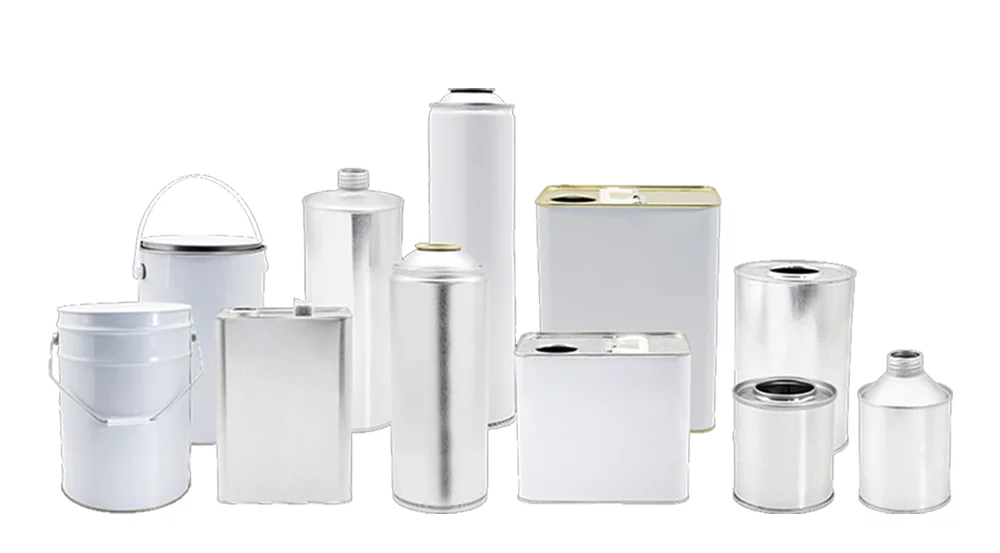
Escolhendo o certo custom tin containers is not just about shape. It’s about pressure, Revestimentos, ferramentas, and load strength. Abaixo, we break down how different custom tins and tin packaging formats actually work in real production.

Round Aerosol Cans: Valve Integration & Classificação de pressão
Quando se trata de latas de aerosol, small design mismatches can cause big filling-line drama. For safe valve integration, cada detalhe conta.
Core compatibility checklist:
- Integração de válvula matched to product viscosity
- Pressure rating aligned with selected propulsores
- Proper actuator alignment with atuadores
- Testado mecanismos de vedação under burst simulation
- Verificado can body material grossura
Technical pairing logic
- Determine product type
1.1 Oil-based spray
1.2 Water-based mist
1.3 Foam formula
- Match propellant pressure
2.1 ≤ 0.6 MPa: light mist
2.2 0.6–0,9MPa: household spray
2.3 ≥ 0.9 MPa: uso industrial
- Align structural components
- Diâmetro do copo da válvula
- Curl depth
- Força da cúpula
Tabela de referência de desempenho
| Diâmetro (milímetros) | Altura (milímetros) | Classificação de pressão (MPa) | Valve Opening (milímetros) | Espessura do material (milímetros) |
|---|---|---|---|---|
| 45 | 100 | 0.6 | 25.4 | 0.18 |
| 52 | 150 | 0.8 | 25.4 | 0.20 |
| 57 | 180 | 0.9 | 25.4 | 0.23 |
| 65 | 200 | 1.0 | 25.4 | 0.25 |
| 70 | 250 | 1.2 | 25.4 | 0.28 |
Para fornecimento de marcas custom tin containers in aerosol format, FANXUN typically fine-tunes curl strength and dome geometry to keep filling speeds steady and rejection rates low. It sounds technical, but on the factory floor, it simply means fewer leaks and smoother output.
Rectangular Food Tins with Internal Coating Options
Rectangular tins are popular in qualidade alimentar packaging because they stack well and look sharp on shelves. But the real game changer is inside.
Why coatings matter
- Acidic foods need stronger revestimentos internos
- Heat sterilization affects materiais de revestimento
- Barrier performance influences prazo de validade
Coating selection flow
- Identify food type
- Measure pH value
- Confirm sterilization temperature
- Choose coating thickness
- Run corrosion resistance test
Breve verificação da realidade:
Tomato paste? High acidity.
Dry tea? Baixo risco.
Seafood in brine? Demands strong lining.
De acordo com Smithers 2025 perspectivas globais de embalagens metálicas, metal food packaging continues steady growth due to “recyclability advantages and long-term barrier reliability,” especially in premium segments.
Global metal packaging demand is projected to maintain stable growth through 2027, driven by sustainability requirements and food safety compliance. — Smithers Market Intelligence, 2025
That’s why many brands upgrading to custom tin containers for food focus on compliance first, design second. FANXUN integrates corrosion testing directly into prototype cycles, which keeps flavor stability intact while meeting regulatory standards.
Specialty Shapes: Desenho Profundo & Desenvolvimento de Ferramentas
When brands want standout specialty shapes, o processo de estampagem profunda becomes the backbone.
Here’s how complexity is managed:
- ♢ Control material deformation through gradual redraw stages
- ♢ Validate wall thinning ratios
- ♢ Build precision moldes personalizados
Development ladder
- Concept sketch
- 3D modeling
- Tool steel selection
- Trial stamping
- Structural stress test
- Embossing validation
Long-form explanation: During deep drawing, sheet metal flows inward while being pressed into dies. Too much stress causes cracking. Too little pressure leads to wrinkling. Tight dimensional tolerance is non-negotiable, especially for lids that must snap perfectly onto custom tins.
For complex tin packaging projects, FANXUN shortens iteration cycles by prototyping tooling before final hardened dies are produced. That saves time and keeps bold shapes commercially realistic.
Large Pails: Espessura do medidor & Volume Capacity
Large pails are built for weight. Pintar, produtos químicos, bulk foods—no room for weak seams.
Key performance drivers
- Espessura do medidor affects stacking strength
- Aumentou capacidade de volume requires reinforced seams
- Forte resistência dos materiais prevents wall buckling
- Adicionado handling features improve transport safety
Load planning structure
- Determine fill weight
- ≤ 10 kg
- 10–20 kg
- ≥ 20 kg
- Select substrate grade
2.1 Standard tinplate
2.2 Heavy duty steel
- Reinforce
- Costura dupla
- Rolled rim
- Bottom curl support
Short notes from real-world logistics:
Thin walls save cost.
Thick walls prevent collapse.
Balance is everything.
In high-volume storage solutions, custom tin containers must support vertical stacking without panel distortion. That’s where proper gauge calculation makes or breaks the design. FANXUN typically models stacking simulations before confirming steel thickness, ensuring durability without wasting raw material.
From aerosol formats to deep-drawn shapes and heavy-duty pails, bem projetado custom tin containers turn metal packaging into a practical, good-looking, and reliable packaging solution.
3 Vendor Vetting Tips For Tin Suppliers
Escolhendo um fornecedor para custom tin containers isn’t just a pricing game. Material science, precisão de formação, and delivery control all shape how your tin container packaging performs in real life. Smart buyers look deeper—into data, processos, e consistência.

Dica 1: Verify Tinplate Grade and Steel Substrate
Ao adquirir custom tin containers, start with the core: folha de flandres e substrato de aço.
- Verificação de Materiais
1.1 Grade specification
- Confirm compliance with EN 10202 or ASTM A623.
- Match grade to product acidity and storage cycle.
1.2 Grossura & temperamento
- Check nominal thickness (Por exemplo, 0.18mm–0.30mm).
- Validar temperamento nível (T2.5, T3, T4) for forming strength.
1.3 Revestimento de estanho & resistência à corrosão
- Review coating weight (g/m²).
- Examine internal lacquer compatibility.
| Parâmetro | Faixa Típica | Impact on Custom Tin Containers | Método de teste |
|---|---|---|---|
| Grossura | 0.18–0,30mm | Rigidez estrutural | Micrômetro |
| Revestimento de estanho | 2.8–11.2 g/m² | Resistência à corrosão | XRF |
| Temperamento | T2.5–T4 | Formabilidade | Rockwell |
| Força de rendimento | 280–420 MPa | Resistência a amolgadelas | Teste de tração |
Lista de verificação rápida:
• Verify composição material certificate
• Confirm recyclability data
• Audit substrate supplier source
If the base metal isn’t right, even premium custom printed tin containers won’t hold up.
Dica 2: Assess Welding Technology and Can Body Forming
Great custom tin containers depend on precise tecnologia de soldagem and disciplined can body forming.
Core evaluation path:
- Manufacturing Review
1.1 Fabrication methods
- Resistance welding vs. laser welding
- Seam overlap control
1.2 Integridade da costura
- Conduct peel tests
- Inspect weld nuggets microscopically
1.3 Tolerância dimensional
- Diameter variance ≤ ±0.05mm
- Height consistency across batches
- Production Techniques
- De alta velocidade equipamento calibration
- In-line camera inspection
- Statistical drift monitoring
- Structural Strength Validation
- Teste de pressão de ruptura
- Axial load compression
A supplier like FANXUN typically provides process flow charts and weld parameter logs on request. That transparency matters when scaling custom made tin containers for automated filling lines.
Dica 3: Review Quality Assurance Metrics and Lead Time
Confiável custom tin containers require disciplined garantia de qualidade e previsível tempo de espera.
Evaluation matrix:
- Quality Control Framework
1.1 Protocolos de inspeção
  - Incoming coil inspection

  - In-process seam monitoring

  - Final leak testing
1.2 Testing standards
- Burst pressure ≥ design threshold - Vacuum decay testing - Conformidade & Certificações
- ISO 9001
- Food-contact compliance
- Documentado certificações
- Delivery Stability
- Average production cycle (dias)
- On-time delivery rate (%)
- Safety stock policy
“Global metal packaging demand remains steady, with supplier reliability ranking among the top three purchasing criteria,” observa um 2025 Smithers industry update on metal packaging trends.
Short lead times sound nice. Consistent delivery schedules keep retail launches on track.
Brands ordering bulk custom tin containers or specialty decorative tins often favor partners like FANXUN, where documented controle de qualidade data supports scaling without last-minute surprises.
Solve Leak Issues: Sealed Tin Techniques
Leak complaints can wreck trust fast. For brands producing custom tin containers, tight sealing is not optional—it’s survival. From metal forming to coating checks, cada movimento em custom tins production shapes durability. Here’s how smart engineering keeps tin containers custom-built and leak‑free.

Deep-Drawing Seam Welding for Zero Leaks
Em fabricação de contêineres de custom tin containers, seam control starts at forming:
- Metal Forming Control
- um. Precisão desenho profundo
- eu. Uniform wall thinning
- eu. Reduced micro-cracks
- b. Tool calibration
- eu. Stable punch speed
- eu. Balanced lubrication
- um. Precisão desenho profundo
- Seam Welding Optimization
- um. Automatizado soldagem de costura
- eu. Continuous bead formation
- eu. Heat input regulation
- b. Real-time weld monitoring
- eu. Infrared temperature tracking
- eu. Arc consistency checks
- um. Automatizado soldagem de costura
- Leak Prevention Validation
- um. Teste de deterioração de vácuo
- b. Selo hermético inspeção
- c. Cross-section integridade da solda análise
For custom metal tins, fewer seams mean fewer risks. That’s why FANXUN integrates forming and welding in one calibrated line.
Optimizing Valve Cup Opening Design
A tiny gap can ruin custom tin containers desempenho.
- Key focus areas:
- Copo de válvula alinhamento
- Preciso opening design
- Suave sealing surface terminar
- Tolerância dimensional: ±0,03 mm
- Correspondido válvula de aerossol especificações
- Controlado taxa de fluxo equilíbrio
Technical benchmarks:
| Parâmetro | Target Value | Método de teste | Impacto |
|---|---|---|---|
| Opening Diameter | 25.40 milímetros | Digital gauge | Ajuste da válvula |
| Tolerância | ±0,03 mm | CMM scan | Risco de vazamento |
| Surface Roughness | Ra ≤0.8 μm | Perfilômetro | Seal grip |
| Fit Pressure | 0.6 MPa | Pressure rig | Dispensing stability |
Dialed-in numbers keep tin containers custom-built for clean dispensing.
Coating Adhesion and Burst Pressure Test
Inside every batch of custom tin containers, coating matters.
- Adesão do revestimento
- Cross-hatch scoring
- Tape pull grading
- Resistência à corrosão
- Exposição à névoa salina
- Visual blister check
- Pressão de ruptura validação
- Gradual pressão interna increase
- Record peak resistência dos materiais
Quando integridade do contêiner passes all three, leak drama fades. Strong coatings plus disciplined métodos de teste mean fewer returns and better shelf life. That’s the quality control mindset behind FANXUN.
Tin Container Customization: Embossing Vs. Impressão
Custom tin containers are more than packaging; they are brand statements shaped in metal. When businesses compare embossing and printing for custom tin containers, the decision affects texture, cor, custo, and shelf appeal in a very real way.

Embossing Options
For custom tin containers, embossing changes how customers physically connect with the tin box. It’s subtle, yet hard to ignore.
- Raised design for bold logos
- Debossed design for recessed elegance
- Multi-level depth for layered branding
- Concept sketch
- Tooling with precision Die
- Mold testing and pressure calibration
At a technical level:
- Sculpting styles
- Single-level impressions
- Multi-level contours
- Esculpido textures
- Blind emboss without ink
- Registrado emboss aligned with print
Key advantages of embossed custom tins:
- No ink wear
- Strong tactile memory
- Premium shelf presence
Production flow usually runs like this: artwork approval → die engraving → sample pressing → coating check → bulk forming. The structure of tin containers stays intact, and custom printed tin containers can still receive coatings afterward. Brands such as FANXUN often recommend embossing when durability and touch matter most.
Técnicas de impressão
If embossing speaks through texture, printing talks in color. Custom tin containers using advanced print methods offer sharp visuals and flexible design freedom.
Core methods include:
- Impressão offset
- Litografia
- Serigrafia
- Impressão digital
Color systems:
- CMYK for gradients
- Spot colors for strict brand tones
- Tintas metálicas for reflective accents
Finishing layers:
- Protetor Varnish finish
- Matte or gloss coating
- Resistência à abrasão
- Estabilidade UV
Typical production rhythm:
- Plate preparation
- Color proofing
- Mass print alignment
- Curing and sealing
For custom tin containers targeting retail impact, printing gives storytelling space across every tin surface. FANXUN supports both custom tins and fully custom printed tin containers, balancing cost, velocidade, and visual punch without cutting corners.
Custom Tin Containers Logistics Simplified

Smooth logistics keep custom tin containers movendo-se sem drama. From factory floor to warehouse rack, tempo, embalagem, frete, and stock control must click together. Quando custom tin containers scale up, even small gaps in planning can slow everything down.
Delivery Schedule Coordination with Suppliers
Claro supplier communication mantém delivery dates realistic and tied to production timelines. For custom tin containers, sync plans through:
- Confirming prazos de entrega in writing
- Alinhando scheduling with seasonal demand
- Setting up shared shipment tracking
- Lock projected volumes.
- Match factory output with forecast.
- Atualizar planejamento logístico semanalmente.
Under strong vendor agreements, changes in custom tin containers orders follow a simple path:
- Order adjustment
- Volume change
- Artwork revision
- Timeline review
- Verificação de capacidade
- Transit recalculation
A quick call often solves what ten emails cannot. For brands scaling custom tins, steady rhythm beats rushed fixes.
Packaging Configurations for Bulk Shipments
Inteligente design de embalagem protects tin containers in transit. Fatores principais:
- Tipos de contêiner and wall thickness
- Paletização disposição
- Protective materials e crating
| Tipo de embalagem | Units per Pallet | Damage Rate (%) | Load Efficiency (%) |
|---|---|---|---|
| Standard Carton | 480 | 2.8 | 82 |
| Reinforced Carton | 520 | 1.6 | 86 |
| Crated Bulk Pack | 600 | 0.9 | 91 |
| Hybrid Stack Pack | 560 | 1.2 | 88 |
For custom tin containers, apertado empilhamento e inteligente load optimization reduzir o desperdício. Brands working with FANXUN often tweak bulk packing specs early, not after losses show up.
Shipping Methods and Logistics Partner Selection
Escolhendo freight modes shapes cost and speed. Air cuts transit; sea lowers cost. Confiável carrier selection depends on:
- Comprovado transporte registros
- Claro Incoterms
- Forte desembaraço alfandegário apoiar
Route choice matters too. Mais curto shipping lanes reduce handling risk for custom tin containers. When launching bespoke tin boxes globally, partner with experienced logistics providers who share real-time updates, não promessas vagas.
Inventory Holding Strategies and Lead-Time Buffering
Equilibrado gestão de estoque keeps custom tin containers ready without bloating warehouse storage. Pense em camadas:
- Core stock
- Base safety stock
- Standard SKUs
- Buffer layer
- Extra buffer inventory for peak months
- Control loop
- Em andamento previsão de demanda
- Automatizado replenishment
Track turnover weekly. Ajustar controle de estoque rules as sales shift. A little cushion builds true resiliência da cadeia de abastecimento, especially when tin containers travel across borders. Smart buffers mean fewer surprises and steadier growth.
3 Estudos de caso: Tin Container Success
Custom tin containers sit at the crossroads of safety, marca, e desempenho. From industrial aerosols to gourmet tins and high-pressure chemical cans, smart engineering turns a simple metal box into serious business value. Vamos detalhar como custom tin containers and tailored tin packaging solutions drive measurable results.

Industrial Lubricant Aerosols with Enhanced Formulation Stability
Em ambientes industriais, custom tin containers para Lubrificantes industriais must handle pressure, química, and daily wear. Performance hinges on tight integration of Embalagem aerossol, Formulation stability, e Compatibilidade de materiais.
- Otimizado Mecanismo de distribuição alinhamento
- Internal lining for Resistência à corrosão
- Crimp precision for Prevenção de vazamentos
As principais camadas de engenharia incluem:
- Valve system calibration
- Internal coating selection
- Pressure rating validation
Performance Data from Production Trials:
| Parâmetro | Lata padrão | FANXUN Custom Tin Containers |
|---|---|---|
| Pressão Interna (bar) | 12 | 16 |
| Taxa de vazamento (%) | 0.8 | 0.1 |
| Horas de corrosão (Spray de sal) | 240 | 480 |
Quality control stack:
- Substrato
- Espessura da folha de flandres (0.20–0.28mm)
- Surface passivation
- Revestimento
- Forro epóxi
- Propellant compatibility tests
- Conjunto
- Valve torque check
- Teste de explosão
É aqui que custom tin containers truly shine—stable formulas, menos retornos, smoother field use.
Gourmet Food Tins Featuring Custom Lithography and Color Matching
Premium snacks deserve sharp looks and safe storage. Custom tin containers usado em Gourmet food packaging mistura Custom lithography with certified Food grade materials.
Design priorities:
- Preciso Correspondência de cores para consistência da marca
- Seam integrity for an Selo hermético
- Interior coating for corrosion protection
De acordo com Smithers 2025 perspectivas globais de embalagens:
“Metal packaging demand in premium food categories continues to rise, driven by brand differentiation and recyclability advantages.”
Production flow for decorative tins:
- Artwork proofing
- Multi-pass lithographic printing
- Curing and coating validation
- Inspeção de costura
Technical hierarchy:
- Camada Visual
- Pantone verification
- Gloss measurement
- Camada Estrutural
- Compressão de costura dupla
- Vacuum retention test
- Conformidade
- FDA/EU food contact checks
Brands choosing FANXUN report stronger shelf impact and better repeat orders. Resumidamente, custom printed tins aren’t just pretty—they sell.
High-Pressure Chemical Cans with Statistical Process Control
Para mercadorias perigosas, custom tin containers deve atender rigorosamente Padrões de segurança e Conformidade regulatória. Strength isn’t optional; é sobrevivência.
Core system:
- High-pressure containers engineered with reinforced seams
- Contínuo Statistical process control
- Verificado Resistência material
Manufacturing control layers:
- Raw Steel
- Yield strength testing
- Thickness scan
- Soldagem
- Seam overlap measurement
- X-ray inspection
- Validação Final
- Teste de pressão de ruptura
- Immersion leak test
Quick specs snapshot:
- Pressure resistance up to 18 bar
- 100% teste de vazamento
- Documentado Garantia de qualidade registros
De Chemical storage plants to export shipping, FANXUN delivers custom tin containers that simply don’t crack under pressure. And in high-risk environments, that reliability means everything.