
 한국어
 English
 العربية
 Bosanski jezik
 Čeština
 Dansk
 Nederlands
 Wikang Filipino
 Suomi
 Français
 Deutsch
 Magyar
 Íslenska
 Bahasa Indonesia
 Italiano
 日本語
 Bahasa Melayu
 Polski
 Português
 Русский
 Cрпски језик
 Español
 ภาษาไทย
 Türkçe
 Tiếng Việt

Aluminum can packaging isn’t just a greener swap; it’s a smart business move that cuts waste and trims freight headaches.
Buyers feel the squeeze from rising material costs and tougher sustainability audits, and steel or plastic just won’t carry that weight anymore.
The International Aluminium Institute reports sustained growth in recycled aluminum demand worldwide.
Why Aluminum Can Packaging Leads Sustainability Trends
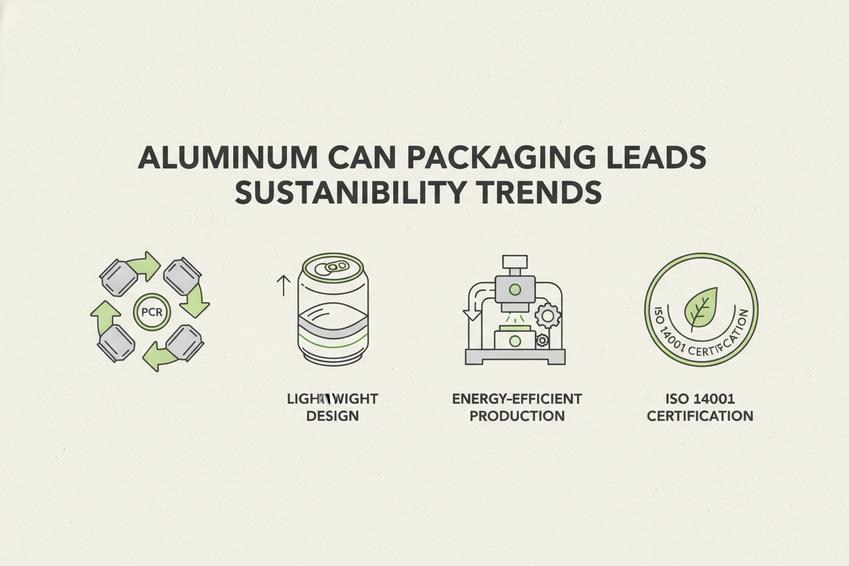
Aluminum can packaging keeps popping up in sustainability talks, 그리고 정당한 이유로. From recycled metal to smart energy use, 알루미늄 캔, 알루미늄 포장, and beverage can systems are reshaping how brands think about waste and carbon footprints.
PCR Aluminum Content and Its Impact on Recyclability Rate
~ 안에 aluminum can packaging, 더 높은 PCR 알루미늄 content reshapes the 지속 가능성 수학.
- 재료 구성
- 소비자 사용 후 재활용 (PCR) 알류미늄
- Reduces demand for 버진 알루미늄 추출
- Cuts lifecycle emissions in aluminum packaging production
- Alloy Integrity
- 유지하다 alloy performance in monobloc can bodies
- 보호하다 압력 등급 for aerosol and beverage can formats
- 소비자 사용 후 재활용 (PCR) 알류미늄
- Circular Performance
- Recycling Loop
- Supports closed-loop aluminum can recycling streams
- Preserves metal quality without downcycling
- 부식 방지
- Works with internal coating systems
- Sustains 내식성 across shelf life
- Recycling Loop
Brands choosing aluminum can packaging with higher PCR content often see improved recyclability rates while keeping the same can diameter, 돔 강도, and burst resistance. That balance is what keeps aluminum packaging ahead of other metal packaging options.
Lightweighting Strategies for Reduced Environmental Footprint
Smart lightweighting in aluminum can packaging is not guesswork; it is engineered precision.
- Structural Optimization
- Wall Design
- 조정됨 벽 두께 to trim grams
- Balanced against 파열 압력 목표
- Base Geometry
- 세련된 base curvature
- Improved load distribution during stacking
- Wall Design
- 성능 검증
- 기계적 테스트
- Verified through drop test performance
- Checked under transport vibration
- 안정성 제어
- 확인됨 shelf life stability
- Protected against paneling and deformation
- 기계적 테스트
By reducing material gauge while holding strength, 알루미늄 캔, 알루미늄 에어로졸 캔, and beverage can formats cut transport emissions. 판쉰 applies these lightweighting strategies so aluminum can packaging stays tough but uses less metal. 간단한 아이디어. 큰 영향.
Energy Efficiency in Impact Extrusion and Annealing Processes
Energy use defines the real footprint of aluminum can packaging 조작.
- Impact Extrusion Stage
- Impact extrusion presses
- Optimized stroke control
- Reduced scrap generation
- Material Flow
- Enhanced aluminum flow behavior
- Improved surface finish consistency
- Impact extrusion presses
- Thermal Treatment Stage
- Annealing process
- Controlled temperature profiles
- Lower peak energy demand
- 치수 정확도
- 안정적인 can diameter and height
- Consistent wall structure after forming
- Annealing process
When aluminum packaging lines fine-tune extrusion speed and annealing cycles, 에너지 소비 drops while throughput stays steady. That means aluminum can packaging delivers lower emissions per unit without sacrificing output. It is efficient, 평범하고 단순하다.
Achieving ISO 14001 Sustainable Manufacturing Certification
Sustainability in aluminum can packaging also lives in management systems.
- Environmental Management Framework
- ISO 14001 Implementation
- Defined environmental objectives
- Continuous improvement cycles
- Compliance Monitoring
- Tracked emissions control
- Documented legal adherence
- ISO 14001 Implementation
- 운영 통제
- 폐기물 감소
- Scrap segregation in aluminum can production
- Recycling of washing water
- Energy Oversight
- Monitoring of curing ovens
- 최적화 코팅 라인 and washing processes
- 폐기물 감소
With structured environmental management, aluminum can packaging plants move from basic compliance to measurable progress. FANXUN은 조작 operations with ISO 14001 원칙, helping brands trust that their aluminum can choices support real, trackable sustainability goals.
From Steel to Aluminum: A Packaging Evolution
The shift from steel to aluminum can packaging didn’t happen overnight. Brands wanted lighter weight, better corrosion control, and sharper design. That’s where aluminum cans, alloy bodies, and modern can packaging tech stepped in. 오늘, aluminum can packaging shapes how aerosol, 음료, and personal care products look and perform on shelves.

Material Gauge Comparison: 강철 대. 알루미늄 합금
비교할 때 재료 게이지, 사이의 차이 강철 그리고 알루미늄 합금 becomes clear through layered evaluation:
- Structural Performance1.1 Pressure Rating
- Steel requires thicker gauge to reach similar burst strength.
- Aluminum alloy maintains pressure stability at reduced wall thickness.
1.2 무게 영향
- Thinner aluminum lowers overall unit mass.
- 거룻배 aluminum can packaging cuts transport cost per pallet.
- Manufacturing Efficiency2.1 Formability
- Aluminum alloy supports deeper drawing without fracture.
2.2 Material Yield
- Reduced scrap rate during high-speed forming.
- Commercial Value3.1 Logistics
- Lower shipping emissions.
3.2 Brand Perception
- Lightweight aluminum cans feel modern and clean.
~에 판쉰, 맞춤화 depth is tuned to balance gauge, 힘, 재활용 가능성, ensuring aluminum packaging remains competitive against traditional steel formats.
Two-Piece Can Monobloc Construction: Corrosion Resistance Benefits
그만큼 Two-Piece Can Monobloc Construction removes the side seam entirely. That small structural change drives major gains:
- Seam Elimination1.1 Fewer corrosion initiation points.
1.2 개선됨 Internal Lacquer Adhesion 일관성.
- Filling Integrity2.1 Stable structure under Propellant Filling Conditions.
2.2 Reduced micro-leak risk over long storage cycles.
- Long-Term Protection3.1 Better resistance to aggressive formulations.
3.2 Cleaner interior surface for sensitive products.
For brands moving toward premium 에어로졸 캔 솔루션, 판쉰 applies strict wall uniformity controls so the monobloc body stays tight, 안전한, 선반에 바로 준비되어 있어요.
표면 처리: Gloss Finish Steel Coating vs. Matte Finish Aluminum
Surface style matters. 와 함께 Gloss Finish Steel Coating, production usually requires:
- Thick external base coat
- Multiple curing passes
- Higher coating weight lacquer requirements.
대조적으로, Matte Finish Aluminum 지원하다:
- Direct ink adhesion on treated aluminum surface
- Embossing compatibility for tactile branding
- Fine-detail graphics without heavy coating build-up
아래에 표면 처리, aluminum packaging offers flexibility:
- Matte elegance
- Satin textures
- High-definition branding
그렇기 때문에 aluminum can packaging continues to replace steel in cosmetic and personal care lines. The feel is sharper. The print pops. And with aluminum cans engineered by 판쉰, brands gain both design freedom and functional durability in modern can packaging formats.
5 Steps to Implement Aluminum Packaging in Your Line
Switching to aluminum can packaging isn’t just a materials swap; it reshapes equipment settings, inspection logic, and sourcing habits. When your team handles 알류미늄, ~할 수 있다, 그리고 포장 as one connected system, production runs smoother. Below is a practical path to bring aluminum can packaging into your line without nasty surprises.

단계 1: Assess Filling Line Compatibility and Valve Crimping Parameters
When preparing for aluminum can packaging, alignment starts at the filling block.
- Filling Line Review
- 밸브 컵 직경
- Neck opening tolerance
- Crimp head profile
- Crimping Parameters
- 목표 압착 깊이
- 허용됨 compression range
- Seal integrity under pressure
- Integration Check
- 성냥 can body alloy with valve material
- Verify torque control on actuator fitment
A tight match between valve crimping parameters and the aluminum can geometry keeps leak rates low and protects your aluminum packaging reputation. Brands often acquire a 충전물 기계 specifically calibrated for these tighter aluminum tolerances.
단계 2: Optimize Impact Extrusion and Drawing & Ironing Settings
안정적인 충격 압출 defines the base of strong aluminum can packaging.
- Extrusion Phase
- Control billet temperature
- Monitor punch speed
- Track wall thinning ratio
- Drawing & Ironing
- Adjust ironing ring clearance
- Confirm wall thickness uniformity
- Inspect internal coating continuity
- Dimensional Stability
- Check trimming height
- Validate flanging angle
Fine-tuning these elements keeps your aluminum cans consistent, reducing scrap and boosting output without pushing machines too hard.
단계 3: Integrate Quality Inspection Systems for Leak Integrity and Burst Pressure
Quality control in aluminum can packaging lives or dies by measurable data.
- Core Tests
- 파열 압력
- 누출 무결성
- 낙하 저항
- 코팅 접착력
| 테스트 유형 | 목표값 | Sampling Rate | 실패 임계값 |
|---|---|---|---|
| 파열 압력 | ≥18 bar | 1/5,000 캔 | <16 술집 |
| 누출 테스트 | 0 누출 | 100% 인라인 | 누출 |
| 낙하 테스트 | 1.2 중 | 1/10,000 | Visible crack |
| 접착등급 | 4B–5B | 1/일괄 | ≤3B |
- Automation Layer
- 인라인 vision inspection
- Real-time reject sorting
Numbers keep aluminum packaging honest. If the can fails here, it fails on retail shelves.
단계 4: Standardize Labeling Application and Overcap Seating Automation
외모가 중요해. So does fit.
- Labeling Application
- 제어 color registration
- Maintain adhesive temperature
- Sync conveyor speed
- Actuator and Overcap
- 검증 actuator fitment force
- Confirm overcap snap retention
- Test removal torque
- Automation Readiness
- Integrate servo-driven applicators
- Link sensors to PLC alarms
Clean labeling plus steady overcap seating makes aluminum can packaging shelf-ready and retail-safe.
단계 5: Monitor Supply Chain Integration for Recycled Content Sourcing
Long-term aluminum can packaging success depends on supply stability.
- PCR Aluminum Sourcing
- Verify recycled content percentage
- 심사 material gauge consistency
- Track supplier certification
- Cost and Sustainability Balance
- Compare virgin vs. PCR input pricing
- Monitor scrap return rate
- Market Direction
국제 알루미늄 연구소(International Aluminium Institute)는 다음과 같이 보고했습니다. 2025 that global recycled aluminum usage in packaging continues to rise, with beverage and aerosol cans leading closed-loop recovery systems.
Staying close to suppliers keeps your aluminum can packaging steady, 준수, and aligned with circular economy goals.
Overcoming Supply Concerns for Aluminum Can Packaging
Supply worries around aluminum can packaging are real. Price swings, recycled feedstock gaps, and gauge inconsistencies can slow down even the best beverage launch. For brands using aluminum, 캔 시체, and metal packaging formats, stability matters. Smart sourcing and tight process control keep aluminum can packaging 꾸준한, 안전한, and ready for scale.

Securing PCR Aluminum Supply Chains and Waste Minimization Tactics
To steady PCR 알루미늄 flow for aluminum can packaging, strong systems beat short-term buying.
- Diversified Sourcing Framework1.1 Regional balance
- Local scrap collectors
- Cross-border secondary aluminum traders
1.2 Supplier tiering
- Primary PCR smelters
- Backup billet converters
1.3 Risk review
- Energy cost exposure
- Policy shifts on recycled aluminum
- Closed-Loop Recycling Integration2.1 In-plant scrap recovery
- Trim loss capture from can body forming
- Re-melting protocols aligned with 합금 구성
2.2 Customer take-back programs
- Branded collection drives
- Partnerships with waste management firms
- Waste Minimization Controls3.1 Process calibration
- 단단한 벽 두께 tolerance checks
- Reduced offspec coils
3.2 디지털 추적
- Scrap rate dashboards
- Yield benchmarking across production lines
국제 알루미늄 연구소(International Aluminium Institute)는 다음과 같이 언급했습니다. 2025 industry update that recycled aluminum demand for beverage cans continues to outpace collection growth, urging stronger closed-loop systems across regions.
With this mindset, 판쉰 지원하다 포장 솔루션 by aligning PCR sourcing with real production data, keeping aluminum can supply practical, 혼란스럽지 않은.
Scaling Automation Readiness to Meet Volume Capacity Demands
대용량 aluminum can packaging needs machines that keep up without cutting corners.
- 치받이 curing ovens to stabilize coating adhesion.
- 증가하다 inspection throughput using vision systems.
- 교정 압력 등급 tests more often during peak runs.
Here’s how scaling usually rolls out:
- Audit current line speed versus defect rate.
- Add servo-driven bodymakers for smoother can forming.
- Sync real-time monitoring with maintenance alerts.
Short bursts of 혁신 돕다. A faster conveyor here. A smarter rejection system there. When automated can lines talk to each other, aluminum cans move cleaner, with fewer dents and burst failures. 그 방법이다 판쉰 approaches beverage can packaging growth—steady upgrades, 드라마는 없어.
Building Supplier Partnerships for Consistent Material Gauge Delivery
안정적인 재료 게이지 is the backbone of safe aluminum can packaging.
- Technical Alignment with Alloy Suppliers1.1 Shared specification sheets
- 목표 gauge tolerance 범위
- 승인됨 합금 등급 list
1.2 Joint testing routines
- 버스트 압력 검증
- Seam integrity checks
- Forecast and Capacity Planning2.1 Rolling demand forecasts for aluminum cans
2.2 Safety stock agreements on coil inventory
- Performance Feedback Loops3.1 Monthly quality reviews
3.2 Root-cause sessions on thickness drift
When suppliers treat can stock like a long-term commitment, not a spot sale, metal packaging stays consistent. For brands betting big on aluminum can packaging, 에어로졸 캔 제조업체 partnerships—backed by data and straight talk—keep wall thickness stable and shelves stocked.
Will Aluminum Cans Dominate Tomorrow’s Markets?
Aluminum can packaging keeps popping up in drinks, 개인 관리, and even food aisles. From sustainability buzz to smart manufacturing, aluminum can and can packaging trends are reshaping how brands think about packaging.
Recyclability Rate vs. Traditional Packaging Materials
세계에서는 포장 재료, 재활용 가능성 isn’t just a green buzzword. It drives cost, policy, and brand image. When comparing aluminum can packaging with 유리, 플라스틱, 강철, 그리고 판지, the differences stack up fast.
- Recycling rate performance
- Aluminum can packaging
- Closed-loop system in many regions
- Minimal quality loss after repeated processing
- 플라스틱
- Downcycling common
- Lower effective 재활용률 due to sorting loss
- 유리
- High recyclability
- Heavy transport footprint
- 강철
- Magnetically recoverable
- Often blended with other alloys
- Aluminum can packaging
- Material durability in reuse cycles
- 알루미늄 캔:
- Melt
- Reform
- 다시 메우다
- 플라스틱:
- 종류
- Shred
- Often downgraded into fibers
- 알루미늄 캔:
- 주요 시사점
- ♻ Infinite reuse potential gives aluminum can packaging a serious edge.
- Lower contamination risk boosts actual 재활용률.
- Circular models are easier to scale.
다음과 같은 브랜드 판쉰 align aluminum can solutions with markets demanding measurable 재활용 가능성, 주장뿐만 아니라.
Environmental Footprint Comparison of Aluminum and PET
When brands compare aluminum can packaging with 애완 동물, the debate centers on 환경에 미치는 영향, 탄소 발자국, 그리고 에너지 소비.
1. Lifecycle metrics overview
| 재료 | 평균. 재활용 콘텐츠 (%) | 탄소 발자국 (kg CO₂e/1000 units) | 에너지 소비 (MJ/1000 units) | Water Usage (m³/1000 units) |
|---|---|---|---|---|
| 알류미늄 (virgin) | 0 | 950 | 14,000 | 12 |
| 알류미늄 (70% 재활용) | 70 | 520 | 8,500 | 7 |
| 애완 동물 (virgin) | 0 | 680 | 10,200 | 9 |
| 애완 동물 (30% 재활용) | 30 | 610 | 9,400 | 8 |
Higher recycled content dramatically lowers greenhouse gas emissions and total carbon footprint for aluminum can packaging.
2. Breakdown by impact factor
- 탄소 발자국
- 1차 알루미늄: energy intensive
- 재활용 알루미늄: 최대 95% 에너지 절약
- 에너지 소비
- PET production stable but fossil-dependent
- 물 사용량
- Aluminum refining water-heavy at virgin stage
3. System-level effect
Under mature collection systems, aluminum can packaging often outperforms PET in full lifecycle assessment 모델. That’s why many beverage brands are switching back to aluminum can formats for long-term environmental impact goals.
Consumer Preference Trends in Can Diameter and Volume Capacity
Shoppers are picky. 소비자 선호도 now shapes every bit of 디자인할 수 있다, ~에서 지름 에게 용량 and total 용량.
Some clear market trends stand out:
- Slim 45–53 mm diameter cans dominate energy drinks.
- 기준 66 mm diameter works for carbonated beverages.
- Larger capacity (500 ml+) signals value.
- Smaller packaging size (150–200 ml) fits sampling culture.
Short and straight:
Ergonomics matter.
Shelf presence matters more.
Shipping efficiency still decides margins.
Brands fine-tune 포장 크기 균형을 맞추다:
- Grip comfort
- Visual height impact
- Pallet density
Aluminum can packaging makes these tweaks easier because wall thickness can adjust without sacrificing strength. That flexibility helps 판쉰 support private-label clients experimenting with bold aluminum can packaging formats.
OEM Integration: Propellant Filling and Actuator Fitment Readiness
For aerosol aluminum can packaging, OEM integration goes deeper than aesthetics. It’s about syncing 조작 precision with real-world performance.
에이. Production line alignment
- Filling process
- Pressure calibration
- 누출 감지
- Valve crimp control
- 오토메이션
- 인라인 중량 점검
- 비전 검사 시스템
- Real-time rejection sorting
비. Component compatibility
- 추진제
- 탄화수소 혼합물
- Compressed gas systems
- 액추에이터
- Spray angle tolerance
- Dip tube length matching
- Fitment
- Crimp diameter accuracy
- 씰 무결성 검증
기음. Pressure and safety validation
- 버스트 테스트
- Drop testing
- 장기 보관 시뮬레이션
An aluminum can built for aerosol use must pass strict BAMA 생산 라인 확인. 판쉰 ensures aluminum can packaging integrates smoothly into automated systems, reducing downtime and speeding time-to-market.
In fast-moving categories, aluminum can packaging that’s ready for seamless OEM adaptation isn’t just nice to have. It’s the difference between prototype and shelf-ready success.
자주 묻는 질문
Why is aluminum can packaging preferred by industrial and chemical OEM buyers?
Aluminum can packaging is chosen for its balance of strength, 무게, and line compatibility.
Can Construction & 보호
- Aluminum alloy in a two-piece can with monobloc construction
- Internal lacquer and external base coat for high corrosion resistance
- Optimized material gauge to maintain burst pressure without excess weight
Performance Under Pressure
- Stable pressure rating and strong leak integrity
- Reliable valve retention during propellant filling
- Proven drop test results and shelf life stability
Line Integration Confidence
- 원활한 충전 라인 호환성
- Accurate valve crimping parameters and actuator fitment
- Consistent quality inspection systems for large production runs
The result is a lighter package with dependable safety margins and predictable output on high-speed lines.
Which dimensional and decoration specifications should OEMs verify before integration?
Correct specifications protect both efficiency and brand image.
① Core Dimensions
- 캔 직경 & 높이 수 있습니다
- 볼륨 용량
- Neck opening & valve cup diameter
- Shoulder radius & base curvature
- 벽 두께 공차
② 표면 & Visual Control
| 영역 | Key Checkpoints | 왜 중요한가 |
|---|---|---|
| 오프셋 인쇄 | Color registration | Clean brand presentation |
| Graphic design | 잉크 접착 | 긁힘 방지 |
| Finish options | 무광택 마감 / 광택 마감 | 시장 포지셔닝 |
| 엠보싱 | Depth accuracy | Tactile identity |
| Protective varnish | 코팅 접착력 | Long-term durability |
Precise alignment between trimming and flanging, labeling application, and overcap seating avoids stoppages and protects appearance at scale.
How does aluminum can packaging support sustainability goals in high-volume production?
Sustainability in aluminum can packaging is practical, measurable, and tied to process control.
- 재료 수준:PCR aluminum and high recycled content increase recyclability rate and cut environmental footprint. Lightweighting reduces raw material use while maintaining pressure rating.
- Process Level:충격압출, drawing and ironing, and controlled annealing process improve energy efficiency. Washing and drying systems, 내부 코팅 적용, and curing ovens are optimized to limit waste and emissions.
- System Level:Automation readiness enhances quality inspection systems, lowers rejection rates, and supports waste minimization aligned with ISO 14001 인증.
Lower weight, lower energy, lower waste—without sacrificing corrosion resistance or performance testing standards.
참고자료
- Global Recycled Aluminum Demand – 국제 알루미늄 연구소
- 알루미늄 재료별 데이터 – EPA
- Energy Efficiency in Aluminum Recycling – 알루미늄 협회
- ISO 14001:2015 Environmental Management Systems – ISO.org
- Circular Economy for Plastics and Metals – OECD
- Aerosol Container Safety Standards – 바마
- Sustainable Packaging Trends 2025 – 캔 제조업체 연구소
- Aluminum Carbon Footprint Analysis – 사이언스다이렉트
- Industrial Decarbonization in the Aluminum Sector – IEA
- Circular Economy and Resource Efficiency – UNEP
- Global Circularity Gap Report – WBCSD
- Metal Packaging Recyclability Standards – European Aluminium
- World Commodity Outlook: 알류미늄 – 세계은행



