
 Español
 English
 العربية
 Bosanski jezik
 Čeština
 Dansk
Dansk Nederlands
 Wikang Filipino
 Suomi
Suomi Français
 Deutsch
 Magyar
 Íslenska
 Bahasa Indonesia
 Italiano
 日本語
日本語 한국어
한국어 Bahasa Melayu
 Polski
 Português
 Русский
 Cрпски језик
 ภาษาไทย
 Türkçe
 Tiếng Việt
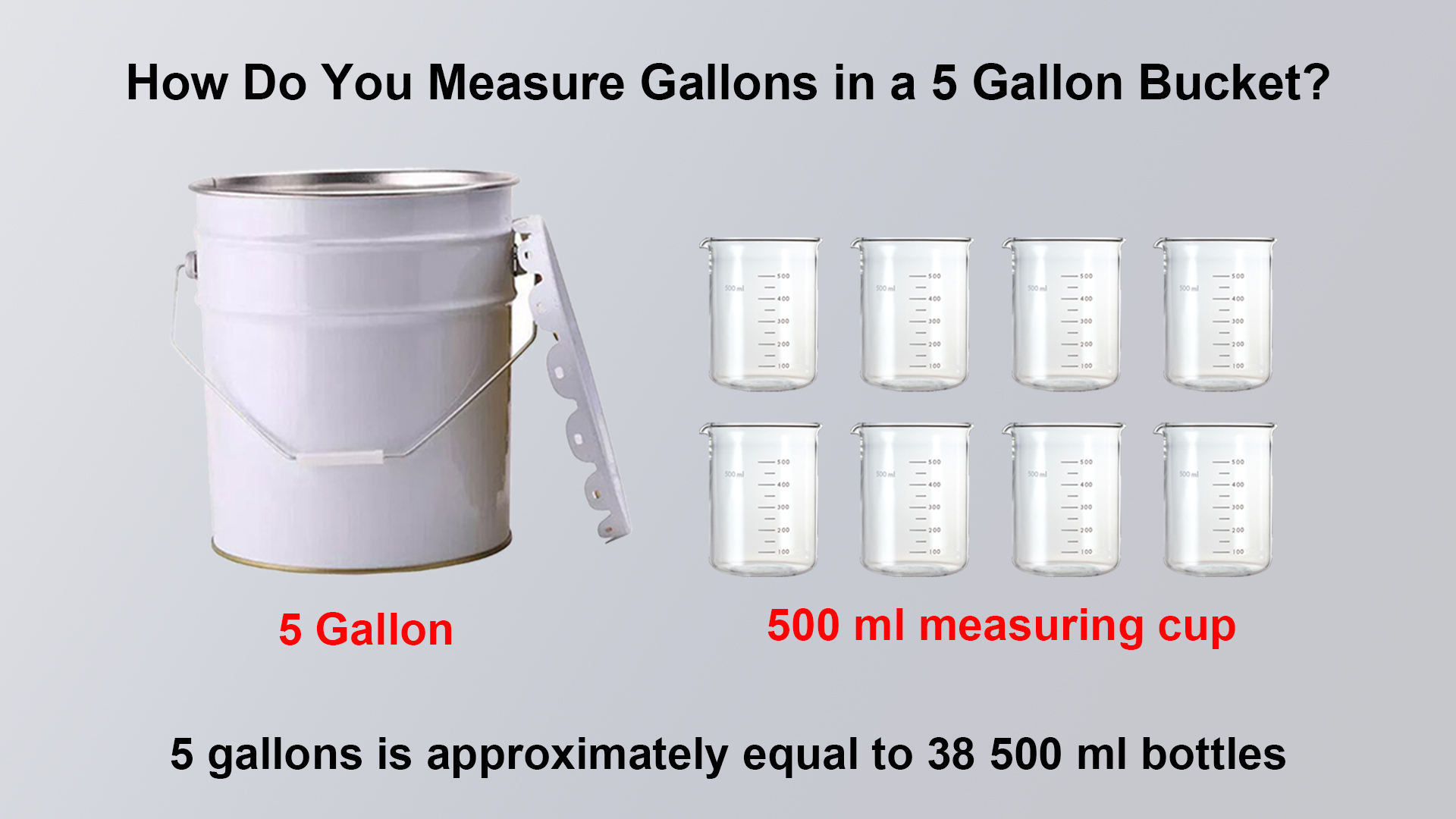
Bueno, Medir cantidades específicas de galones en un balde estándar de 5 galones puede ser complicado porque generalmente no están marcados con líneas para 1, 2, 3, o 4 galones. Aquí tienes las formas más comunes y prácticas de hacerlo.:
Usando un conocido 1-Galón Recipiente (Método más común):
-
- Encuentre un recipiente que contenga exactamente 1 galón. Los ejemplos comunes incluyen:
- Vacío (y enjuagado) 1-jarras de leche de un galón
- 1-jarras de agua de galones
- Jarras medidoras grandes marcadas específicamente con 1 galón.
- Llene el recipiente de 1 galón con precisión con el líquido que desea medir..
- Vierta el galón en el balde de 5 galones..
- Repita para cada galón que necesite. Si necesitas 3 galones, haz esto tres veces.
- Encuentre un recipiente que contenga exactamente 1 galón. Los ejemplos comunes incluyen:
Calibrar y marcar el cucharón (Lo mejor para uso repetido):
-
- Este es el método más preciso si necesita medir los volúmenes en ese depósito específico con frecuencia..
- Coloque el balde de 5 galones sobre una superficie perfectamente nivelada..
- Usando el método anterior (with a 1-gallon container), pour exactly 1 gallon of water into the bucket.
- Let the water settle.
- Use un marcador permanente (waterproof is best) to draw a line precisely at the water level on the adentro of the bucket. Label it “1 Galón”.
- Carefully add another exact gallon of water, bringing the total to 2 galones.
- Mark this new water level and label it “2 Galón”.
- Repeat for 3 gallons and 4 galones.
Once marked, you can empty the water. Your bucket is now calibrated, and you can easily fill it to the desired line or see how much liquid is inside.
Using Smaller Measuring Containers (If No Gallon Jug):
- You can use smaller, accurately marked containers like quart jugs or large measuring cups (often marked in quarts or liters).
- Remember the conversions:
- 4 quarts = 1 galón
- Aproximadamente 3.785 liters = 1 galón
Carefully measure out the required number of quarts or liters to make up each gallon and pour them into the 5-gallon bucket. (P.EJ., measure 4 quarts to get 1 galón). This is more time-consuming but works if it’s all you have.
Using Weight (Less Common, Requires Scale):
- This method works best for water, as its density is well-known. Other liquids have different weights per gallon.
- 1 US gallon of water weighs approximately 8.34 libras (lbs) o 3.78 kilogramos (kilos) a temperatura ambiente.
- You need a scale that can handle the weight (a 5-gallon bucket plus water can be over 40 lbs).
- Primero, weigh the empty bucket. Note this weight (peso tara).
- Place the empty bucket on the scale and zero it out (if the scale has a tare function). Si no, you’ll need to subtract the empty bucket weight later.
- Add the liquid until the scale shows the desired weight:
- 1 galón ≈ 8.34 lbs
-
- 2 gallons ≈ 16.68 lbs
- 3 gallons ≈ 25.02 lbs
- 4 gallons ≈ 33.36 lbs
- 5 gallons ≈ 41.7 lbs
- Importante: This method’s accuracy depends on the scale’s precision and knowing the precise density of the liquid if it’s not water.
Key Tips:
- Mida siempre en una superficie nivelada.
- Utilice recipientes de medición precisos para calibración o medición directa..
- Para marcar, Utilice un marcador permanente resistente al agua en el interior..
Los métodos más fáciles y recomendados para uso general son utilizar un conocido 1-galón contenedor o calibrar y marcar el cubo usted mismo.
¿Tienes alguna otra pregunta?? Por ejemplo: ¿Cuáles son las dimensiones de un cubo de 5 galones?? ¿Cuáles son las dimensiones de un cubo de 55 arrastre?? ¿Cuánto pesa un cubo de pintura de 5 galones??
Si necesitas un 5-balón, Por favor contáctenos. Nosotros(FANXUN) Somos un fabricante de renombre mundial que se centra en productos de alta calidad..



