
 English
 العربية
 Bosanski jezik
 Čeština
 Dansk
Dansk Nederlands
 Wikang Filipino
 Suomi
Suomi Français
 Deutsch
 Magyar
 Íslenska
 Bahasa Indonesia
 Italiano
 日本語
日本語 한국어
한국어 Bahasa Melayu
 Polski
 Português
 Русский
 Cрпски језик
 Español
 ภาษาไทย
 Türkçe
 Tiếng Việt
In 2026, aerosol spray manufacturers aren’t just tweaking valves and polishing cans—they’re flipping the whole game board. From compressed air propellants to precision-engineered nozzles that shoot cleaner at any angle, these folks are building smarter solutions for industrial buyers who don’t have time for leaks, delays, or EPA red flags. If you’re sourcing thousands of units a month, every ounce of efficiency matters—and every regulatory box checked is one less lawsuit waiting in the wings.
“More than 73% of OEM procurement teams now prioritize eco-compliant packaging over price alone,” says a recent McKinsey report on sustainable manufacturing trends—proof that performance isn’t king anymore unless it rides shotgun with compliance.
So if your supply chain’s been feeling like rush hour traffic—clogged with outdated tech and slow turnaround—this might be your fast lane forward.
Trends in Aerosol Spray Technology for 2026

Tomorrow’s aerosols are smarter, cleaner, and way more precise. Let’s break down what’s heating up in the aerosol spray manufacturers world.
The Rise of Specialized Adhesive Aerosol Compounds
- Specialized adhesives are no longer one-size-fits-all. Now we’ve got:
- Heat-resistant spray adhesives for automotive interiors.
- Flexible bonding agents for footwear and textiles.
- Ultra-fast curing formulas used on construction sites.
- Applications vary by industry:
- Auto repair shops use them to reduce downtime.
- Packaging lines rely on them for quick sealing.
- DIYers love their ease of use at home.
- These new aerosol compounds bond faster, last longer, and stick better across temperature extremes.
With all this innovation, aerosol spray manufacturers are shifting gears toward more application-specific formulations—less waste, more grip.
Innovations in Metering Valve Aerosol Components
Modern-day metering valves aren’t just about function—they’re about finesse.
• New valve tech delivers pinpoint dosage control, cutting down overuse by up to 40%.
• Enhanced actuator design means sprays feel smoother and more ergonomic than ever before.
• Precision is king—especially in medical sprays where every microgram counts.
According to a recent Euromonitor report, “The global demand for precision dispensing systems is growing at nearly twice the rate of traditional aerosol packaging.” That tells you everything about where the smart money’s headed in the world of aerosol components.
Compressed Air: The Future of Propellant Gas in Aerosols
Here’s why compressed air is stealing the spotlight:
- It’s non-toxic and doesn’t contribute to smog-forming VOCs.
- It reduces fire hazards—no flammable gas here.
- It keeps product integrity intact without chemical interference.
| Propellant Type | VOC Emissions (g/L) | Flammability Rating | Cost Impact |
|---|---|---|---|
| Hydrocarbon Blend | >250 | High | Low |
| DME (Dimethyl Ether) | ~100 | Medium | Medium |
| Compressed Air | Zero | None | Slightly Higher |
More and more eco-minded consumers are demanding clean-label products—and guess what? Brands using air-powered aerosols are getting ahead fast. For many top-tier aerosol spray manufacturers, this shift isn’t optional—it’s survival mode with style.
Latest Developments in Automated Aerosol Filling Machinery
Let’s talk speed, smarts, and savings:
• Modern automated lines can fill up to 300 cans per minute—yeah, you read that right.
• Smart sensors now monitor fill levels, pressure balance, and seal integrity on the fly.
• Robotic arms handle everything from valve placement to cap crimping with near-zero error rates.
Grouped into three categories:
- Efficiency Boosters:
- Inline quality control systems
- Real-time diagnostics
- Labor Savers:
- Reduced need for manual supervision
- Lower training costs
- Consistency Champions:
- Uniform fill volumes
- Fewer rejected batches
FANXUN has already integrated several AI-guided robotic systems into its automatic aerosol can production lines—raising the bar across global aerosol production standards while giving other players something serious to chase after in this evolving game of high-speed precision manufacturing among leading aerosol spray manufacturers worldwide.
Sustainability: A Game Changer for Aerosol Spray Producers
Sustainability isn’t just a buzzword—it’s reshaping how aerosol spray manufacturers operate, package, and innovate.
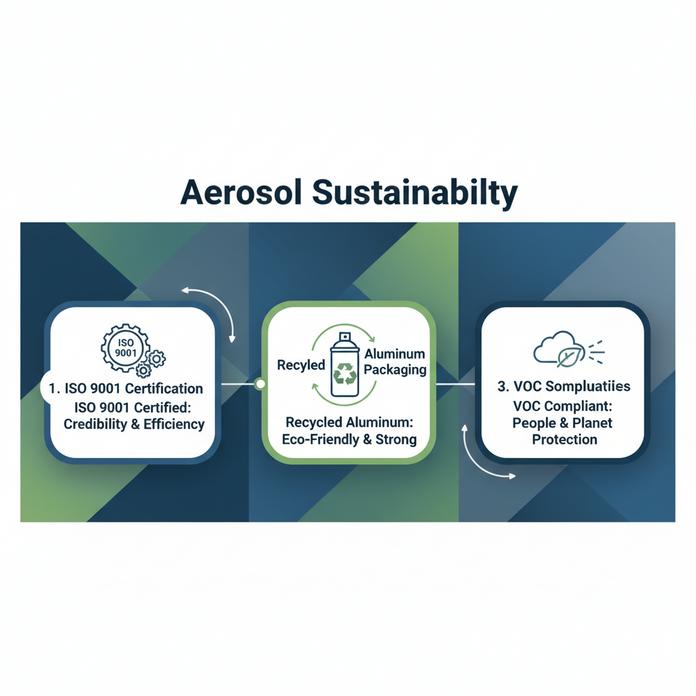
ISO 9001 Certified Aerosol Production Benefits
- Boosts brand credibility by aligning with global quality benchmarks
- Drives internal efficiency through standardized process improvement
- Reduces operational waste and rework, saving time and money
ISO 9001 certification doesn’t just make things look good on paper—it actually helps aerosol producers tighten up their game. By embedding strong quality management practices into daily operations, production teams can streamline workflows and minimize costly errors. For many top-tier aerosol spray manufacturers, this certification is a non-negotiable standard in the pursuit of consistent product excellence.
In fast-paced production environments, having ISO standards in place means fewer hiccups and happier customers. It also opens doors to new markets that demand strict adherence to international norms. That’s why more players in the space are chasing this badge—it’s not fluff; it’s functional.
Recycled Aluminum Aerosol Packaging: A Sustainable Choice
• Eco-friendly? Check. Strong as ever? Absolutely. Using recycled aluminum gives packaging a second life without compromising performance
• Supports the circular economy while reducing landfill pressure
• Cuts down greenhouse gas emissions during material sourcing
Some folks think going green means giving something up—but not here. With modern innovations in metal recovery, recycled aluminum now holds its own against virgin materials in terms of strength and formability.
That’s why so many aerosol spray manufacturers are switching gears toward this sustainable option. Not only does it help them meet rising consumer expectations around eco-consciousness, but it also slashes raw material costs over time—a win-win that’s hard to ignore.
Multiple industries—from personal care to automotive—are embracing these aluminum aerosol cans as their go-to solution for cleaner branding and smarter logistics.
VOC Compliant Aerosol Manufacturing Strategies
Formulation Adjustments:
- Switch to water-based or low-solvent carriers
- Use naturally derived propellants like compressed air or nitrogen
Process Tweaks:
- Improve sealing systems to prevent leakage
- Install vapor recovery units at key emission points
Regulatory Alignment:
- Stay updated with EPA guidelines or EU REACH protocols
- Conduct regular internal audits on VOC thresholds
VOC compliance isn’t just about ticking boxes—it’s about protecting both people and the planet while staying ahead of fines or recalls. As consumers get pickier about what they breathe in from household sprays or industrial products, smart aerosol spray manufacturers are leaning into low-VOC strategies early.
By tweaking formulations and upgrading equipment, producers can maintain performance without sacrificing environmental integrity. The future? It smells fresher already—with fewer chemicals riding along.
How Aerosol Spray Manufacturers Are Improving Product Safety
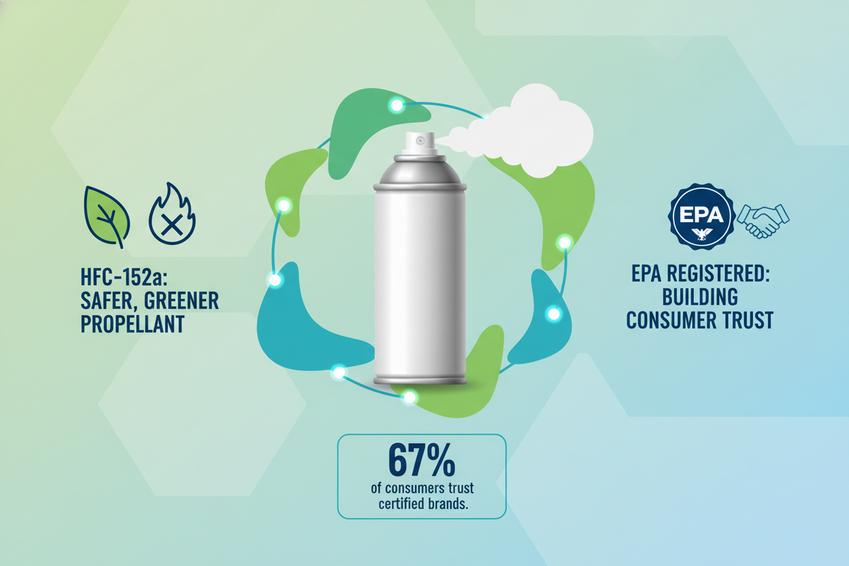
Modern aerosol spray manufacturers are stepping up their game—making products safer, greener, and more trustworthy for everyday use.
Advances in HFC-152a Aerosol Propellant Safety
HFC-152a, a next-gen aerosol propellant, is changing the safety game without compromising performance.
• Safer chemistry: Unlike traditional hydrocarbons, HFC-152a has low toxicity and reduced ozone impact. That’s a win for both users and the planet.
• Lower flammability: It meets tough new safety standards, helping minimize fire risk during storage and use—especially important for household sprays.
• Environmental edge: With a much lower global warming potential than older propellants, it qualifies as part of the new class of sustainable propellants that eco-conscious brands are adopting fast.
By switching to this innovative compound, many aerosol spray manufacturers now meet stricter regulations while maintaining product effectiveness. Brands like FANXUN are leading with formulations that balance high delivery performance with real-world safety enhancements.
EPA Registered Aerosol Ingredients: Ensuring Consumer Trust
Trust starts with transparency—and that’s exactly what EPA registration brings to the table when it comes to aerosol ingredients.
“According to Mintel’s March 2024 Home Care Report, over 67% of consumers say they’re more likely to purchase from companies that clearly list ingredient sourcing and safety certifications.”
✔️ Ingredient scrutiny: All active components undergo rigorous testing aligned with federal regulatory compliance frameworks—this isn’t just red tape; it’s consumer protection at its finest.
✔️ Boosting confidence: When shoppers spot an EPA badge on their favorite cleaner or bug spray, it signals adherence to strict environmental standards, not just marketing fluff.
✔️ Transparency sells: Clearly labeled formulas build lasting consumer trust, especially when brands disclose even inactive ingredients—a growing trend among forward-thinking aerosol spray manufacturers looking to stand out on crowded shelves.
This level of clarity fuels public confidence while raising the bar across the industry—something every responsible manufacturer should aim for today.
Case Study: Successful Strategies by Innovating Aerosol Spray Companies
Explore how modern aerosol spray manufacturers are flipping the script with smart tech, killer packaging, and user-first design.

Custom Printed Aerosol Cans: Enhancing Brand Identity
• Eye-catching custom printing instantly grabs attention on crowded shelves. Brands that invest in bold visual storytelling often see better recall rates.
• Smart packaging design doesn’t just look good — it tells a story. From matte finishes to holographic elements, every detail matters.
• Personalized cans help smaller players punch above their weight in competitive markets by boosting product differentiation and emotional connection.
Short-run customization gives brands a chance to test multiple designs without breaking the bank — ideal for seasonal promos or regional launches.
When brand identity is baked into every inch of an aerosol can, it becomes more than packaging; it’s a conversation starter.
Leveraging Semi-Automatic Aerosol Fillers for Efficiency
- Semi-auto machines offer the sweet spot between full automation and manual control.
- They’re perfect when you’re scaling up but not quite ready to go all-in on high-volume robotics.
- Ideal for niche production runs where flexibility is more valuable than sheer speed.
Most small-to-mid-sized aerosol spray manufacturers rely heavily on this type of setup to balance agility and consistency.
The best part? These systems reduce labor costs while maintaining tight tolerances — so quality doesn’t take a hit even when volume increases.
The Impact of 360 Degree Aerosol Spray Valve Designs
— Better spray reach? Check. — More comfortable use at awkward angles? Double check. — Consistent output no matter how you hold it? Nailed it.
This kind of smart valve design changes how people interact with products like automotive degreasers or household cleaners.
By improving both precision and convenience, these 360-degree valve systems create a smoother experience that users genuinely appreciate — especially when they don’t have time to fiddle around with positioning just right.
Custom Printing + Marketing Strategy = Shelf Power
Short bursts:
• Visual appeal drives impulse buys. • Branding consistency builds trust. • Packaging doubles as advertising real estate.
Put simply, well-executed custom printing isn’t just pretty — it’s strategic. For many growing aerosol spray manufacturers, it’s become their frontline weapon in retail warfare.
Equipment Technology That Scales With You
Step-by-step:
Step 1: Start small with bench-top fillers during R&D phases.
Step 2: Scale up using semi-auto lines as demand grows steadily.
Step 3: Transition into modular systems once orders hit critical mass.
This phased approach lets companies stay nimble while evolving their tech stack based on real sales data rather than guesswork — super important in volatile markets like personal care sprays or industrial lubricants.
Why Flexible Filling Systems Matter More Than Ever
Grouped bullets:
🔹 Operational optimization:
- Modular setups mean fewer bottlenecks during changeovers.
- Compact footprints save space without sacrificing throughput.
🔹 Cost reduction:
- Less downtime equals better ROI.
- Lower maintenance needs compared to fully automated lines.
🔹 Manufacturing processes:
- Perfect fit for brands offering multiple SKUs across different volumes.
- Adaptable enough to handle seasonal spikes without outsourcing overflow work.
For many mid-tier aerosol producers, this combo delivers peak efficiency without locking them into rigid workflows they’ll outgrow in six months flat.
How Valve Design Impacts User Experience & Brand Loyalty
Grouped bullets:
🟢 Product innovation:
- Dual-action triggers improve control over release pressure.
- Anti-clog tips extend shelf life and reduce waste complaints from users.
🟢 Application versatility:
- Sprays work upside down, sideways—even underwater depending on formula!
- Ideal across verticals like pet grooming, disinfectants, and sports sprays.
🟢 Performance enhancement:
- Uniform particle distribution boosts perceived product quality instantly.
- Less dripping means fewer negative reviews related to messiness or wastefulness.
In short, thoughtful engineering at the valve level can turn casual buyers into repeat customers faster than most loyalty programs ever could — especially if your target market values ease-of-use as much as performance itself.
FAQs
How are aerosol spray manufacturers making their products gentler on the planet?
- Choosing compressed air aerosol propellant for VOC‑free varieties like household cleaner dispensers and air freshener aerosol sprays.
- Adopting recycled aluminum aerosol packaging, marrying durability with conscience in industrial coating solutions.
- Running VOC compliant aerosol manufacturing lines that respect both air quality and worker safety.
Why do ISO 9001 certified facilities feel more trustworthy to bulk buyers?
- Consistent spraying performance across tinplate, steel, and aluminum containers—even in high output valve designs for automotive lubricant aerosols or insecticide formulations.
- Streamlined orders through documented processes, so repeat batches mirror the first in every dimension of color, pressure, and finish.
Can custom printed cans become silent ambassadors for a brand?
♦ Vivid designs on metal surfaces catch eyes beside competing sprays; personal care deodorants shine brightest here.
♦ UV coated images resist scuffs during transport of specialty adhesive compounds or heavy industrial coatings—beauty intact from plant to shelf.
What makes HFC‑152a worth choosing over a classic hydrocarbon blend propellant?
Reduced toxicity whispers reassurance when using an EPA registered household cleaner dispenser; at the same time it lessens ecological strain without sacrificing push-button power.
| Propellant Type | Safety Profile | Typical Use Cases |
|---|---|---|
| Hydrocarbon Blend | Higher flammability | Insecticide & automotive lubricants |
| HFC‑152a | Lower toxicity risk | Household cleaners & personal care deodorants |
Which filling equipment choices suit huge OEM runs while keeping products precise?
Short setup + bullet duo:
- Automated aerosol filling machinery, racing through massive volumes yet keeping each metering valve perfectly aligned.
- Rotary systems paired with crimping & gassing units keep tilt valves tight—ideal for multi-pack bundling options without leaks.
Do 360 degree spray valves really improve life for users beyond convenience?
Short bullets + summary:
• Spray upright or upside down with equal grace—helpful when coating awkward automotive parts or clearing dust behind fragile glass vials.
• Even distribution turns cleaning into artistry rather than struggle, especially with carbon dioxide powered air freshener sprays.
By removing the frustration of angle restrictions, these valves let skill—not position—define results.
References
- Do US consumers care about sustainable packaging in 2025? – McKinsey
- Dispensing Systems Market | Size, Share, Growth | 2024 – 2030 – Virtue Market Research
- Propellant Gases in Aerosol Production: Types and Functions – Sora Machine
- Benefits of ISO 9001 Certification – Amtivo Group
- Why Is ISO 9001 Compliance So Important for Manufacturing? – Azumuta
- Sustainability Advantages of Cans – Can Manufacturers Institute
- Can Aluminum Be Recycled, and Why Is It Important? – Okon Recycling
- Propellants – Chemours
- A Complete Guide to Aerosol Propellants – Hydrokem
- US Ingredient Trends in Beauty Report 2024 – Mintel
- Building Consumer Trust Through Brand Transparency – Mintel
- How Semi-Automatic Aerosol Filling Machine Reduces Labor Costs – Aile Aerosol
- 360° (aka Up/Down Valve) – Precision Global
- Automatic vs Semi-Automatic Filling Machine: Which Is Better – LIENM



